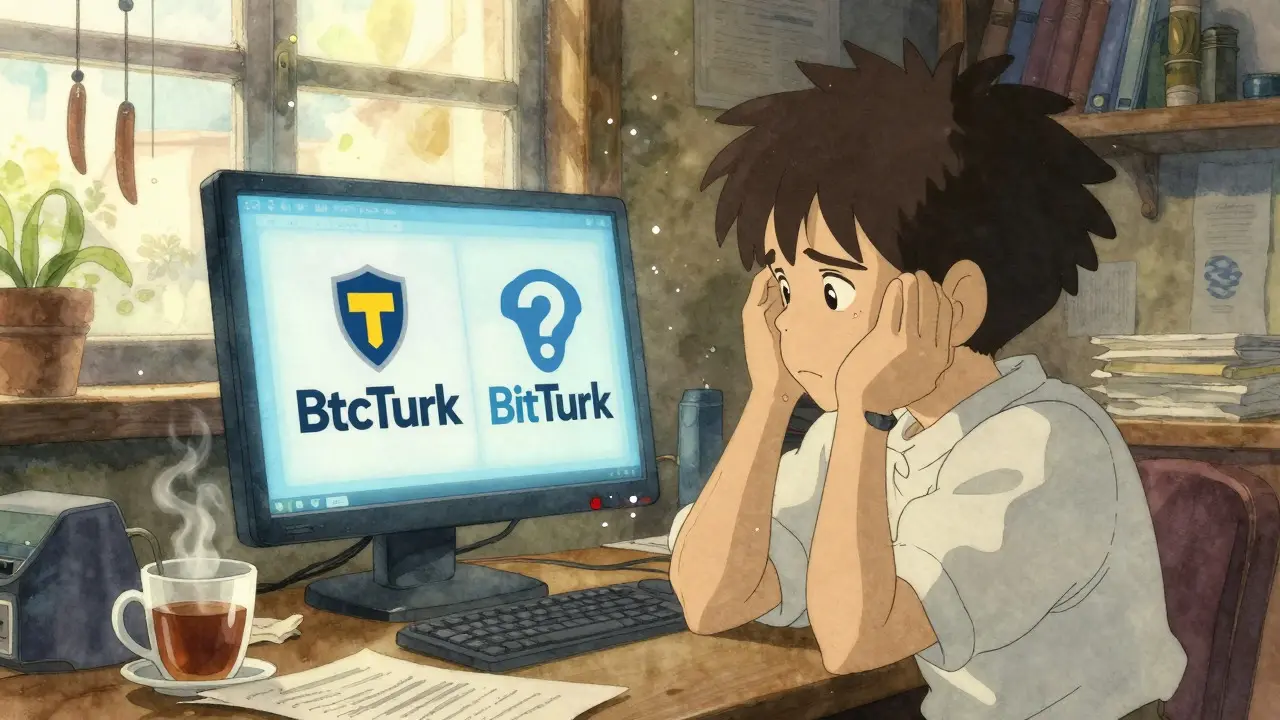
Have you ever typed "BtcTurk" into your browser, only to land on a site called BitTurk, which is a cryptocurrency exchange platform that often causes confusion due to its similar name to the established BtcTurk? You are not alone. In the world of digital assets, names matter. And right now, there is a serious mix-up happening in the Turkish crypto market that could cost you money if you aren't paying attention.
I’ve spent weeks digging through regulatory databases, user forums, and technical archives to separate fact from fiction regarding this platform. The short answer? Proceed with extreme caution. While it claims to be a legitimate trading hub, the evidence points to a platform lacking the transparency and regulatory backing required for safe trading in 2026.
The Name Game: BitTurk vs. BtcTurk
Before we talk about fees or features, we need to clear up the biggest elephant in the room. There are two very different entities here. First, there is BtcTurk, which is Turkey's largest and most established cryptocurrency exchange, founded in 2013 and regulated by local authorities. This is the giant in the room, holding roughly 85% of the domestic market share as of late 2025.
Then, there is BitTurk. Founded in 2017, it positions itself as a competitor but lacks the footprint of its neighbor. Why does this distinction matter? Because trust is built on history and verification. BtcTurk has years of public data, verified audits, and a clear relationship with Turkey’s Capital Markets Board (SPK). BitTurk? Not so much.
Many users report landing on BitTurk.com by accident, thinking they are on the secure, regulated BtcTurk platform. This isn’t just a typo; it’s a potential phishing risk. If you are looking for the big, regulated player, double-check that extra 'c' in the URL.
Regulatory Red Flags: The SPK License Issue
In Turkey, the rules changed significantly in January 2025. The SPK implemented strict licensing requirements for all crypto exchanges operating within the country. To trade legally and safely, an exchange must appear on the official SPK registry.
Here is the critical finding: As of September 2025, BitTurk does not appear on the SPK’s list of licensed operators. Meanwhile, BtcTurk and other major players like Paribu have secured their licenses. What does this mean for you?
- No Legal Recourse: If BitTurk freezes your funds or disappears, you have little protection under Turkish law because they aren't officially recognized.
- High-Risk Status: Industry analysts at Delphi Digital noted in October 2025 that unlicensed exchanges in emerging markets have less than a 30% survival probability over 18 months.
- Shut Down Risk: Regulatory bodies have warned that non-compliant platforms face imminent shutdown risks.
When a platform hides its regulatory status, it’s usually hiding something else too.

Security and Transparency: What Are They Hiding?
Let’s look at how BitTurk handles your money. Any reputable exchange will proudly display details about cold storage (offline wallets), insurance coverage, and third-party security audits. For example, Binance and Coinbase publish regular proof-of-reserves reports.
BitTurk claims to offer "robust security features" and Google Authenticator integration. That’s good, but it’s the bare minimum. Where are the audit reports? Where is the percentage of assets held in cold storage? Silence is an answer.
Furthermore, the platform’s technical infrastructure raises questions. While Slashdot’s 2025 comparison notes API access and support for Bitcoin, Ethereum, and Ripple, the lack of detailed developer documentation suggests a smaller, perhaps less maintained team. Security isn’t just about having a login wall; it’s about the backend architecture protecting your private keys.
Fees, Liquidity, and User Experience
You can’t trade without knowing the costs. Unfortunately, BitTurk’s fee structure is a mystery. Major industry trackers like CoinGecko and CoinMarketCap do not list BitTurk’s trading volume or fee schedules. Without verifiable trading volume, you face two problems:
- Slippage: Low liquidity means your buy or sell orders might not execute at the price you see. You could buy Bitcoin expecting $60,000, but end up paying $60,500 because there weren’t enough sellers at the lower price.
- Hidden Costs: Without published fee tables, withdrawal limits, or deposit requirements, you’re guessing what you’ll pay until the money is already gone.
User experience also seems tailored exclusively for Turkish speakers. Reports from August 2025 indicate that the English interface is machine-translated, leading to confusing instructions. If you are an international trader, the language barrier alone makes this platform difficult to navigate safely.
| Feature | BitTurk | BtcTurk |
|---|---|---|
| Founded | 2017 | 2013 |
| SPK Licensed (2025+) | No / Unclear | Yes |
| Market Share | < 2% | ~85% |
| Verified Volume Data | No | Yes |
| Security Audits Published | No | Yes |
| User Reviews | Minimal/Negative | Extensive/Mixed |

What Users Are Saying
Data doesn’t lie, but people’s experiences tell the real story. On Revain, a blockchain-based review platform, BitTurk has virtually no ratings. Trustpilot shows zero verified reviews. But on Reddit and local Turkish forums like Paribu.com, the sentiment is wary.
In September 2025, users on r/CryptoCurrency warned specifically about exchanges using "Turk" in their name that aren’t BtcTurk. One user noted, "Be extremely careful with any exchange using 'Turk' in the name that isn't BtcTurk.com - many are copycats." Another thread highlighted slow customer support responses for non-Turkish queries.
There are no success stories. No case studies of large trades executed smoothly. Just silence and warnings. In the crypto world, if nobody is talking about how great it is, ask yourself why.
Is BitTurk Worth Your Money?
If you are a novice trader in Turkey, you might be drawn to BitTurk because it looks familiar. But familiarity is not safety. Given the lack of SPK licensing, missing security audits, and unclear fee structures, the risks far outweigh the potential benefits.
For international users, the language barriers and lack of fiat on-ramps make it impractical. For locals, BtcTurk offers a safer, more liquid, and fully regulated alternative. Why gamble on an obscure platform when a proven leader exists next door?
My advice? Stick to exchanges that play by the rules. Check the SPK registry before you deposit a single Lira. Your portfolio will thank you later.
Is BitTurk a scam?
While not explicitly labeled a scam by every authority, BitTurk exhibits high-risk characteristics such as lack of regulatory licensing (SPK), no published security audits, and minimal user feedback. These factors make it highly risky compared to regulated alternatives.
What is the difference between BitTurk and BtcTurk?
BtcTurk is Turkey's largest, regulated exchange founded in 2013. BitTurk is a smaller, less transparent platform founded in 2017. They are separate companies, but the similar names often cause confusion. Always check the URL carefully.
Does BitTurk have an SPK license?
As of late 2025, BitTurk does not appear on the official list of licensed operators maintained by Turkey's Capital Markets Board (SPK). Trading on unlicensed platforms carries significant legal and financial risks.
Are my funds safe on BitTurk?
Without published proof-of-reserves, insurance details, or third-party security audits, there is no guarantee your funds are safe. Regulated exchanges provide these documents to ensure transparency.
Can international users trade on BitTurk?
It is difficult. The platform primarily targets Turkish users, requiring local ID verification and phone numbers. Additionally, the English interface is reported to be poorly translated, creating usability issues for non-Turkish speakers.








0 Comments