Remember the early days of DeFi when simply connecting your wallet could land you thousands of dollars in tokens? Those days are mostly gone. Today’s airdrops require actual work-providing liquidity, borrowing assets, and engaging with communities. If you are looking at the SAKE token ecosystem, specifically the opportunities tied to SakePerp and the newer Sake Finance protocol, you need to understand that this is not a "click-and-win" scenario. It is a points-based system designed to reward active participants on the Soneium network.
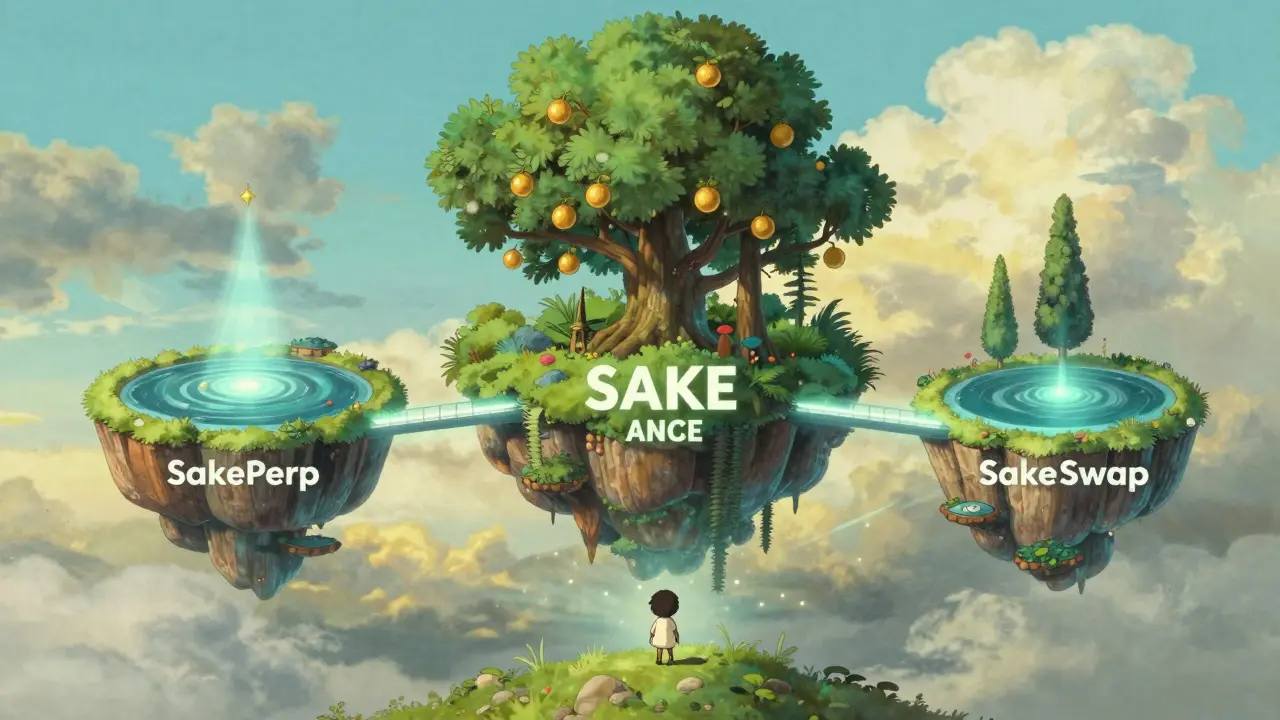
The confusion often starts because "SAKE" refers to an entire ecosystem, not just one platform. You have SakePerp for perpetual trading, SakeSwap for spot trading, and now Sake Finance for lending and borrowing. The current hype surrounds the Sake Finance "Sake Points" program, which acts as a retroactive airdrop mechanism. While exact token distribution numbers remain under wraps, the path to earning these points is clear. This guide breaks down exactly how to participate, maximize your yield, and avoid common pitfalls.
Understanding the SAKE Ecosystem Structure
Before you bridge any funds, it helps to know where your money is going. The SAKE token serves as the governance backbone for three distinct platforms. Understanding their roles prevents you from wasting gas fees on irrelevant activities.
| Platform | Primary Function | Airdrop Relevance |
|---|---|---|
| SakePerp | Perpetual contract trading using vAMM + Oracle price discovery | Historical participant rewards; revenue sharing via buybacks |
| SakeSwap | Spot trading AMM DEX and Initial Liquidity Offering (ILO) crowdfunding | Farming rewards for LPs; potential future ILO participant drops |
| Sake Finance | Lending and borrowing protocol on Soneium network | Current "Sake Points" accumulation for upcoming token distribution |
SakePerp stands out because it uses a virtual Automated Market Maker (vAMM) combined with external oracles. This means prices stay close to spot markets without relying solely on funding rates. For traders, this offers arbitrage opportunities against centralized exchanges like Binance. For the airdrop hunter, SakePerp is less about the current point grind and more about long-term holding value, as 50% of transaction fees go toward buying back and locking SAKE tokens as insurance.
SakeSwap handles the spot side. It features an Initial Liquidity Offering (ILO) system where projects raise funds. If a project fails its cap, smart contracts automatically refund tokens. Successful launches create immediate liquidity pools. Liquidity Providers (LPs) here earn 3% of withdrawal fees, which also feed into SAKE buybacks. While SakeSwap farming exists, the current focus for new entrants is overwhelmingly on Sake Finance.
Step-by-Step: How to Earn Sake Points
The Sake Finance airdrop operates on a "points" model. These points do not have a fixed dollar value today, but they will determine your share of the future SAKE token allocation. Here is the exact workflow to start accumulating them.
- Prepare Your Wallet: You will need a Web3 wallet compatible with the Soneium network. MetaMask and WalletConnect are the standard choices. Ensure you have some ETH or USDC.e on a major exchange like Binance to bridge later.
- Bridge Assets to Soneium: Use the Rhino Bridge to transfer your assets to the Soneium network. Do not forget to keep enough native tokens for gas fees. Running out of gas mid-transaction is the most common beginner mistake.
- Connect to Sake Finance: Navigate to the Sake Finance Rewards Program page. Connect your wallet and sign the participation confirmation message. This step registers your address for the retroactive snapshot.
- Complete Social Tasks: Follow SakeFinance on Twitter and join their Discord server. In Discord, you need to earn the "Sipper role." This proves community engagement and often unlocks bonus multipliers for your points.
- Supply Collateral: Deposit assets like ETH, WETH, ASTR, or USDC.e into the lending pool. Each asset has a specific collateral factor. For example, stablecoins usually offer higher collateral factors than volatile assets.
- Borrow Against Collateral: To maximize points, don't just deposit. Borrow other assets against your collateral. This increases your utilization of the protocol, which the algorithm rewards more heavily than simple deposits.
- Monitor Health Factor: Keep your health factor above 1.0. If it drops too low, your position gets liquidated, and you lose both your capital and your accumulated points momentum.

Maximizing Your Point Yield
Earning points is easy; maximizing them requires strategy. The Sake Finance protocol rewards activity, not just balance. Here is how to optimize your approach.
Diversify Your Assets: Don't put all your eggs in one basket. Supplying multiple supported assets (ETH, USDC.e, ASTR) can trigger different reward tiers. Check the dashboard for which assets currently offer the highest APY and point multipliers. Often, newer assets like ASTR might have aggressive incentives to attract initial liquidity.
Maintain Healthy Leverage: Since borrowing boosts your points, aim for a high supply-to-borrow ratio while staying safe. A good rule of thumb is to keep your health factor between 1.5 and 2.0. This shows the protocol you are an active, sophisticated user without risking immediate liquidation during minor market dips.
Engage with Layer3 Quests: Sake Finance integrates with Layer3, a quest platform. Completing tasks there adds extra points to your total. Connect your wallet to Layer3 and look for Sake Finance-specific campaigns. These are often low-effort, high-reward activities that separate casual users from serious participants.
Stay Active Regularly: The system favors frequent interactions. Logging in daily to check positions, rebalancing slightly, or claiming small rewards signals active usage. Dormant accounts, even with large balances, may receive lower multipliers compared to smaller but highly active wallets.
Risks and Pitfalls to Avoid
No DeFi interaction is risk-free. While chasing airdrop points, keep these dangers in mind.
- Smart Contract Risk: Sake Finance is built on Soneium, a relatively new network. While audits are standard, bugs happen. Never invest more than you can afford to lose. Treat the principal amount as a sunk cost if you are purely here for the airdrop.
- Liquidation Cascades: Crypto markets are volatile. If ETH drops 20% in a day, your borrowed position could get squeezed. Set up price alerts on CoinGecko or TradingView for your collateral assets. Consider over-collateralizing significantly if you plan to leave your position unmonitored for weeks.
- Gas Fee Spikes: Bridging assets and interacting with contracts costs gas. During network congestion, these fees can eat into your potential profits. Time your transactions during off-peak hours if possible.
- Phishing Scams: Always double-check URLs. There are dozens of fake "Sake Finance" sites designed to drain wallets. Bookmark the official site and never click links from random DMs on Discord or Twitter.
What Happens After the Snapshot?
Currently, the exact date for the SAKE token launch and the conversion rate of Sake Points to tokens is undisclosed. The team advises focusing on accumulation rather than speculation. Historically, protocols like this announce a snapshot date, after which further activity does not increase your allocation. Until then, the game is open.
Once the token launches, you will likely need to claim your SAKE tokens through a dedicated portal. These tokens will grant you governance rights across the entire ecosystem, including voting on fee structures for SakePerp and listing decisions for SakeSwap. Holding SAKE also entitles you to a share of the revenue generated by the platform's buyback mechanisms.
For those interested in the broader picture, the SAKE ecosystem aims to be a comprehensive DeFi hub. By combining spot, perp, and lending functionalities, it reduces the friction of moving assets between different protocols. Your participation now helps bootstrap liquidity for this integrated experience, which is why the rewards are structured to incentivize early adopters.
Is the Sake Finance airdrop free to participate in?
Partially. Connecting your wallet and completing social tasks is free. However, to earn significant points, you need to supply collateral and borrow assets, which requires owning crypto assets like ETH or USDC. You also pay gas fees for transactions on the Soneium network.
When will the SAKE token be distributed?
The exact launch date has not been announced. The team recommends continuing to accumulate Sake Points through active use of the Sake Finance protocol until an official announcement is made regarding the snapshot and distribution timeline.
Do I need to use SakePerp to get the Sake Finance airdrop?
No. The current "Sake Points" program is specific to the Sake Finance lending and borrowing protocol. While SakePerp and SakeSwap are part of the same ecosystem, their reward mechanisms are separate. Focus on Sake Finance for the current points campaign.
What is the minimum amount needed to start earning points?
There is no strict minimum, but due to gas fees and the need to maintain a healthy loan-to-value ratio, starting with at least $50-$100 worth of collateral is practical. Smaller amounts may result in points that are negligible compared to the effort and gas costs involved.
How do I track my Sake Points?
You can view your accumulated points directly on the Sake Finance dApp. Once your wallet is connected, navigate to the "Rewards" or "Points" section. This dashboard updates in real-time based on your supplied collateral, borrowed amounts, and completed quests.







Dominic Greco
August 4, 2026 AT 20:34 PMWake up sheeple! 🐑🚨 This is just another rug pull waiting to happen. They want your ETH, your data, and your soul. The 'Soneium' network? Sounds like a pharmaceutical drug for brain-dead investors. 💊 SakePerp, SakeSwap... it's all smoke and mirrors designed to distract you from the fact that they are printing tokens out of thin air to dump on you later. I've seen this playbook before. Always. They create hype, get retail to bridge funds (paying gas fees like good little lambs), and then vanish when the liquidity dries up. Don't be a sucker. Keep your keys cold and your wallet empty. 🔒❄️ #TrustNoOne
Sus Sawyer
August 5, 2026 AT 01:56 AMhey dominic calm down dude 😅 look i know de fi can be sketchy but this guide actually lays out the risks pretty well. smart contract risk is real yeah but thats why u dont put in more than u can lose right? i mean if u treat the principal as sunk cost then its basically free money if the token launches. i tried supplying some usdc.e yesterday and the points started ticking up almost instantly. super easy process once u bridge via rhino. just make sure u check ur health factor so u dont get liquidated lol. its not a scam its just work. supply borrow repeat. 🔄💰
Sean Rowland
August 6, 2026 AT 18:44 PMOh, how quaint. Another 'guide' written by someone who clearly misunderstands the fundamental mechanics of decentralized finance. The notion that one must 'provide liquidity' to earn an airdrop is merely a euphemism for subsidizing venture capital exits. Let us dissect this farce. You deposit assets into a smart contract-code that has likely been audited by a firm paid in stablecoins-and hope for the best. Meanwhile, the insiders are quietly accumulating SAKE tokens at near-zero cost. The 'points' system is a psychological trick, a gamification of exploitation. It creates a false sense of agency while the true value accrues to those who wrote the whitepaper. Do not mistake activity for equity. You are not an investor; you are a liquidity provider for their exit strategy. How utterly predictable.
Aryan MISHRA
August 7, 2026 AT 17:06 PMIncorrect. Assumptions. Wrong. Soneium is Layer 2. Low gas. High speed. Points are retroactive. Simple math. Supply > Borrow > Points. No need for drama. Just follow steps. Bridge ETH. Deposit. Wait. Token launch. Profit. Or loss. Your choice. Market dictates value. Not opinions. Check TVL. Check audits. Then decide. But mostly just do it. Time is money. Wasting words costs more than gas here.
Ryan Robinson
August 9, 2026 AT 03:24 AMhonestly aryan makes a good point even if he sounds like a robot lol. sean is overthinking it again with his big words. its just crypto bro. u do the tasks u get the points. if u think its a scam fine dont do it but most people here are trying to make a buck. i bridged like 200 bucks worth of eth just to test it out and it was super smooth. rhino bridge worked fine. took like 5 mins. now im just farming the points while i watch tv. low effort high reward potential. why complain? just participate or stay poor. no hard feelings tho. ✌️
Earl Kott65
August 10, 2026 AT 18:35 PMAH HA! 🎭 Look at them go! The masses flocking to the digital trough! 🐷 Is it greed? Is it FOMO? Or is it simply the human condition to chase shiny objects until they turn to dust? ⏳ I love the energy here. Dominic thinks it's a conspiracy (probably true!), Sean thinks it's a philosophical trap (also probably true!), and Ryan is just vibing with his $200. It's beautiful chaos. But hey, if you're gonna play the game, play it hard. Max out that leverage! Get that health factor to 1.5 and pray to the blockchain gods! 🙏 Because let's be real, if this thing moons, we're all buying yachts. If it rugs, we have great stories for the bar. So what's the worst that could happen? We learn something new about our own stupidity! 📉🚀
Ethan Yuwono
August 12, 2026 AT 13:18 PMthe nature of value is subjective. whether sake is worth anything depends on collective belief. the protocol provides structure but belief drives price. interesting dynamic. many focus on mechanics ignoring psychology. both matter. silence speaks volumes too. perhaps the quietest participants will benefit most. not everyone needs to shout their strategy. observation is also participation. in a way. watching the charts is a form of engagement. deep engagement. maybe deeper than clicking buttons. who knows. the market decides. eventually. always does.
Jack Delasquez
August 13, 2026 AT 02:43 AMyo guys just remember to check the layer3 quests too!!! i missed em at first and lost like 10% potential points smh. super easy stuff like following twitter and joining discord. takes like 2 mins. dont be lazy. also make sure u diversify. dont just put eth. try astr or usdc.e if rates are better. keeps the algo happy. lets gooo team sake!! 🚀🔥 wait did i spell everything right? my phone autocorrect is acting up today lol.
Harman Singh
August 13, 2026 AT 04:54 AMwhy is everyone so excited?? i feel tired just reading this. so much work for maybe nothing. i supplied some eth and now i cant sleep because im worried about liquidation. every time eth dips my heart stops. is it worth it? probaly not. but i already did it so might as well keep going. sigh. anyone else feeling overwhelmed by all these steps? bridge connect sign supply borrow monitor repeat. its exhausting. i miss when crypto was just buy and hold. now its a second job. ugh. anyway good luck to u all i guess. hope u get rich. i just want my peace of mind back.