DeFi risk: What you're really exposing yourself to in decentralized finance
When you hear DeFi risk, the potential for losing money in decentralized finance protocols due to technical flaws, scams, or market volatility. Also known as crypto investment risk, it’s not just about prices going down—it’s about your funds vanishing because a platform you trusted has no real users, no audits, or no backup plan. Most people think DeFi risk means crypto markets crash. But the real danger? You’re putting money into something that doesn’t actually work.
Take liquidity mining, earning crypto rewards by locking up funds in DeFi pools to help traders swap tokens. Sounds simple, right? But if the pool has $15 in daily volume like DPEX.io, or zero users like MonoSwap v3 (Blast), your rewards are fake. You’re not earning—you’re funding a ghost. And then there’s impermanent loss, the hidden drag on your funds when token prices in a liquidity pool shift dramatically. It doesn’t always show up in your wallet balance, but it eats into your returns silently. KingDeFi (KRW) and Nasdaq666 (NDQ) look like DeFi projects on paper, but their TVL is under $1,000. They’re not DeFi—they’re bait.
And don’t get fooled by airdrops. SUNI, TacoCat, ZHT, PNDR—they all promise free tokens. But if there’s no roadmap, no trading volume, and no team behind it, that token is worth $0. These aren’t opportunities. They’re traps built on CoinMarketCap listings that anyone can pay to appear on. DeFi risk isn’t just technical. It’s psychological. You’re being sold hope. The platforms that survive—like Chainlink or Hop Protocol—solve real problems. They connect blockchains, bring real data into smart contracts, and have users who depend on them. The rest? They’re digital slot machines with a blockchain label.
Every post in this collection shows the same pattern: a platform with no users, no audits, no transparency. GDEX, Fairdesk, BTB.io, INRTOKEN, Purple Bridge—they all vanish when the money runs out. Meanwhile, Swiss banks like Sygnum and regulated exchanges like OKX and Coinbase offer real custody, real security, and real accountability. DeFi risk isn’t about blockchain technology. It’s about who’s behind the code. And if you can’t find their name, their address, or their legal registration—you’re not investing. You’re gambling.
Below, you’ll find real breakdowns of the most dangerous DeFi traps, the ones that look promising but collapse fast. No fluff. No hype. Just what actually happens when you put your money where the lights are off.
 1 Dec
1 Dec
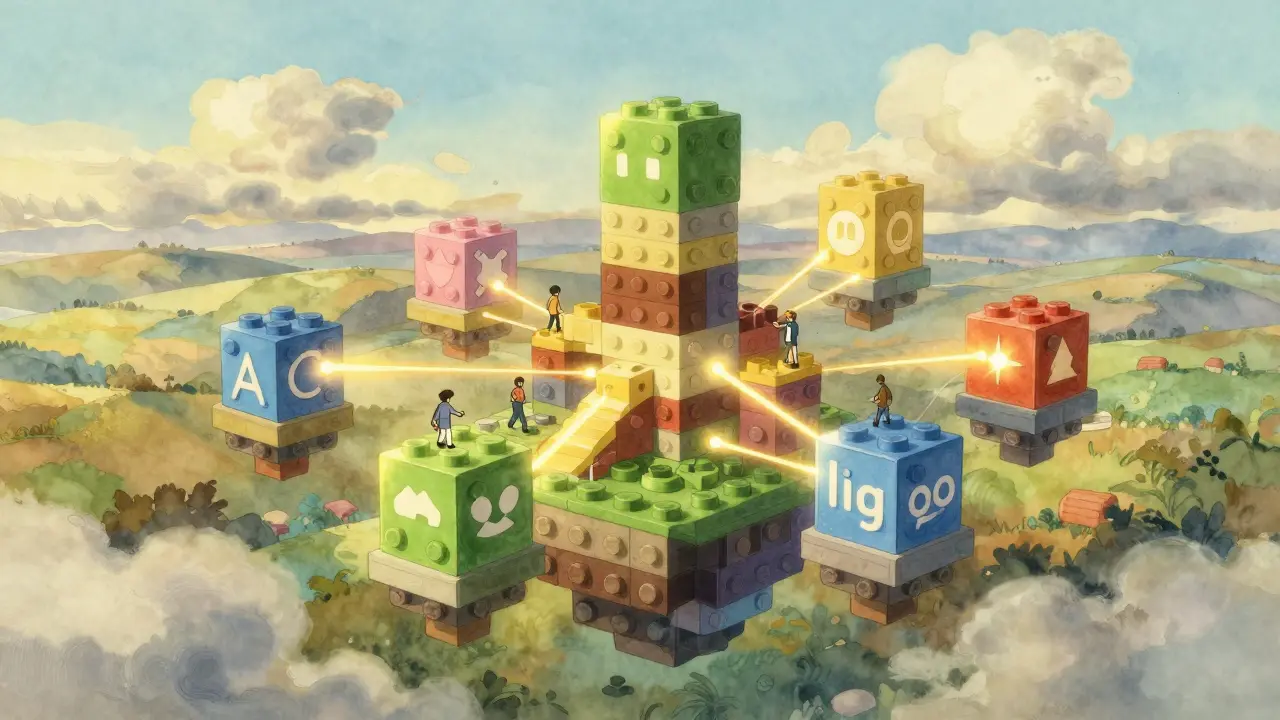
Future of DeFi Composability: How Money Legos Are Reshaping Finance by 2025
DeFi composability lets financial protocols interact like LEGO blocks, enabling rapid innovation and high yields - but also systemic risk. By 2025, it's reshaping finance with cross-chain integrations, AI-driven yield optimization, and intent-based interfaces - but safety and regulation are catching up.