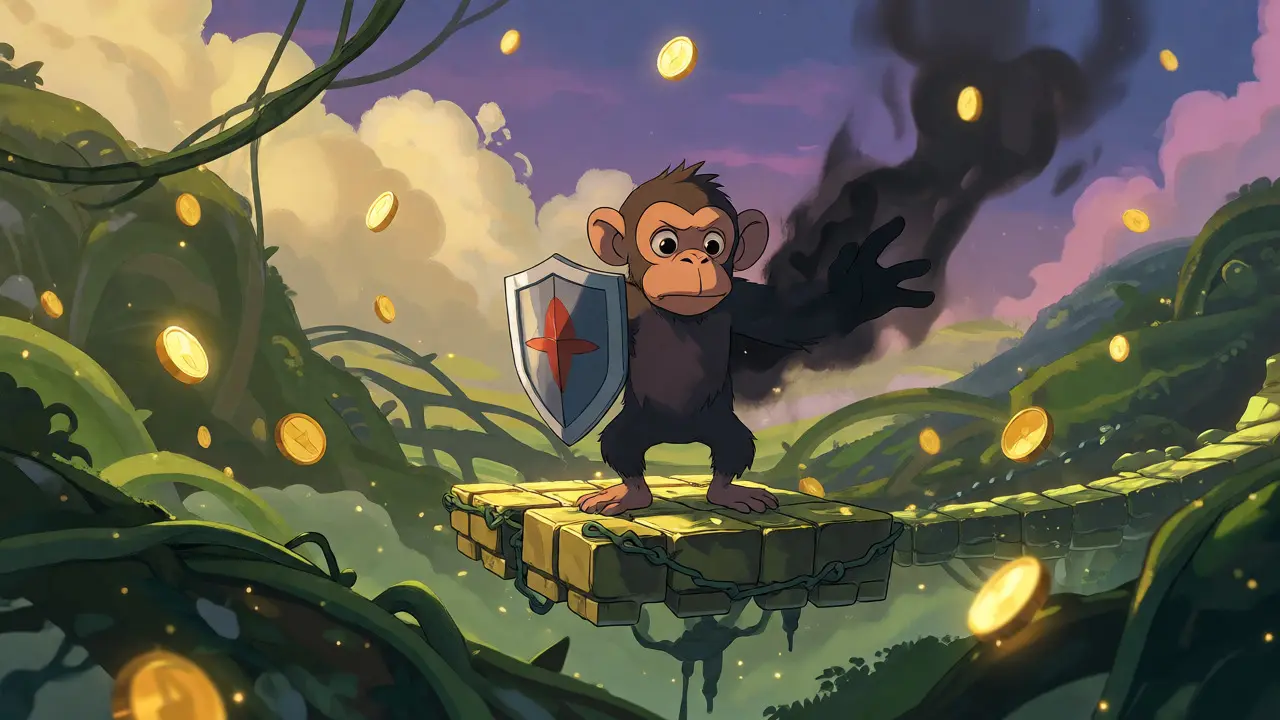
You've probably seen the phrase "Trust me bro" used sarcastically in crypto Twitter when someone promises moonshots without proof. But what if a token actually tried to fix that broken trust? $TRUST ME BROs is a cryptocurrency project built on the Virtuals Protocol ecosystem, aiming to turn a meme into a utility-driven asset for traders who are tired of rug pulls and paid shills.
If you're wondering whether this micro-cap token has real legs or if it's just another fleeting joke, you need to look past the name. This isn't just about vibes; it's about an AI agent framework, a specific trader's intellectual property, and a community trying to build something transparent on the Base network. Here’s exactly what TRUST is, how it works, and where it stands today.
The Core Concept: Meme Culture Meets AI Utility
Most meme coins rely purely on hype. They launch, spike, and often vanish because there's no underlying product. TRUST tries to flip the script. It positions itself as a counterpoint to the "rug-pull, paid-shill, pump-dump" cycle that plagues many low-cap altcoins. The idea is simple: bind the token's value to actual trading intelligence and community access rather than empty promises.
The project lives within the Virtuals.io ecosystem, which is known for its focus on autonomous AI agents. By leveraging the Virtuals Protocol, TRUST integrates an AI agent component. While the technical specifics of this AI implementation remain somewhat opaque, the goal is clear-use AI to provide value to holders, not just speculation fuel.
What makes this unique is the IP binding. The token is tied to the reputation and intellectual property of @Degen__Ape__, an established trader in the crypto space. In a market full of anonymous developers, linking a token to a known persona creates a different kind of accountability. If @Degen__Ape__ loses credibility, the token likely suffers too. It’s a high-stakes alignment mechanism.
Tokenomics and Supply Structure
Understanding the supply side helps you gauge inflationary pressure. TRUST has a maximum supply capped at 1 billion tokens. As of late 2026, circulating supply estimates hover between 920 million and nearly 1 billion, depending on which data aggregator you check. CoinGecko reports around 920 million in circulation, while Bybit shows closer to 996.58 million. This discrepancy highlights the fragmented nature of data for smaller tokens.
The token operates on the Base blockchain, Ethereum's Layer 2 solution. This choice reduces transaction fees significantly compared to mainnet Ethereum, making it more accessible for retail traders. The contract address on Uniswap is 0xc841b4ead3f70be99472ffdb88e5c3c7af6a481a, serving as the primary source of truth for on-chain activity.
A notable feature in the tokenomics is the weekly liquidity injection mechanism. Instead of letting liquidity dry up post-launch, the project aims to inject consistent market support. This is designed to smooth out volatility, though with such a small market cap, even minor trades can cause significant price swings.

Utility: What Do Holders Actually Get?
Holding TRUST isn't just about watching a chart go up. The project offers token-gated alpha access. This means holders get entry to a private trading community. Inside, they receive real-time signals from seasoned traders and access to proprietary AI-assisted trading tools. For active traders, this could be worth more than the speculative upside of the token itself.
This model attempts to create intrinsic value. If the community provides profitable signals, demand for the token should theoretically increase because non-holders want access to those insights. It transforms the token from a passive asset into a key for a service.
Market Performance and Price Volatility
Let’s talk numbers, because they tell a cautionary tale. TRUST experienced massive volatility. Its all-time high was recorded at approximately $3.004648 USD on December 30, 2024. That’s a huge peak for a meme-adjacent token. However, like many assets in that category, it faced a severe correction. The all-time low hit around $0.0006615 USD in April 2025.
As of September 2026, the token trades well below those highs. Current prices vary wildly across platforms due to thin liquidity:
| Platform | Price (USD) | 24h Volume (USD) | Status |
|---|---|---|---|
| Binance (Tracker) | $0.001567 | $56,765 | Tracked only, not listed for trading |
| CoinMarketCap | $0.0001101 | $4.71 | Data Aggregator |
| CoinGecko | $0.0001137 | $142.14 | Data Aggregator |
| Bybit | $0.00013227 | $21,260 | Listed Exchange |
| Uniswap (DEX) | $0.000118 | N/A | Primary Trading Venue |
Notice the price discrepancies. Binance tracks it at over $0.0015, while other sources show it near $0.00011. This gap exists because Binance doesn’t list TRUST for direct trading; it only aggregates price data. Real trading happens mostly on decentralized exchanges like Uniswap and Matcha, or centralized venues like Bybit. The low volume figures-sometimes under $100 on aggregators-signal extremely thin liquidity.
Currently, the token sits around rank #2961 on CoinGecko, marking it as a micro-cap asset with a market capitalization hovering near $100K-$110K. This size makes it highly susceptible to manipulation and sudden moves based on single large trades.

Risks and Limitations
Investing in TRUST comes with distinct risks. First, the lack of major centralized exchange listings limits accessibility. You can’t buy it directly on Coinbase or Binance. This restricts the potential buyer pool to those comfortable using DEXs or smaller CEXs. Second, the 91% drop from its all-time high indicates significant capital destruction for early buyers. Recovering from such a deep drawdown requires substantial new capital inflows.
Additionally, the reliance on a single trader’s IP (@Degen__Ape__) is a double-edged sword. It adds authenticity but also centralizes risk. If that individual steps back or faces controversy, the project’s narrative weakens instantly. There’s also the question of regulatory status, which remains unaddressed in public documentation.
Who Should Consider TRUST?
TRUST isn't for everyone. It suits traders who believe in the Virtuals Protocol ecosystem and want exposure to AI-agent narratives on Base. It appeals to those skeptical of anonymous teams who prefer projects with identifiable faces. However, it’s not a safe haven. The thin liquidity means slippage will hurt you if you try to move large amounts. Treat it as a high-risk, high-reward play on community-driven utility rather than a blue-chip investment.
Is TRUST ME BROs listed on Binance?
No, TRUST ME BROs is not officially listed for trading on Binance. Binance provides price tracking data for the token, but users cannot buy or sell it directly through the Binance exchange interface. Trading primarily occurs on decentralized exchanges like Uniswap and some smaller centralized exchanges like Bybit.
What blockchain does TRUST run on?
TRUST operates on the Base blockchain, which is a Layer 2 scaling solution for Ethereum. This allows for lower transaction fees and faster settlement times compared to the Ethereum mainnet, making it more accessible for frequent traders and micro-transactions.
What is the utility of holding TRUST tokens?
Holders gain access to exclusive token-gated communities that provide real-time trading signals, proprietary AI-assisted tools, and alpha information from established traders. This utility aims to provide tangible value beyond mere price speculation by offering actionable trading intelligence.
Why is there a price difference between exchanges?
The price differences arise from thin liquidity and fragmented markets. Since TRUST is not widely listed on major centralized exchanges, arbitrage opportunities are limited. Prices on aggregators may reflect stale data or isolated trades on specific DEX pools, leading to significant discrepancies compared to tracked rates on platforms like Binance.
Who is behind the TRUST project?
The project is bound to the intellectual property of @Degen__Ape__, a recognized trader in the crypto community. It is developed within the Virtuals.io ecosystem, leveraging their framework for AI agents. This association serves as a credibility signal in a market often dominated by anonymous development teams.





0 Comments