
Imagine trying to buy a coffee with Bitcoin in Baghdad. You pull out your phone, open your wallet, and try to scan the QR code. The merchant looks at you like you’re speaking an alien language. Then, their bank declines the transaction-not because the tech failed, but because the Central Bank of Iraq has declared it illegal.
If you are looking to trade, invest, or even just hold digital assets while living in or doing business with Iraq, you need to understand one thing immediately: the country is one of the most hostile environments for private cryptocurrency in the world. As of 2026, Iraq remains on the short list of nations maintaining a complete, hardline ban on crypto transactions. But why? And what does this mean for the future of money in the region?
The Legal Wall: How the Ban Works
The restriction isn’t just a vague suggestion; it’s written in stone through specific banking regulations. The cornerstone of this policy is CBI Circular No. (125/5/9), issued back in November 2021. This document explicitly told all supervised financial institutions-banks, non-bank intermediaries, and payment providers-to stop dealing with virtual assets cold turkey.
Here is what that means for you:
- No Legal Tender Status: Cryptocurrencies are not recognized as money in Iraq. If someone owes you Bitcoin, they can legally pay you in Iraqi Dinar instead, and you have no legal recourse to demand the crypto.
- Institutional Blockade: Banks cannot process payments for crypto exchanges. They cannot offer custody services. They cannot facilitate any transfer related to digital coins.
- Payment Card Bans: A follow-up directive in March 2022 tightened the screws further. It prohibited the use of payment cards and e-wallets for speculative trading or crypto transactions. This cut off the easiest way for everyday users to move fiat money into digital wallets.
This regulatory stance aligns Iraq with global anti-money laundering standards set by the Financial Action Task Force (FATF). The Central Bank argues that without strict controls, the country becomes a haven for illicit finance. However, the result is a financial ecosystem where private digital currency effectively doesn’t exist in the formal sector.
Why So Strict? The Economic Context
To understand the ban, you have to look at the economy. Iraq has faced severe liquidity constraints for years. The government often struggles to print enough physical cash to meet monthly budgetary needs, which range between 18 and 20 trillion dinars.
Consider the shock of 2020. The government devalued the Iraqi dinar from 1,182 to 1,450 per US dollar. Overnight, prices for food and essentials surged. Public trust in the local currency took a hit. In this environment, policymakers see decentralized cryptocurrencies not as innovation, but as a threat to monetary sovereignty. If people start hoarding Bitcoin or stablecoins to escape inflation, the Central Bank loses its ability to control interest rates and manage the money supply.
Furthermore, there is a cultural and religious dimension. In 2018, the Supreme Fatwa Authority of the Kurdistan Regional Government issued a ruling against OneCoin (a notorious scam). While this targeted a specific fraud, it reinforced a broader skepticism toward unregulated digital assets among religious leaders, adding ideological weight to the financial regulations.
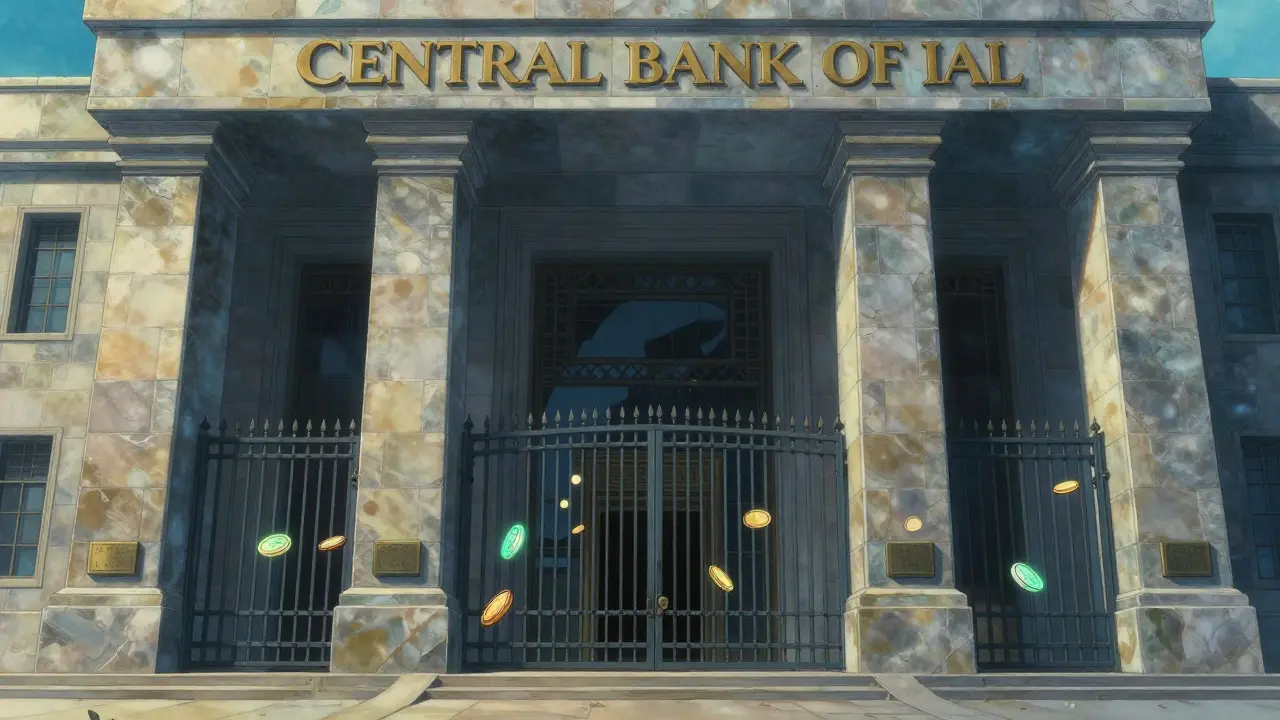
The Underground Reality: Does Anyone Use Crypto?
Officially, the answer is no. Unofficially, the answer is complicated. Despite the blanket ban, informal trading persists. Why? Because human nature seeks alternatives when the system is restrictive.
However, unlike in countries like China, where massive underground mining and trading networks operate with some sophistication, Iraq’s crypto activity is fragmented and risky. There is no clear enforcement mechanism targeting individual users directly, but the risk is real. If your bank detects suspicious flows linked to crypto, they can freeze your account under Anti-Money Laundering (AML) laws. You aren’t necessarily going to jail for holding Bitcoin, but you might lose access to your life savings if the bank decides your activity violates their compliance protocols.
This creates a "legal gray area." Individuals operate in ambiguity. There is no criminal code specifically punishing possession of crypto, but the lack of legal protection means if you get scammed, you have nowhere to turn. The disconnect between official prohibition and practical enforcement highlights a gap in the state’s technological capacity to monitor every digital transaction.

The Twist: Iraq’s Own Digital Currency
Here is where it gets interesting. While banning private crypto, the Central Bank of Iraq is actively building its own version. In March 2025, Mazhar Mohammed Saleh, financial advisor to the Prime Minister, announced that the CBI is moving toward issuing a Central Bank Digital Currency (CBDC).
This isn’t a contradiction; it’s a strategy. The government wants the efficiency of digital money without the loss of control associated with decentralized networks. Here is what they hope to achieve with the Iraqi CBDC:
| Feature | Private Crypto (Banned) | Iraqi CBDC (Planned) |
|---|---|---|
| Control | Decentralized / User-controlled | State-controlled / Centralized |
| Transparency | Pseudonymous | Fully traceable by government |
| Cash Leakage | High risk of capital flight | Reduced leakage / Tracked spending |
| Cost | Variable network fees | Lower printing/distribution costs |
The goal is to reduce the cost of printing paper money, track spending trends to combat corruption, and ensure financial inclusion. But critics warn of the downside. With a CBDC, every transaction is visible to the state. In a country where political rights and civil liberties score low on international indices, this level of financial surveillance raises significant human rights concerns.
What This Means for Businesses and Investors
If you are a foreign investor or a business operating in Iraq, the message is clear: keep your crypto activities separate from your Iraqi banking operations. Do not expect your local bank to help you convert dinars to USDT. Do not expect legal protection if a smart contract fails.
For now, the regulatory framework is static. The CBI’s 2022 directive remains the guiding principle. Until parliament passes comprehensive digital asset legislation, the status quo is a hard ban on private crypto paired with aggressive development of state-controlled digital currency.
The irony is palpable. Iraq rejects the technology of decentralization while racing to adopt the technology of centralization. For the average citizen, this means waiting. Waiting for the CBDC to launch, waiting for potential regulatory shifts, and navigating a financial system that is slowly digitizing-but only on the government's terms.
Is owning cryptocurrency illegal in Iraq?
Owning cryptocurrency is not explicitly criminalized for individuals, but it lacks legal recognition. The Central Bank of Iraq prohibits banks and financial institutions from processing crypto transactions. This means while you won't likely be arrested for holding Bitcoin, you have no legal recourse if you are scammed, and your bank may freeze your accounts if they detect crypto-related activity.
When will Iraq launch its Central Bank Digital Currency (CBDC)?
As of early 2026, the Central Bank of Iraq is in the research and development phase for its CBDC. Announcements in March 2025 confirmed the intent to issue a digital dinar to replace paper currency gradually. No specific launch date has been finalized, but the project is a high priority for the government to improve financial tracking and reduce printing costs.
Can I use PayPal or credit cards to buy crypto in Iraq?
Generally, no. The CBI’s 2022 directive explicitly prohibits the use of payment cards and e-wallets for speculative trading or cryptocurrency transactions. Most international payment processors also restrict services in Iraq due to these regulatory bans and high-risk classifications.
Why did the Central Bank of Iraq ban cryptocurrency?
The ban was driven by concerns over financial crimes, market volatility, and consumer protection. Additionally, the government aims to maintain control over monetary policy and prevent capital flight. By banning private crypto, the CBI hopes to steer the population toward a state-controlled digital currency that allows for better surveillance of financial flows.
How does Iraq's crypto ban compare to other countries?
Iraq is one of only about ten nations worldwide that maintain a complete ban on cryptocurrency transactions. Unlike countries like India or Turkey, which have taxes and regulations but allow trading, Iraq prohibits institutional involvement entirely. This makes Iraq’s stance significantly more restrictive than most emerging markets.






Don Fizy
August 12, 2026 AT 13:45 PMHey folks! 👋 Just wanted to drop a quick note here. If you're navigating this mess, remember that the CBI Circular No. (125/5/9) is your main enemy right now. It basically tells banks to ignore crypto entirely. So if you are thinking of moving funds, keep it off the grid or use peer-to-peer methods carefully. Stay safe out there! 💪
Dominic Greco
August 13, 2026 AT 06:37 AMWAKE UP SHEEPLE 🐑 The CBDC isn't about efficiency, it's about TOTAL CONTROL. They want to track every single coffee you buy in Baghdad. Once they have the digital dinar, they can turn off your money with a keystroke. This is exactly what the globalists planned since Davos. Don't let them steal your sovereignty! 🚨👁️🗨️💸
Prudence Flemming
August 14, 2026 AT 00:49 AMthe dichotomy is fascinating. state power seeks to monopolize value representation while simultaneously fearing the liquidity it cannot control. it is not merely a ban on technology but a ban on alternative epistemologies of wealth. when the central bank declares bitcoin alien language it is speaking to the fear of decentralization as an existential threat to the social contract. the cbdc is thus not a solution but a surveillance apparatus disguised as innovation.
Lance Jantz
August 15, 2026 AT 04:05 AMOh, darling Prudence, you make it sound so clinical. But think of the drama! A merchant in Baghdad looking at a QR code like it’s a cursed artifact from another dimension. It’s almost poetic, isn’t it? The sheer absurdity of trying to pay for a latte with decentralized trust in a country where the government struggles to print enough paper notes for its own payroll. It’s a tragedy written in blockchain ink, my friends. Truly heartbreaking yet strangely beautiful in its futility.
Sean Rowland
August 16, 2026 AT 16:45 PMIt is quite preposterous how these analysts fail to see the obvious contrarian truth. While everyone panics about the ban, the real story is the lack of enforcement capacity. The state claims total control but lacks the technological infrastructure to monitor every transaction. Thus, the ban is largely performative theater designed to appease international watchdogs like the FATF rather than a genuine impediment to underground activity. One must question the efficacy of such draconian measures when the underlying economic reality remains fragmented and unregulated by default.
Sus Sawyer
August 18, 2026 AT 04:41 AMhey guys just wanna say that u gotta be super careful with ur accounts. if the bank sees weird stuff they will freeze it no questions asked. i know some ppl who lost access to their savings cuz they tried to trade usdt. dont risk it unless u have cash on hand. stay sharp and keep yur assets liquid but offline if possible. good luck!
Aryan MISHRA
August 18, 2026 AT 10:14 AMThe regulatory framework is fundamentally flawed; however, the economic necessity drives the policy. Liquidity constraints are severe. The devaluation in 2020 was catastrophic. Trust in the dinar is low. Therefore, the ban is a rational response to capital flight risks. Do not expect leniency. Adapt or perish. The CBDC is inevitable. Prepare accordingly.
Ryan Robinson
August 18, 2026 AT 19:17 PMi mean its kinda wild how they ban private crypto but build their own version. feels like saying no one can drive cars except the government. but hey maybe it works for them. just hope they dont lose the keys to the kingdom lol. peace out.
Ethan Yuwono
August 19, 2026 AT 17:18 PMthere is a deep philosophical tension here between individual autonomy and collective security. the state argues that without strict controls the nation becomes a haven for illicit finance which threatens the broader social fabric. yet the citizen loses agency over their own wealth. it is a classic tradeoff where privacy is sacrificed for perceived stability. one must weigh the cost of surveillance against the benefit of reduced corruption.
Jack Delasquez
August 20, 2026 AT 07:10 AMthats crazy man. i heard the cbdc launch is gonna be huge but also scary. hope they get it right. anyway good post thanks for sharing the info.