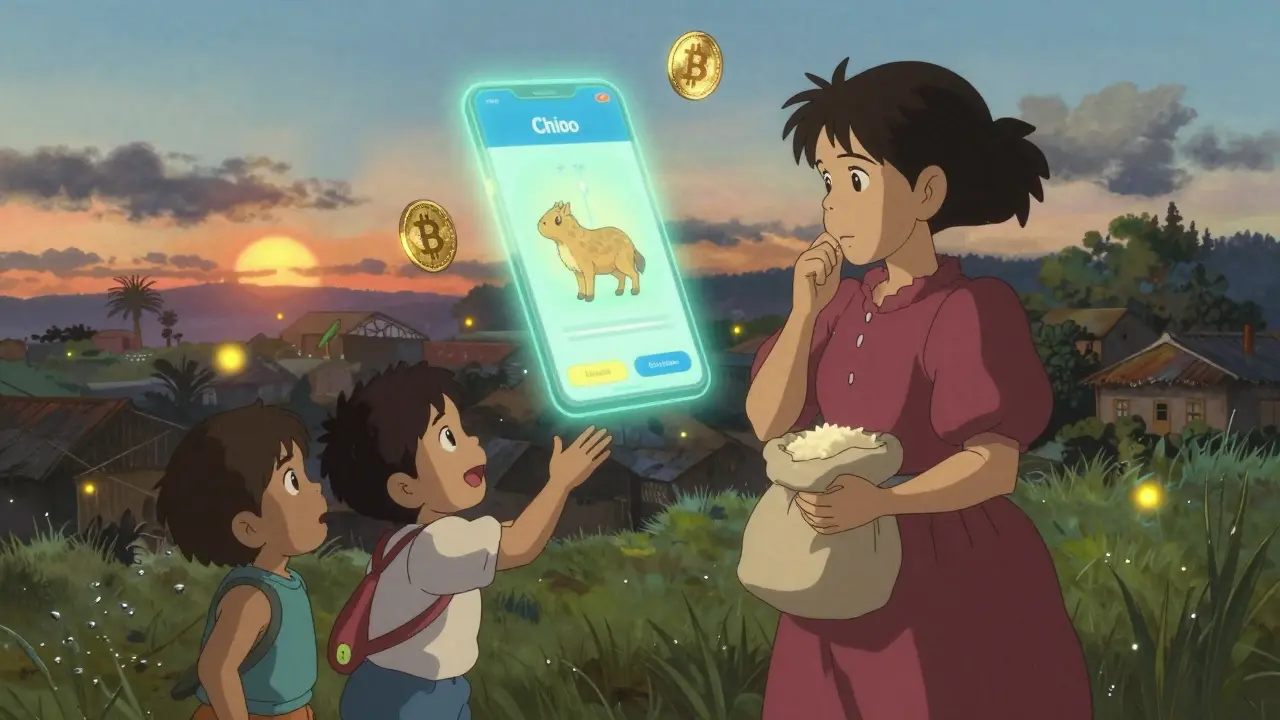
El Salvador didn’t just try Bitcoin. It made it legal tender. And it built a national wallet - Chivo - to force everyone to use it. This wasn’t a experiment. It was a revolution. But three years later, the story isn’t about innovation. It’s about what happens when a government tries to rewrite money overnight - and the people are left holding the bag.
Why Chivo Was Born
In 2021, El Salvador was drowning in remittances. Over 20% of its GDP came from money sent home by Salvadorans living abroad. Most of it flowed through Western Union or MoneyGram, where fees ate up 10%, sometimes 15%, of every $200 sent. For families living paycheck to paycheck, that meant less food, less medicine, less hope. President Nayib Bukele’s answer? Make Bitcoin legal tender. And create the Chivo wallet - a free, government-backed app that let people send and receive Bitcoin with zero fees. The idea was simple: cut out the middlemen. Give people direct access to a global currency. And to get them to try it, the government gave every citizen who downloaded Chivo $30 in Bitcoin. It worked - at first. Within weeks, 46% of the population had downloaded the app. That’s more than 2.5 million people. For a country where 70% had no bank account, this felt like liberation.The Technical Nightmare
But Chivo wasn’t built for mass adoption. It was built for a demo. The software, developed by AlphaPoint, crashed on day one. Users couldn’t log in. Payments got stuck. Some people received $30 - then lost it because the app glitched and deleted their balance. Others got locked out after a security breach that exposed personal data. The government blamed internet outages. Telecom providers blamed the app. Users blamed the government. By the end of 2021, half the people who downloaded Chivo had uninstalled it. Why? Because it was unreliable. If your $30 vanishes because of a bug, you don’t trust it again.Bitcoin’s Volatility Hit Hard
Here’s the thing no one talked about: Bitcoin isn’t stable. It’s not meant to be. But El Salvador treated it like cash. In September 2021, Bitcoin was at $50,000. By December, it dropped to $40,000. By mid-2022, it hit $16,000. That meant the $30 the government gave you? It was worth $10. Some people cashed out immediately. Others held on - and watched their savings evaporate. Imagine this: You’re a mother in Santa Ana. You get $30 in Bitcoin. You use it to buy rice, beans, and medicine. Three weeks later, the price crashes. You’re not just out of money - you’re out of trust. You can’t explain to your kids why the money they counted on disappeared. That’s not innovation. That’s financial risk dumped on ordinary people.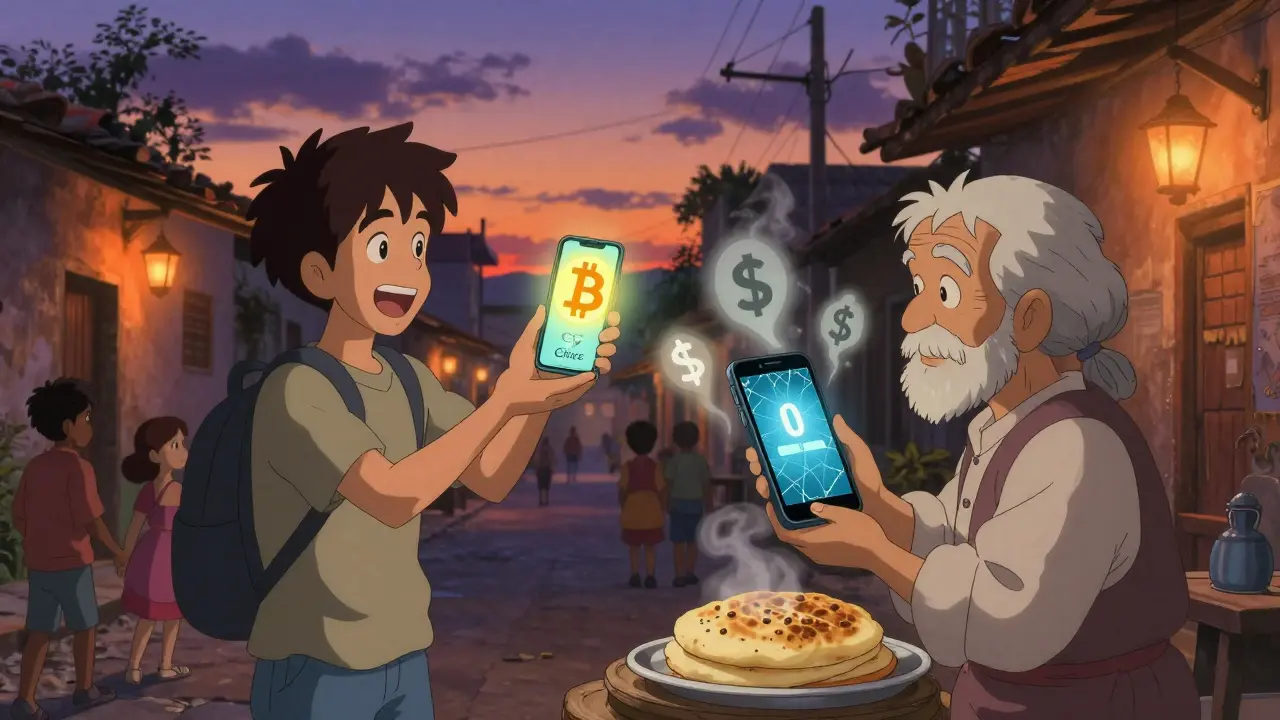
The IMF’s Ultimatum
By 2024, El Salvador’s economy was under pressure. Inflation was rising. The peso was weakening. The country needed a $1.4 billion loan from the International Monetary Fund. The IMF said: “Stop using Bitcoin as legal tender.” Why? Because it made the economy unpredictable. Banks wouldn’t lend. Investors pulled out. The IMF didn’t care if Bitcoin was “revolutionary.” It cared about stability. And in January 2025, El Salvador quietly removed Bitcoin’s legal tender status. That didn’t mean Bitcoin was banned. It just meant the government stopped forcing businesses to accept it. Chivo still worked - but now, it was just another app.Who Actually Used Chivo?
A 2024 survey found that 8 out of 10 Salvadorans never used Bitcoin for daily transactions. Only 12% used Chivo regularly. The rest? They used it once - for the $30 - then forgot about it. The real winners? Remittance companies. When Chivo launched, Western Union saw a drop in volume. But by 2023, they adapted. They started offering Bitcoin payouts. Now, they take a 5% fee instead of 15%. That’s still cheaper than before - but Chivo didn’t kill them. It just forced them to change. The people who benefited most? Young tech-savvy Salvadorans with family abroad. They used Chivo to receive money from the U.S. or Spain. They held Bitcoin as an investment. They didn’t use it to buy groceries. They used it to send money home - and that’s the only real win.
What’s Left?
El Salvador didn’t fail. It learned. In March 2025, the government bought more Bitcoin - adding 1,200 coins to its reserve, bringing the total to 6,102. That’s worth about $500 million. This isn’t about daily use anymore. It’s about holding Bitcoin as a national asset - like gold. Chivo is still active. But now, it’s a private tool. No government backing. No $30 bonuses. No legal requirement to use it. And that’s probably for the best. The Digital Assets Issuance Act of 2023 created the National Commission of Digital Assets (CNAD). That’s the new rulebook. It doesn’t force Bitcoin on anyone. It just lets businesses use crypto - if they want to. El Salvador didn’t become a Bitcoin nation. It became a Bitcoin lab. And what it proved is simple: You can’t legislate adoption. You can’t force trust. And you can’t turn a volatile asset into stable money without consequences.What You Can Learn
This isn’t just about El Salvador. It’s about every country watching this experiment. - Bitcoin isn’t cash. It’s a speculative asset. Treating it like currency invites chaos. - Technology doesn’t fix poverty. Giving people an app doesn’t solve lack of education, infrastructure, or financial literacy. - Forced adoption fails. People don’t trust mandates. They trust value. If the value disappears - so does the trust. - Remittances can be cheaper. But not by forcing Bitcoin. By improving banking access. By lowering fees. By competition. El Salvador’s story isn’t a blueprint. It’s a warning. The world watches. And now, everyone knows: You don’t need to make Bitcoin legal tender to use it. You just need to let people choose.Did Chivo wallet really help Salvadorans save money on remittances?
Only for a small group. While Chivo offered zero fees for Bitcoin transfers, most Salvadorans didn’t use it regularly. Those who did - typically young people with family abroad - saved money compared to Western Union’s 10-15% fees. But for the majority, the $30 incentive was a one-time perk. Once Bitcoin’s price dropped and the app glitched, usage plummeted. The real savings came not from Chivo, but from competition: Western Union and MoneyGram lowered fees to stay relevant.
Why did the IMF demand Bitcoin be removed as legal tender?
The IMF said Bitcoin’s extreme volatility made El Salvador’s economy unstable. When Bitcoin dropped from $50,000 to $16,000, the value of government-held Bitcoin and citizen savings crashed. Banks hesitated to lend. Investors pulled out. The country needed a $1.4 billion loan, and the IMF refused unless Bitcoin lost its legal tender status. Stability mattered more than innovation.
Is Chivo wallet still operational today?
Yes, but it’s no longer government-backed. After January 2025, when Bitcoin lost its legal tender status, Chivo became just another cryptocurrency app. No $30 bonuses. No mandatory use. No government guarantee. It still works for users who want to send or receive Bitcoin, but it’s no longer the centerpiece of national policy.
What happened to the $30 that people received?
Many users cashed out immediately, converting Bitcoin to USD within the app. Others held it - and lost money when Bitcoin’s price dropped. Some lost access entirely due to app glitches or security breaches. The $30 was meant to spark adoption, but without education or stable value, it became a short-term experiment - not a financial lifeline.
Are Salvadorans still using Bitcoin today?
A small number - mostly tech-savvy users, businesses, and remittance receivers - still use Bitcoin. But less than 15% of the population uses it regularly. Most people rely on the U.S. dollar. The government no longer pushes Bitcoin for daily use. Instead, it holds Bitcoin as a reserve asset and lets private companies decide whether to accept it.
Could another country copy El Salvador’s model?
Unlikely. El Salvador’s situation was unique: a small economy, heavy reliance on remittances, low banking access, and a strongman government willing to override opposition. Most countries lack the political will - or the economic vulnerability - to risk financial instability. Central banks are now focused on their own digital currencies (CBDCs), not adopting Bitcoin. Chivo’s legacy isn’t a model - it’s a cautionary tale.





Konakuze Christopher
March 17, 2026 AT 07:34 AMThis whole Bitcoin experiment was a dictatorship in disguise. They didn't care about the people-they cared about headlines. $30? That's a bribe, not a solution. And now? The app's a ghost town. Classic socialist tech fantasy.
Angelica Stovall
March 19, 2026 AT 06:15 AMI told you this would fail. Governments can't just slap a blockchain app on poverty and call it innovation. The volatility killed it. The glitches killed it. The arrogance killed it. This isn't progress. It's a cautionary tale with extra drama.
Taylor Holloman.
March 19, 2026 AT 06:29 AMYou know... I think it's kinda beautiful how they tried. Even if it crashed. Even if the price dropped. Even if people lost money. They didn't just sit there. They tried something wild. That takes guts. Maybe it wasn't perfect-but it was real.
Carol Lueneburg
March 19, 2026 AT 09:29 AMI love how people act like Bitcoin is the villain here 😭 The real villain? The remittance companies charging 15% to poor families. Chivo gave them a shot. Sure, the app sucked. But imagine if we’d just let it evolve? Instead of shutting it down, we should’ve fixed it. 💔
Bryan Roth
March 20, 2026 AT 12:32 PMLet’s not pretend this was just about tech. It was about dignity. People didn’t want a government app-they wanted to stop paying 15% just to feed their kids. Chivo didn’t fix everything, but it started a conversation. And now? The fees dropped. That’s a win. Even if the app’s dead, the movement lives.
Zachary N
March 20, 2026 AT 21:15 PMThere’s a deeper layer here that most people miss. The real failure wasn’t Bitcoin or Chivo-it was the lack of financial literacy infrastructure. You can’t hand someone a $30 Bitcoin bonus and expect them to navigate volatility, private keys, and exchange rates without education. The government skipped the basics: workshops, community hubs, multilingual guides. They built a Ferrari and gave it to people who’d never driven a bicycle. Of course it crashed. This wasn’t a tech problem-it was a human one. We need to stop treating financial inclusion like a software update.
Sahithi Reddy
March 22, 2026 AT 00:55 AMChivo was never about Bitcoin. It was about cutting out the middlemen. And it worked for some. The app glitched? Fix it. The price dropped? Learn. The IMF panicked? Good. Let them panic. Salvadorans didn’t need permission to try something new. They just needed a chance.
George Hutchings
March 22, 2026 AT 18:39 PMI’ve seen this movie before. First world countries throw tech at third world problems and call it ‘disruption.’ Meanwhile, the real issue? No reliable electricity. No consistent internet. No banking access. You can’t solve poverty with an app that needs 4G. Chivo was a shiny distraction. The real win? Remittance companies lowering fees because they were scared. That’s market pressure-not innovation.
Steph Andrews
March 24, 2026 AT 11:56 AMI’m from El Salvador. My mom used Chivo once. Got her $30. Lost it because the app froze. She didn’t blame Bitcoin. She blamed the lack of support. No one taught her how to use it. No one checked in. No one cared. The government gave us a tool and walked away. That’s not revolution. That’s neglect. And it hurts.
S F
March 26, 2026 AT 11:28 AMThe IMF is a puppet of Wall Street. Of course they wanted Bitcoin gone. They don’t want decentralized money. They want control. And now? El Salvador’s reserve is worth $500M. They’re playing 4D chess while the world’s still stuck on checkers. This wasn’t a failure. It was a trapdoor.
Prakash Patel
March 27, 2026 AT 16:56 PMEveryone’s acting like this was unique. Try telling that to Venezuela or Nigeria. They’ve been doing crypto remittances for years. Chivo just got more attention because of the ‘legal tender’ stunt. The real story? People find ways to bypass broken systems. Always have. Always will.
Henrique Lyma
March 29, 2026 AT 03:41 AMHonestly? This whole thing reads like a Silicon Valley pitch deck written by someone who’s never left a metro area. Bitcoin isn’t money. It’s a speculative asset wrapped in libertarian fantasy. Forcing it on a country with 70% unbanked? That’s not bold. It’s reckless. And now the world gets to watch a nation’s economic experiment implode. Bravo. You’re all geniuses.