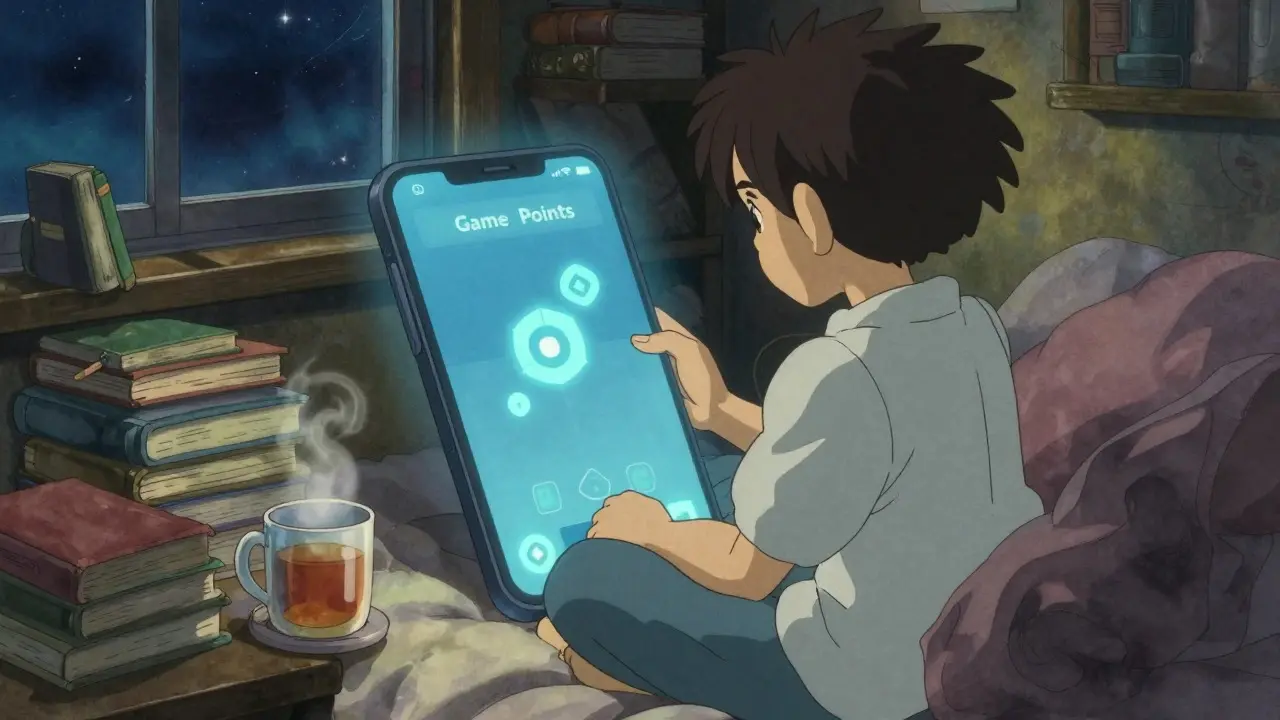
Ever clicked on a Telegram mini-game that promised you could earn real money just by playing? You might have stumbled upon GPTON, a cryptocurrency token built specifically for this kind of ecosystem. It’s not your typical Bitcoin or Ethereum; it lives on The Open Network (TON) and is designed to reward players with tokens they can actually stake or trade. But here’s the catch: while the concept sounds exciting, the reality involves low liquidity, limited exchange options, and a trust score that makes many investors pause. Before you buy in, let’s break down exactly what GPTON is, how it works, and whether it’s worth your time in 2026.
What Exactly Is GPTON?
GPTON is a non-mintable utility token that powers a gaming platform where users convert Game Points into tradable assets. Think of it as the fuel for a specific engine. The engine is a suite of games available via web and Telegram, developed by a team operating under the handle @genesisprofit. When you play these games, you don't just get high scores; you accumulate "Game Points." These points are then converted into GPTON tokens based on a set exchange rate. This conversion process was officially highlighted in May 2024, marking a key milestone for the project's utility.
The token itself has a fixed supply cap of 1,000,000,000 GPTON. As of recent data, nearly all of these tokens-approximately 999,999,933-are already in circulation. This means there is no inflationary pressure from new token issuance, which is a standard feature in many deflationary crypto models. However, because it’s not mintable, the value depends entirely on demand within its closed ecosystem and the few external markets where it trades.
How the Ecosystem Works: From Gameplay to Tokens
The core loop of GPTON is straightforward but requires attention to detail. First, you need a wallet compatible with the TON blockchain. The most popular choices are Tonkeeper or OpenMask. Once your wallet is set up, you connect to the GPTON platform at gpton.co. Here, you play various mini-games. Some are active, requiring skill, while others are passive, allowing you to earn simply by keeping the app open or interacting lightly.
Here is where it gets tricky. Earning points is easy; converting them is where friction occurs. Users have reported that the exchange rate between Game Points and GPTON can be lower than expected, making small wins less profitable than advertised. Furthermore, the documentation is primarily housed in Telegram channels rather than a comprehensive whitepaper, which can lead to confusion about tokenomics and future updates. If you are new to TON-based projects, expect a learning curve regarding gas fees and transaction settings. Incorrect gas settings are a common reason for failed transactions in this specific environment.

Where Can You Buy and Sell GPTON?
This is arguably the biggest hurdle for GPTON holders. Unlike major cryptocurrencies found on Binance or Coinbase, GPTON is not listed on any tier-one centralized exchanges. Its primary trading venue is Mexc, which handles the vast majority of its volume. There is also some activity on decentralized exchanges, but liquidity is thin. In fact, one tracking platform noted that GPTON is effectively available on only one significant exchange, limiting accessibility for global traders.
The lack of major exchange listings impacts price stability. You will often see significant price discrepancies across different tracking sites. For instance, while one source might show GPTON at $0.04, another might list it at $0.018. This fragmentation reflects low trading volume relative to its market cap. A healthy crypto asset typically sees a volume-to-market-cap ratio of 1-5%, but GPTON often hovers around 0.11%. This suggests that moving large amounts of tokens without affecting the price significantly is difficult, posing a risk for larger investors.
| Attribute | Value/Detail |
|---|---|
| Blockchain | The Open Network (TON) |
| Total Supply | 1,000,000,000 GPTON |
| Circulating Supply | ~999,999,933 GPTON |
| Mintable | No |
| Primary Exchange | Mexc |
| Staking Platform | STON.fi |
| Trust Score (DYOR.io) | 25/100 |
Staking and Holding: Is It Worth It?
If you decide to hold GPTON, staking is your main way to generate yield. The official staking partner is STON.fi, a leading DeFi protocol on the TON network. However, don’t expect a seamless experience. User feedback indicates that connecting your wallet and setting up staking on STON.fi is more complex than typical interfaces. About 68% of surveyed users described the process as cumbersome compared to other platforms. Despite this, stakers receive rewards, adding a layer of passive income to their holdings.
But should you hold long-term? The community size is relatively small, with only around 6,000 unique wallet holders. Compare this to established gaming tokens that often boast over 20,000 holders. A smaller community usually means less organic growth and higher susceptibility to price manipulation. Additionally, the project relies heavily on the success of its single gaming ecosystem. If player interest wanes, the demand for GPTON drops sharply. There is no utility outside of this specific platform, which limits its broader adoption potential.

Risks and Red Flags to Watch
Let’s be honest: GPTON carries higher risks than mainstream crypto assets. The first red flag is the trust score. DYOR.io assigns it a score of 25 out of 100, signaling concerns about transparency and legitimacy. While not necessarily a scam, this low score warrants caution. Second, the centralization issue is prominent. Critics on Reddit note that GPTON feels too tied to one game platform with no real utility elsewhere. If the developers pivot or fail, the token’s value could plummet.
- Liquidity Risk: Low trading volume means exiting a position quickly can be costly due to slippage.
- Exchange Dependency: Relying almost exclusively on Mexc creates a single point of failure.
- Documentation Gaps: Inconsistent information about tokenomics leads to user confusion and mistrust.
- Regulatory Uncertainty: As with all TON-based tokens, regulatory status in jurisdictions like the U.S. remains evolving.
Frequently Asked Questions
Is GPTON a good investment in 2026?
GPTON is a high-risk, speculative asset. It offers potential rewards through gameplay and staking but suffers from low liquidity, limited exchange listings, and a small holder base. It is best suited for experienced traders who understand TON-specific risks and are willing to monitor the project closely. It is not recommended for conservative investors seeking stable returns.
Where can I buy GPTON safely?
The safest and most liquid place to buy GPTON is currently Mexc, a centralized exchange. You can also find it on decentralized exchanges on the TON network, but be aware that spreads may be wider and liquidity lower. Always verify the contract address before buying to avoid fake tokens.
What wallet do I need to store GPTON?
You need a wallet compatible with The Open Network (TON). Tonkeeper and OpenMask are the most widely used and supported wallets for GPTON. Make sure to back up your seed phrase securely, as losing access to your wallet means losing your tokens permanently.
How does the Game Point to GPTON conversion work?
Users earn Game Points by playing games on the GPTON platform. These points are converted to GPTON tokens at a predetermined exchange rate. The rate has been adjusted periodically, so check the current announcement in the official Telegram channel before cashing out, as rates can vary and impact profitability.
Is GPTON listed on Binance?
No, GPTON is not listed on Binance. It is primarily traded on Mexc and some decentralized exchanges. This lack of listing on top-tier exchanges contributes to its lower visibility and liquidity compared to other TON-based tokens.

OLIVER CHRISTIAN
August 19, 2026 AT 08:56 AMGreat breakdown. The liquidity issue is the real killer here, not just the trust score. If you can't exit without slippage eating your gains, it's a dead end for most retail investors. Mexc is fine but it's not Binance. Keep an eye on the volume-to-market-cap ratio; if that stays below 1%, don't expect price discovery to be fair.
Mohamed Shoaeb
August 21, 2026 AT 03:23 AMI actually think this has potential because TON is growing so fast with Telegram integration. The gaming angle is huge right now. I started playing one of their mini-games last month and the points conversion was smooth enough. Just gotta be patient with the staking process though
Kelsey Anne
August 22, 2026 AT 09:10 AMYou're ignoring the red flags. 25/100 trust score is basically a warning siren. Most people who buy these 'gaming' tokens end up holding bags while the devs rug or just abandon the project. It's not about potential, it's about risk management.
Jillian Groskreutz
August 24, 2026 AT 05:40 AMOh, please. You clearly haven't read the whitepaper-oh wait, there isn't one. Just a Telegram channel. How 'transparent.' The fact that 99.9% of supply is already out means the early whales control the price action entirely. It's a closed ecosystem designed to keep you trapped in their specific games. Classic pump-and-dump setup disguised as 'utility.'
Carmene Jackson
August 25, 2026 AT 03:00 AMUgh why is everyone so negative? I feel like we're all missing the fun part! I just want to play some cute little tap-tap games and maybe get rich lol. The community vibes are actually super chill in the TG group, even if the tech is a bit clunky. Don't let the spreadsheets ruin the magic ✨
Jade Brown
August 26, 2026 AT 18:26 PMLet's dissect the tokenomics, shall we? The non-mintable nature is a double-edged sword. While it prevents inflationary dilution, it also means the value proposition is purely speculative demand within a walled garden. The 'Game Point' conversion rate is opaque, creating an information asymmetry that favors insiders. Furthermore, the reliance on STON.fi for staking introduces counterparty risk that is rarely priced into the asset's valuation model. It's a high-beta, low-liquidity instrument masquerading as a utility token. A classic case of narrative over substance.
Claudio Perrone
August 28, 2026 AT 05:21 AMits all about the mind set bro. if u believe in the game u win. i dont care about the liquidity or whatever they say about mexc being the only place. its a journey not a destination. the code is law and the law is us. stop thinking so hard and just play the tap game already
Aaron Morrissey
August 29, 2026 AT 20:37 PMOne must consider the broader philosophical implications of such decentralized gaming ecosystems. Are we not merely participants, but co-creators of a new digital reality? The friction in the user experience, while annoying, perhaps serves as a filter for the truly dedicated. Let us not dismiss the artistic merit of the pixelated worlds, however small the audience may currently be. It is a testament to human ingenuity, flawed yet persistent.
Hicham Mounir
August 30, 2026 AT 00:44 AMHey everyone, just wanted to add a gentle reminder to always check the contract address before buying. I know it sounds basic, but I've seen so many people get caught off guard by fake tokens on DEXs. Also, if you're new to TON, don't stress too much about the gas fees at first. Start with small amounts. It's totally okay to take it slow and learn as you go. We're all in this together, no judgment here!