
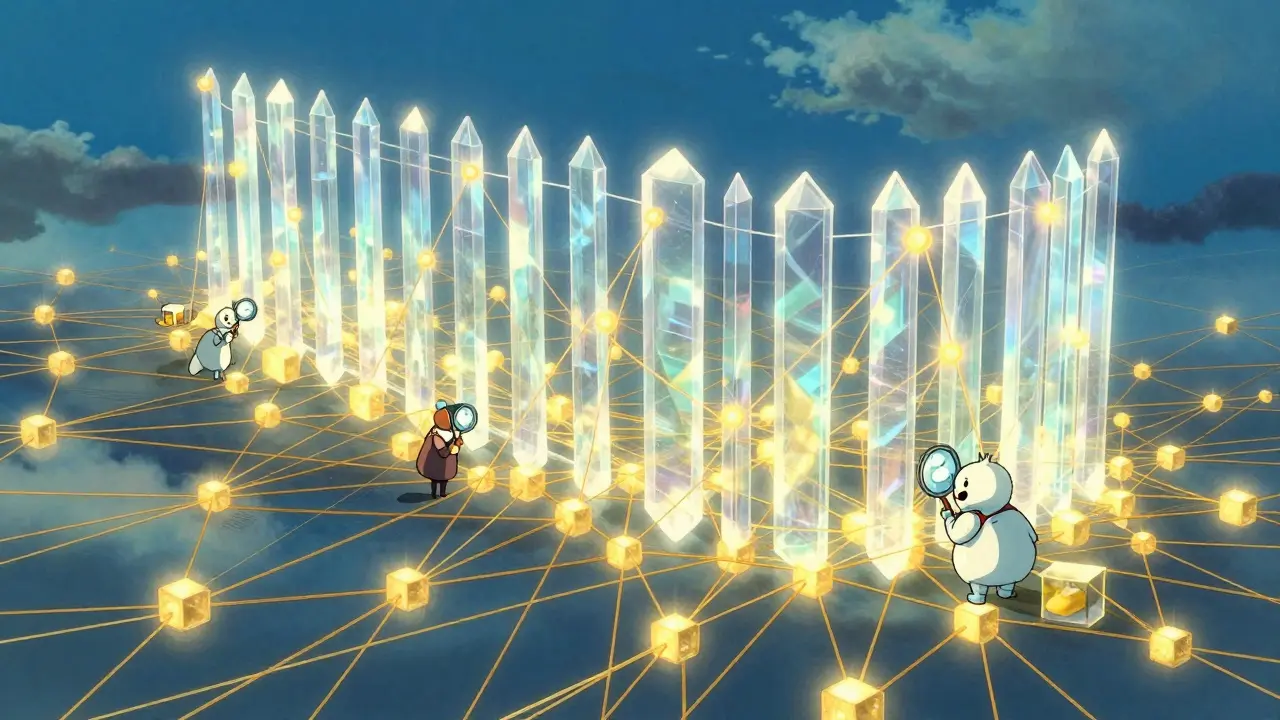
Imagine waking up to find your digital assets frozen because you unknowingly accepted a transaction from a wallet linked to a sanctioned regime. It sounds like a nightmare, but in the world of 2026, this is a daily reality for thousands of users and exchanges. The OFAC sanctions list is no longer just a document for diplomats and bankers; it is a live, digital fence that determines who can and cannot move money in the crypto ecosystem.
What Exactly is the OFAC Sanctions List for Crypto?
The Office of Foreign Assets Control is a financial intelligence and enforcement agency of the U.S. Department of the Treasury doesn't just target countries; it targets specific digital footprints. By maintaining the Specially Designated Nationals (SDN) list, OFAC creates a "no-fly zone" for money. As of 2025, this list has grown to include over 1,200 specific cryptocurrency wallet addresses. If a wallet is on this list, any U.S. person or business-and most global exchanges-is legally prohibited from interacting with it.
This isn't limited to just Bitcoin. The current framework covers a massive spread of assets. We're talking about everything from heavy hitters like Ethereum and Bitcoin to stablecoins like USDT and USDC. Even newer Layer 2 networks and platforms like Arbitrum and Binance Smart Chain are now under the microscope. The goal is simple: stop money laundering, cut off terrorism financing, and prevent nations from bypassing economic restrictions through the "back door" of blockchain.
How Sanctioned Entities Try to Hide (and Get Caught)
Sanctioned actors aren't just sitting still; they use every trick in the book to evade detection. Some use "privacy coins" like Monero to mask their trails. Others set up complex webs of new addresses to shuffle funds. A classic example is the Garantex case, where the exchange tried to simply rebrand as Grinex after being slapped with sanctions. It didn't work. International law enforcement, including the U.S. Secret Service and German authorities, eventually seized over $26 million in assets from them in early 2025.
We're also seeing a shift toward automation. In February 2025, OFAC sanctioned an AI-powered autonomous trading bot that was moving $60 million for a sanctioned entity. This was a wake-up call for the industry: if a piece of code is used to break sanctions, the code (and its creators) can be targeted too. This leads to a scary new frontier where even smart contract developers might be held liable if their code explicitly enables sanctions evasion.
| Feature | Traditional Banking | Cryptocurrency (OFAC) |
|---|---|---|
| Target | Financial Institutions | Specific Wallet Addresses |
| Visibility | Private Ledgers | Public, Immutable Blockchains |
| Speed of Update | Days/Weeks | Real-time (as fast as 15 mins) |
| Enforcement Method | SWIFT blocks | Wallet freezing & Chain Analysis |
The Tech Behind the Block: Real-Time Screening
For a crypto exchange, checking a list once a day isn't enough. If a wallet is added to the SDN list at 10:00 AM, and an exchange processes a transaction from that wallet at 10:05 AM, they've just committed a federal violation. This is why the industry has moved toward the "15-minute standard." Tools like Scorechain update their monitoring systems almost instantly after OFAC releases new data.
The actual data is handled via the sdn_advanced.xml file. Compliance teams feed this XML data into their transaction monitoring systems. When a user tries to deposit or withdraw funds, the system runs a check: "Is this address in the XML file?" If yes, the funds are frozen immediately. With the launch of the OFAC Blacklist v2.0 in May 2025, this monitoring now extends deep into DeFi protocols and Layer 2 networks, leaving very few places for sanctioned funds to hide.
Case Studies: High-Stakes Game of Cat and Mouse
Looking at real-world examples shows just how aggressive this has become. Take the case of Iranian nationals Alireza Derakhshan and Arash Estaki Alivand. These individuals were moving over $100 million from oil sales using Ethereum and TRON wallets. They thought the decentralized nature of these chains would protect them, but the transparent nature of the blockchain allowed OFAC to map their entire network, leading to their designation in late 2025.
Then there is the Lazarus Group. In early 2025, they managed to steal $200 million using sanctioned DeFi protocols. Because these protocols lack a central "CEO" to call, OFAC has shifted its strategy to target the bridge and entry/exit points-the exchanges where the thieves try to turn their stolen crypto into spendable cash.
Compliance Checklist for Crypto Businesses
If you're running a platform or a DeFi project, you can't afford to ignore this. Compliance isn't just a "nice to have"; it's a survival requirement. Here is a practical rule of thumb for setting up a system:
- Automate Data Feeds: Don't manually check lists. Integrate the OFAC XML feed directly into your API.
- Cross-Chain Monitoring: Sanctioned entities jump from Bitcoin to Ethereum to Tron to hide their tracks. Your screening must happen across all supported chains simultaneously.
- Address the "Taint" Factor: It's not just about the sanctioned wallet. If a wallet receives funds from a sanctioned address, those funds are "tainted." You need tools to track the hop-count (how many transfers away a wallet is from a sanctioned one).
- Freeze Capability: For stablecoin issuers like Tether, the ability to freeze assets is a key requirement. In March 2025, Tether froze $450 million linked to Iranian entities on OFAC's request.

The Future of Digital Restrictions
Where do we go from here? We are moving toward a world of "algorithmic compliance." The joint directive between OFAC and the Financial Action Task Force (FATF) in April 2025 suggests that international standards are finally aligning. This means that a wallet blocked in the US will likely be blocked in Europe and Asia almost instantly.
The biggest debate right now is about the "code as law" philosophy of DeFi. If a smart contract is decentralized and no one "owns" it, who does OFAC sanction? The current trend is to hold the developers accountable. If you write a piece of code that helps a sanctioned entity move money, the US government may view that as providing a financial service to a criminal.
Can a regular user accidentally interact with a sanctioned address?
Yes, it happens. You might receive a random airdrop or a payment from a wallet that was later sanctioned. While individual users are rarely targeted for a single accidental transaction, most centralized exchanges will freeze your account if they detect "tainted" funds entering your balance.
Does OFAC monitor all cryptocurrencies?
They focus on the most used ones. Currently, they track 17 major types, including Bitcoin, Ethereum, Monero, Litecoin, ZCash, DASH, Bitcoin Gold, Ethereum Classic, BSV, BCH, Verge, USDC, USDT, XRP, TRX, Arbitrum, and BSC. However, they can and do add new ones as they become relevant to illicit finance.
What happens if my wallet is added to the SDN list?
Essentially, you become a financial pariah. No US-based exchange will allow you to trade, and most global platforms will freeze your assets. Moving funds becomes nearly impossible because most "on-ramps" and "off-ramps" (where you turn crypto into cash) screen against this list in real-time.
How often is the OFAC list updated?
The official list is updated frequently, but professional compliance tools like Scorechain process these updates and reflect them in their monitoring systems within about 15 minutes of the official release.
Are DAOs exempt from these sanctions?
No. As of January 2025, OFAC specifically expanded its criteria to include Decentralized Autonomous Organizations (DAOs) and decentralized protocols, even those without formal leadership structures.
Next Steps for Users and Businesses
If you are an individual user, the best way to protect yourself is to avoid using "mixing services" or interacting with unknown high-yield DeFi protocols that promise unrealistic returns-these are often fronts for sanctioned entities. Always use reputable exchanges that have clear compliance policies.
For business owners, the priority is a technical audit. If your system is still relying on weekly manual updates of the SDN list, you are at high risk. Switch to an automated XML-based screening tool and ensure your coverage extends to Layer 2 networks to avoid the gaps that OFAC is now actively targeting.




Kelly Cantrell
April 10, 2026 AT 23:16 PMThis is just the beginning of the total surveillance state. First they track the wallets, then they'll track your very thoughts via these "algorithmic compliance" systems. It is obvious the government is using this as a pretext to seize all private wealth and eliminate any form of financial independence for the American people. They want us completely dependent on a centralized digital ledger they can switch off with one click. Wake up and get your assets into something they can't see or touch before the net closes fully.
Heather Warren
April 11, 2026 AT 04:10 AMIt is really important for smaller project owners to automate these feeds. Relying on manual checks is simply too risky in this environment. Using the XML integration is a great way to keep everyone safe and compliant.
7stargee Emmanuel Obani
April 11, 2026 AT 22:34 PMLmao imagine thinking "decentralization" actually means anything anymore 🤡. The devs just build backdoors for the gov and call it a feature. Big joke. 🙄
Carroll Foster
April 12, 2026 AT 01:12 AMOh sure, because the 15-minute standard is *totally* enough for a high-frequency MEV bot that's already cycled through six different L2 bridges. I love how we pretend that a static XML file is an effective countermeasure against actual sophisticated adversarial actors. It's basically like trying to stop a flood with a screen door while the regulators pat themselves on the back for their "innovation." Peak comedy.
daniella davis
April 12, 2026 AT 02:03 AMPls... like anyone actually believes the Lazerus group is the only one doing this. Its so obvious that the big exchanges are just playing along to get a tax break or something. Like i actually can't deal with how naive some people are about how this works. Its all just a big game and we're the pawns lol.
Kieran Smith
April 13, 2026 AT 18:21 PMwow its crazy how fast things move. i didnt even know about the bot sanctions! makes me wonder if we can actually stay anonymus in the long run or if its just a dream now. hope there's still a way for regular folks to keep their privacy without being labeled as criminals.
Hope Johnson
April 14, 2026 AT 10:09 AMThe tension between the "code is law" ethos and the reality of state-mandated financial restrictions highlights a fundamental conflict in how we define sovereignty in the digital age. If we concede that the state can dictate the functionality of a smart contract, we are essentially admitting that mathematics is secondary to political will, which fundamentally alters the promise of a trustless system. We must consider whether a truly decentralized future is even possible when the entry and exit points are governed by the very entities the technology was designed to circumvent. It is a philosophical crossroads that will define the next decade of human interaction with value.
Terrance Hausmann
April 15, 2026 AT 06:53 AMI think we can find a middle ground here. While the government has a right to stop terrorism, we should also advocate for clear boundaries so that innocent users don't lose their life savings over one bad airdrop. Balance is key.
Lela Singh
April 16, 2026 AT 20:59 PMAbsolute gold! 🌟 Just automate your APIs and stay sparkling clean!
aletheia wittman
April 18, 2026 AT 04:54 AMomg a 15 min window is literally a lifetime in crypto lol. my funds would be gone and spent on a yacht by then. total joke!!
Rima Dinar
April 20, 2026 AT 00:12 AMI really believe that if users take the time to read through the compliance checklists provided, they will find that it is not as scary as it seems. It is all about being proactive and making sure you are using reputable platforms that actually care about their users' security and legal standing, because once your funds are frozen, the process to get them back is an absolute nightmare that can take years of legal fighting and endless paperwork. Just be careful with where you send your money and who you trust with your keys.
ssjuul z
April 21, 2026 AT 23:12 PMLet's stay positive! 🚀 Just follow the rules and keep building the future of finance together! 💎
Surender Kumar
April 23, 2026 AT 03:58 AMnice info man.’s cool how they track it all now. just gonna keep my coins in cold storage and chill lol.
Will Dixon
April 24, 2026 AT 21:10 PMsounds like a lot of work for the devs. just gotta keep it simple and not do anything illegal i guess.