
You have the keys to your digital kingdom. You’ve bought Bitcoin, maybe some Ethereum, and you’re sitting pretty with a wallet address that looks like random noise. But here is the scary truth: if someone gets their hands on those 12 or 24 words, they own your money. Not just access to it-total ownership. And unlike your bank account, there’s no fraud department to call. If your seed phrase walks out the door in a burglar’s pocket, your crypto is gone forever.
Most people worry about hackers phishing their emails or malware stealing passwords. Those are real threats, sure. But physical theft of your seed phrase is often overlooked because it feels too simple to be dangerous. Yet, studies show that nearly two-thirds of seed phrase compromises happen offline, not online. Someone breaks into your house, finds a piece of paper in your sock drawer, and boom-your savings vanish. So, how do you keep those words safe when they exist in the messy, unpredictable physical world?
Why Paper Backups Are Riskier Than You Think
Let’s be honest: writing your seed phrase on a piece of paper and sticking it in a book is the most common method. It’s cheap, easy, and requires no tech skills. But paper is fragile. Have you ever left a notebook near a window? Over time, ink fades. Standard printer ink can start disappearing after just 18 months under normal conditions. Pencil lasts longer, potentially up to 200 years on archival paper, but who uses pencil for critical financial data?
Then there are disasters. Fire, water, and mold don’t care about your portfolio value. In fact, UL fire resistance testing showed that standard paper backups fail completely in 43% of house fires. If your house burns down, your backup likely turns to ash right along with your furniture. Water damage is another silent killer. A burst pipe in the basement where you stored your safety deposit box can turn your crisp white paper into unreadable pulp.
| Method | Fire Resistance | Water Resistance | Lifespan | Cost |
|---|---|---|---|---|
| Paper (Printer Ink) | Low (Burns instantly) | Low (Dissolves/smudges) | ~18 months legibility | $0 |
| Paper (Pencil) | Low | Medium (Smudges) | Up to 200 years | $0 |
| Metal Plate | High (Up to 2,500°F) | High (Indestructible) | Decades+ | $100-$150 |
| Bank Vault | High | High | Dependent on lease | $50-$100/year |
The Case for Metal Backups
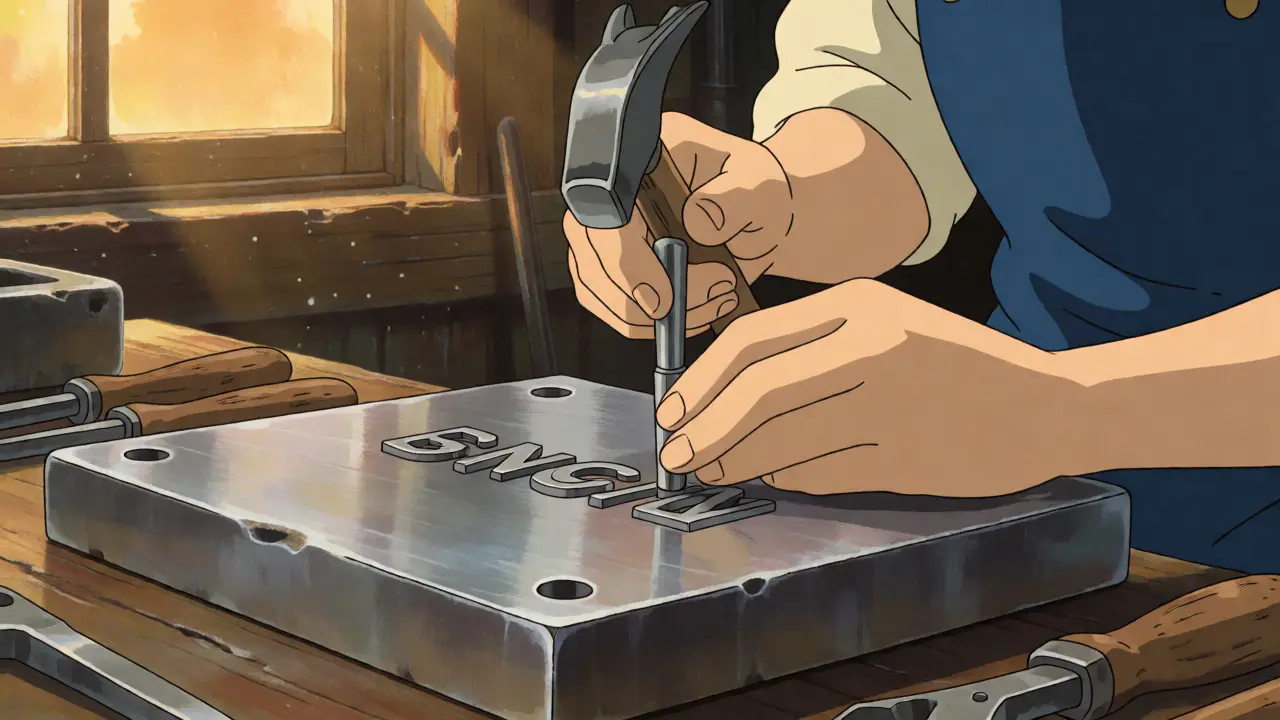
If you hold any significant amount of crypto, you need to move beyond paper. Enter metal backups. These are plates made of stainless steel or titanium where you stamp each word of your seed phrase. They look industrial and feel heavy, which is exactly what you want for something holding your wealth.
Why go metal? Because it survives everything. A metal plate can withstand temperatures up to 2,500°F. That covers almost any house fire. Drop it in a pool? No problem. Bury it in the backyard? It’ll still be readable in ten years. Products like Cryptosteel cost around $130, which sounds expensive until you compare it to losing $10,000 worth of Bitcoin because your paper backup got wet during a flood.
There is a learning curve, though. Stamping letters onto small metal tiles takes patience. Users often make errors on their first try, so take your time. Double-check every single letter. One typo means your backup is useless. Once done, this solution offers peace of mind that paper simply cannot match.
Hiding in Plain Sight: Location Strategy
Okay, you have a durable backup. Now, where do you put it? The biggest mistake people make is putting all their eggs in one basket. If you keep your seed phrase in your home safe, and a thief knows you have crypto, they will find that safe. Burglars know to check safes, books, and under mattresses.
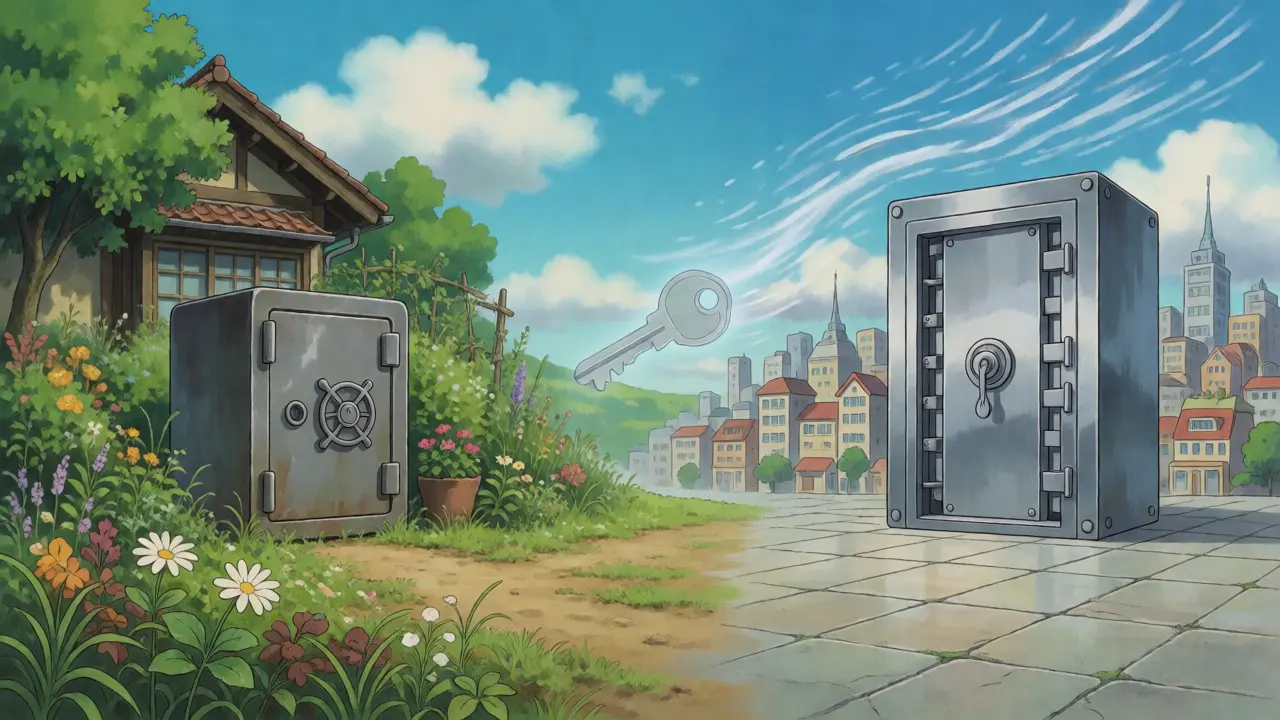
Diversify your storage locations. This isn’t just a suggestion; it’s a necessity. Andreas Antonopoulos, a well-known voice in the Bitcoin community, emphasizes that concentrating security in one spot is a major error. Ideally, store copies in geographically separate locations. We’re talking at least 50 miles apart. Maybe one copy stays in your home safe, while another lives in a relative’s house across town or in a different city entirely.
What about bank safe deposit boxes? Many people think these are the ultimate vaults. Be careful. While banks offer great physical security, they introduce legal risks. If your bank freezes your account due to an audit or regulatory issue, you might lose access to your box for months. There are documented cases of users locked out of their crypto funds for six months because of a banking dispute. Plus, recent guidance suggests that assets in safe deposit boxes could be subject to seizure protocols more easily than assets held in private custody.
Advanced Tactics: Passphrases and Splitting Secrets
If you really want to sleep well at night, consider adding a layer of cryptographic complexity. Most wallets support a feature called a passphrase, sometimes called the "13th" or "25th" word. This is an extra password you add to your seed phrase. Without this passphrase, your seed phrase only opens a default wallet. With it, you unlock a completely different set of addresses.
Here is the trick: you can store your seed phrase in one place and memorize your passphrase. Or better yet, split them. Even if a thief steals your metal plate, they can’t access your main funds without knowing the secret passphrase. Just remember: if you forget the passphrase, your funds are lost just as surely as if you lost the seed phrase itself. There is no reset button.
For the ultra-cautious, there is Shamir’s Secret Sharing (SSS). This mathematical method splits your seed phrase into multiple shares. For example, you could split it into five parts and require any three parts to reconstruct the key. You give one part to your spouse, one to your parents, one to a lawyer, etc. If your house burns down, you still have enough shares elsewhere to recover your funds. If a thief breaks in, they might steal one share, but without two others, they can’t do anything. Note that SSS is complex to implement correctly, so use trusted tools and test thoroughly before relying on it for large sums.
Common Pitfalls to Avoid
Even with the best plans, humans make mistakes. Here are the traps to watch out for:
- Digital Storage: Never save your seed phrase as a screenshot, text file, or photo on your phone. If your device is hacked or backed up to the cloud, your seed phrase is exposed. Keep it strictly offline.
- Verification Failure: Did you actually test your backup? Too many people write down their seed phrase, lock it away, and never verify it works. Restore your wallet on a new device using your backup *before* you send all your coins to it. If it doesn’t work, you haven’t lost money yet.
- Obvious Hiding Spots: Thieves know the usual spots. Don’t hide your metal plate inside a hollowed-out book titled "The Art of War" unless you’re being ironic. Consider non-descript containers or obscure locations within your home.
- Ignoring Environmental Factors: Humidity and heat degrade materials over time. Keep your backups in a cool, dry place. Temperature ranges between 15-25°C are ideal.
Final Thoughts on Peace of Mind
Securing your seed phrase isn’t about paranoia; it’s about responsibility. You are your own bank now. That means you carry the burden of security. Start simple: get a metal backup. Then, diversify your locations. Finally, consider advanced methods like passphrases if you hold significant assets.
Remember, the goal isn’t just to protect against thieves. It’s to protect against accidents, natural disasters, and human error. Spend the time now to set up a robust system. Future-you will thank present-you when the unexpected happens and your crypto remains safe and sound.
Is it safe to store my seed phrase in a bank safe deposit box?
It is physically secure, but legally risky. Banks can freeze access due to audits or disputes, leaving you unable to access your crypto for extended periods. Additionally, some jurisdictions may treat contents of safe deposit boxes differently regarding asset seizure compared to privately held items. It's best used as one of multiple backup locations, not the sole location.
Can I take a picture of my seed phrase with my phone?
Generally, no. Photos can sync to cloud services (like iCloud or Google Photos) automatically, exposing your seed phrase to potential breaches. If you must use a phone, ensure cloud backup is disabled for that specific album, delete the original photo immediately after verifying clarity, and keep the device offline. However, physical metal backups are far superior for long-term security.
What happens if I lose one part of my Shamir's Secret Sharing backup?
If you set up a threshold scheme (e.g., 3-of-5), losing one part is fine as long as you retain at least the required number of shares (3 in this case). If you fall below the threshold, you cannot reconstruct the seed phrase, resulting in permanent loss of funds. Always keep track of how many shares you have remaining.
Do I need a metal backup if I already have a hardware wallet?
Yes. A hardware wallet protects your private keys during transactions, but it does not replace your seed phrase backup. If your hardware wallet breaks, is lost, or is stolen, you need the seed phrase to restore your funds on a new device. The hardware wallet is a tool for daily use; the seed phrase is your ultimate recovery mechanism.
How often should I check my physical backups?
At least once a year. Check for signs of wear, corrosion, or fading. If you use paper, check for moisture damage or insect activity. For metal backups, ensure the stamps are still legible. Regular verification ensures that your backup hasn't degraded silently over time.






0 Comments