
You’ve likely stumbled upon RadioShack a decentralized finance protocol operating on the Celo blockchain while looking for a new place to trade. The name sounds familiar-maybe even trustworthy-and seeing “CELO” next to it might make you think you’ve found a hidden gem in the world of cryptocurrency exchanges. But here is the hard truth: RadioShack is not an exchange. You cannot log in, deposit funds into a custodial account, or click “buy” on a centralized dashboard.
This confusion is common in the fast-moving world of Web3. Many projects use recognizable brand names or simple acronyms that blur the line between a platform and a protocol. RadioShack, specifically identified by its trading symbol RADS, is a token within the Celo ecosystem. Understanding this distinction is critical before you connect your wallet or send any assets. If you are looking for a traditional exchange like Coinbase or Binance, you will find nothing here. If you are curious about how decentralized liquidity works on Celo, then you are in the right place.
The Core Misconception: Protocol vs. Platform
To understand why RadioShack isn’t an exchange, we need to look at how it functions technically. According to data from CoinMarketCap, RadioShack is listed as a token with the ticker RADS. Its primary technical objective is to "significantly reduce the diameter of the graph of swappable tokens" and increase liquidity per pair. In plain English, this means RadioShack is a routing optimization tool, not a marketplace.
Imagine you want to swap Token A for Token B. On many decentralized networks, there is no direct path. You might have to swap A for C, then C for D, and finally D for B. Each step adds fees and slippage. RadioShack aims to shorten this path-the "diameter" of the graph-so you get from A to B faster and cheaper. It operates within existing decentralized exchange (DEX) infrastructure on Celo, optimizing the routes rather than hosting the trades itself. This makes it a backend utility protocol, similar in function to aggregators like 1inch or CowSwap, but specific to the Celo network’s architecture.
Why the Confusion Happens
The branding plays a significant role here. The name RadioShack evokes memories of the old electronics retailer, which creates a subconscious association with buying and selling goods. When combined with the word "exchange" in search queries or casual discussions, users naturally assume it is a venue for trading. Additionally, the presence of the CELO tag reinforces the idea of a trading pair. However, in the context of the Celo blockchain, this simply indicates the network where the RADS token lives and interacts.
Celo itself has seen massive growth, which amplifies the visibility of all protocols built on top of it. As of late 2025, reports indicate Celo handles over $1.7 billion in monthly stablecoin volume and serves more than 500,000 daily active users across 150 countries. With such high traffic, niche protocols like RadioShack gain exposure. But exposure does not equal functionality. Just because RadioShack appears on market trackers doesn’t mean it offers user-facing exchange services.

Technical Context: How RadioShack Fits Into Celo
RadioShack leverages the Ethereum Virtual Machine (EVM) compatibility established by Celo’s Espresso Hardfork in March 2022. This update made Celo fully compatible with Ethereum upgrades, allowing developers to deploy complex smart contracts. RadioShack is one such contract. It doesn’t run its own consensus mechanism or maintain its own ledger; it relies entirely on Celo’s security and speed.
The protocol’s focus on reducing the "graph diameter" suggests it uses advanced routing algorithms. In decentralized finance (DeFi), liquidity is often fragmented across multiple pools. By concentrating liquidity and minimizing hops, RadioShack theoretically reduces slippage for traders. However, without access to the actual interface, users don’t interact with RadioShack directly. Instead, they might use a DEX aggregator or a wallet that integrates RadioShack’s routing logic behind the scenes to find the best price.
| Feature | RadioShack (RADS) | Traditional Exchange (e.g., Coinbase) |
|---|---|---|
| Type | Decentralized Finance Protocol / Token | Centralized Service Provider |
| User Account | No login required; uses wallet address | Email/Phone registration required |
| Custody | Non-custodial (you hold keys) | Custodial (platform holds funds) |
| Primary Function | Optimizes swap routes and liquidity | Facilitates fiat-to-crypto and crypto-to-crypto trades |
| Regulation | Code-based governance; minimal regulatory oversight | Subject to financial regulations (KYC/AML) |
Risks and Red Flags for Users
If you are searching for a safe place to store and trade your crypto, RadioShack is not the answer. In fact, treating it as an exchange exposes you to significant risks. First, there is no customer support. If you send tokens to the wrong address or encounter a bug in the smart contract, there is no help desk to call. Second, the lack of detailed documentation is concerning. Unlike major protocols like Uniswap or PancakeSwap, RadioShack has sparse public records regarding its development team, audit reports, or future roadmap.
Security experts frequently warn users about the importance of verifying contract addresses. Since RadioShack is a token, scammers can easily create fake RADS tokens on other blockchains or even on Celo itself. Always verify the official contract address through reputable sources like CoinMarketCap or the official Celo forum. Furthermore, the Celo security team issued advisories in October 2025 reminding users to prioritize hardware wallets and multi-factor authentication. These general warnings apply doubly to lesser-known protocols where code audits may be less rigorous.
Another risk is liquidity fragmentation. While RadioShack aims to solve this problem, relying on a single, niche protocol for large transactions can still result in poor execution if the underlying liquidity pools are shallow. Without transparent volume metrics, it is difficult to assess whether RadioShack can handle significant trade sizes without impacting the price.
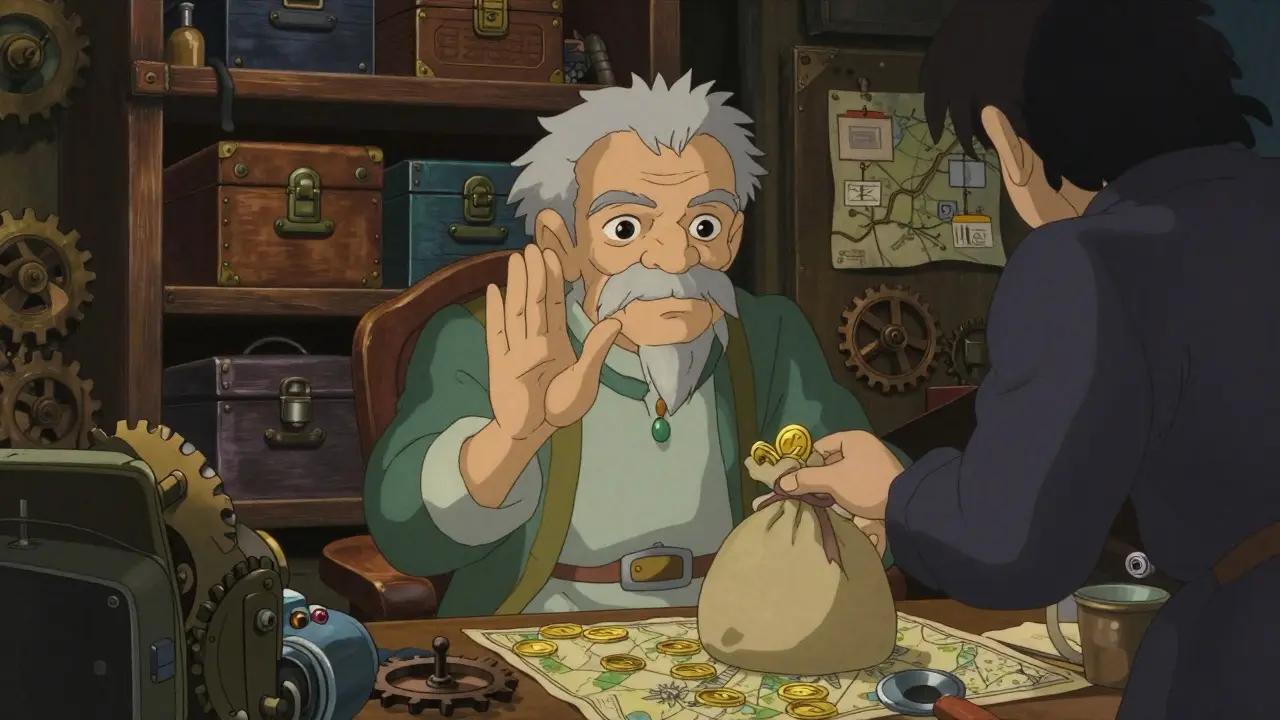
What Should You Do Instead?
If your goal is to trade Celo (CELO) or other assets on the network, you should use established decentralized exchanges that are known to integrate with Celo’s ecosystem. Platforms like Uniswap (via cross-chain bridges) or native Celo DEXs provide clear interfaces, verified contracts, and community support. For those who prefer centralized exchanges, major platforms like Binance, Kraken, or Coinbase offer direct CELO trading pairs with fiat on-ramps.
If you are interested in the RADS token itself, treat it as a speculative asset within the DeFi space. Research the tokenomics, check the total supply, and understand how the token is used within the protocol. Does holding RADS give you voting rights? Does it generate yield? Without clear answers from the project team, investing in RADS carries higher uncertainty than investing in well-documented blue-chip cryptocurrencies.
The Future of RadioShack on Celo
The long-term viability of RadioShack depends heavily on the continued growth of the Celo ecosystem. Celo’s recent implementation of Nightfall Layer 3 technology for private transactions adds another layer of complexity and opportunity. If RadioShack can integrate with these privacy features while maintaining its routing efficiency, it could become a valuable component of Celo’s infrastructure. However, this remains theoretical. There is no public roadmap indicating such plans.
For now, RadioShack exists as a minor player in a growing market. It serves a specific technical function-optimizing swap graphs-but lacks the brand recognition and user base of larger competitors. Investors and traders should approach it with caution, recognizing that it is a tool for developers and sophisticated DeFi users, not a beginner-friendly exchange.
Is RadioShack a legitimate crypto exchange?
No, RadioShack is not a crypto exchange. It is a decentralized finance (DeFi) protocol and token (RADS) that operates on the Celo blockchain. It focuses on optimizing swap routes and liquidity rather than providing a trading platform for users.
Can I buy RADS token on RadioShack?
You cannot buy RADS on "RadioShack" because it is not a platform. You would need to acquire RADS through decentralized exchanges (DEXs) on the Celo network or via peer-to-peer transactions, ensuring you use the correct contract address to avoid scams.
What is the main purpose of the RadioShack protocol?
The main purpose of RadioShack is to reduce the "diameter of the graph of swappable tokens." This means it aims to minimize the number of steps required to swap one token for another, thereby reducing slippage and improving liquidity efficiency within the Celo ecosystem.
Is RadioShack safe to use?
As with any DeFi protocol, safety depends on the smart contract code and user diligence. RadioShack has limited public documentation and audit information compared to major protocols. Users should always verify contract addresses, use hardware wallets, and start with small amounts to test interactions.
How does RadioShack differ from Uniswap or PancakeSwap?
Uniswap and PancakeSwap are automated market makers (AMMs) that provide liquidity pools for direct trading. RadioShack is a routing optimization protocol that works behind the scenes to improve the efficiency of swaps, potentially integrating with various DEXs rather than competing directly as a standalone trading venue.
Where can I find official information about RadioShack?
Official information is sparse. You can find basic listing data on CoinMarketCap under the RADS ticker. For deeper technical details, you may need to explore the Celo Forum or GitHub repositories associated with Celo developers, though dedicated RadioShack resources are currently limited.







Bianca Vilas Boas Lourenço
May 19, 2026 AT 13:21 PMOh wow, another day another protocol pretending to be something it’s not 😒 I swear the crypto space is just one big scam fest at this point. RadioShack? Really? Did they think we’d forget the electronics store or what 🙄
Jesse Alston
May 20, 2026 AT 05:40 AMHey Bianca, I get the frustration but let’s look at the technical side for a second 🤓 This isn’t really about branding confusion as much as it is about how DeFi infrastructure works. The article explains that RADS is essentially a routing optimizer, similar to how 1inch works on Ethereum. It doesn’t host liquidity itself; it finds the most efficient path through existing pools. So while the name is misleading, the underlying tech might actually be useful if you’re doing complex swaps on Celo. Just don’t expect a Coinbase-like interface because that’s not what this is built for 💡
Albert Lee
May 21, 2026 AT 18:51 PMI am so glad someone finally wrote this out clearly! 🎉 It is absolutely terrifying how many people are walking into these traps thinking they found a safe harbor. You have to keep your eyes wide open in this space. The distinction between a custodial exchange and a non-custodial protocol is life or death for your portfolio. Please everyone read this twice before connecting any wallets! Your financial health depends on understanding these nuances. We need more content like this to save people from themselves! ❤️
Ankush Pokarana
May 22, 2026 AT 17:12 PMthe concept of graph diameter reduction is fascinating when you consider the broader implications for network efficiency in decentralized systems it is not merely about speed but about the fundamental structure of value transfer pathways that connect disparate liquidity sources across the blockchain ecosystem which suggests a deeper philosophical alignment with the principles of minimal friction in human interaction and economic exchange alike
John Gonzalez Bentham
May 23, 2026 AT 04:50 AMtypo alert: its not radio shack its radioshack lol also who cares about graph diameter i just want to buy low and sell high without reading a novel about backend utilities these devs are trying to complicate simple things to make themselves look smart while the rest of us are just trying to hodl our bags and wait for the moon shot
Kimberly Herbstritt
May 24, 2026 AT 07:08 AMActually, I kind of like the idea of a protocol that just sits there and optimizes routes without asking me to verify my identity or link my bank account. Isn’t that the whole point of DeFi? To avoid the centralized gatekeepers? Maybe the confusion is just a feature, not a bug, forcing users to learn how the system actually works instead of relying on a friendly UI.
Ellie Riddell
May 24, 2026 AT 14:40 PMSure, Kimberly, if you enjoy losing money to smart contract bugs because you didn’t read the docs. “Forcing users to learn” sounds great until you’ve drained your wallet to a honeypot. I’m all for decentralization, but let’s not pretend obscurity is a virtue. If you can’t explain what the token does in three sentences, it’s probably not worth your time. 🙃
Yash Lodha
May 24, 2026 AT 20:07 PMOne must question the true intentions behind such opaque protocols. Is it merely optimization or a subtle mechanism for surveillance within the Celo network? The lack of transparency regarding the development team raises eyebrows. Could this be a front for data harvesting under the guise of liquidity routing? We must remain vigilant against these digital panopticons disguised as utility tokens. The architecture itself may be a trap for the unwary.
Jerry CUNNINGHAM SR
May 25, 2026 AT 22:14 PMYash, while skepticism is healthy, it is important to rely on verifiable data rather than speculation. The post clearly outlines that RadioShack operates as a backend utility. There is no evidence provided here to suggest malicious intent. Let us focus on the technical merits and the risks associated with smart contract interactions. Constructive dialogue helps us all navigate this complex landscape more safely.
Sharada Vakkund
May 26, 2026 AT 09:38 AMHello everyone! I think it is really important that we support each other in learning these new technologies. If anyone feels confused by terms like 'graph diameter' or 'slippage', please ask questions in a dedicated thread. We are all beginners at some point. Understanding that RadioShack is a tool and not an exchange is a huge step. Let’s help each other stay safe and informed in the Celo community! 🌟
Sudarshan Anbazhagan
May 26, 2026 AT 18:51 PMit is quite evident that the majority of participants in this discussion lack the necessary foundational knowledge to comprehend the sophisticated nature of decentralized finance protocols such as RadioShack which serves a critical function in optimizing transactional efficiency thereby reducing the overall cost of capital allocation within the Celo ecosystem and those who fail to recognize this distinction are merely engaging in superficial commentary devoid of substantive analytical rigor
Destiny Kilby
May 27, 2026 AT 19:07 PMI appreciate the detailed breakdown provided in the original post. It is crucial for investors to understand the difference between a custodial service and a non-custodial protocol. The risks associated with interacting with lesser-known contracts cannot be overstated. One should always prioritize security and verification over convenience. Thank you for highlighting the importance of checking contract addresses.
Sarah C
May 28, 2026 AT 10:12 AMThis is such a helpful clarification. I was genuinely worried I had missed out on a major exchange opportunity. Knowing that it is just a routing tool makes me feel better about focusing on established platforms like Uniswap for my trades. Thanks for keeping the community informed!