When Bitcoin launched in 2009, no one knew exactly how it would evolve. But within a decade, it had already split into multiple versions - not because of bugs or hacks, but because people fundamentally disagreed about what Bitcoin should be. Two of the most famous forks - Bitcoin Cash (BCH) and Bitcoin SV (BSV) - weren’t just technical upgrades. They were ideological battles fought in code.
Why Bitcoin Forked in the First Place
Bitcoin’s original design limited each block to 1 megabyte. That meant the network could only process about 7 transactions per second. As adoption grew, transaction fees spiked and confirmation times dragged. By 2017, the network was clogged. Some users paid over $50 just to send a few dollars worth of Bitcoin. Others couldn’t get their transactions confirmed for days. The core team, led by developers like Wladimir van der Laan, believed Bitcoin should stay small and secure. Their solution? Move most transactions off-chain using the Lightning Network. But a growing group of miners, traders, and entrepreneurs thought that was wrong. They believed Bitcoin was meant to be digital cash - something you could use at a coffee shop, not just a store of value. To them, the solution was simple: make blocks bigger. This wasn’t a minor disagreement. It was a split in philosophy. One side wanted Bitcoin to be a settlement layer - a secure backbone for other systems. The other wanted it to be a payment network for everyday people.Bitcoin Cash: The First Major Fork
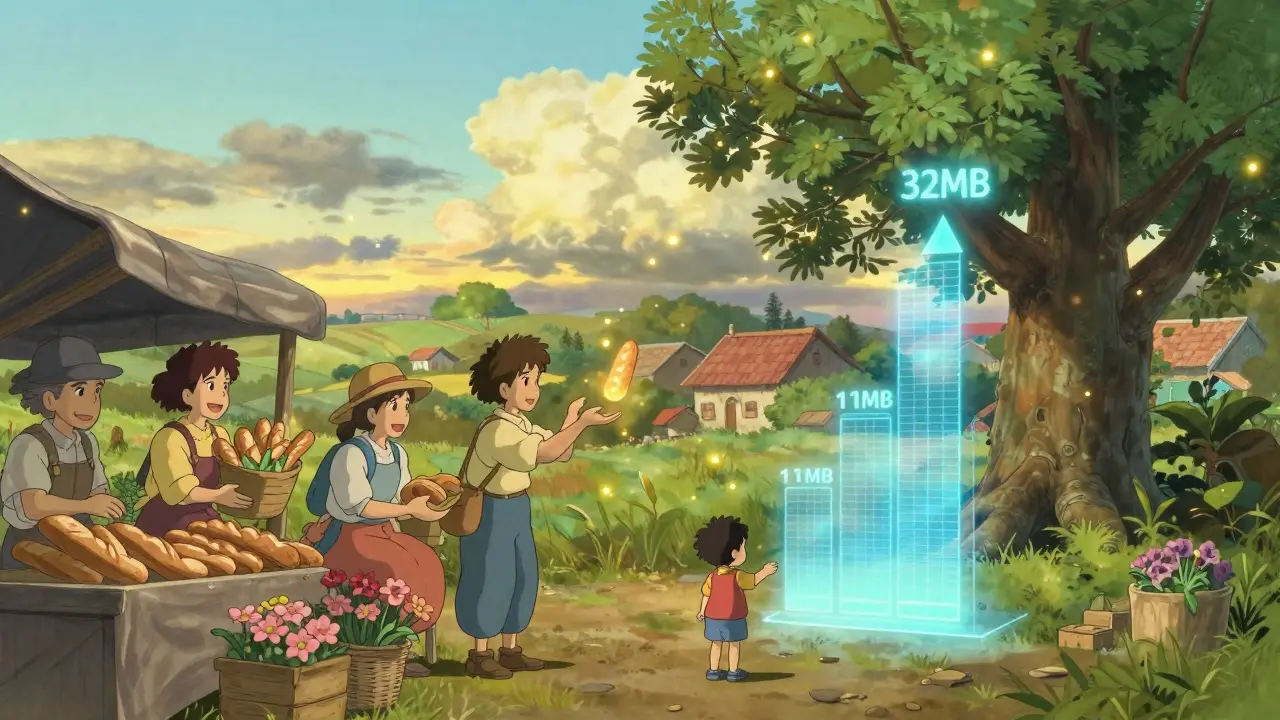
On August 1, 2017, Bitcoin Cash was born. It took the existing Bitcoin blockchain and doubled the block size from 1 MB to 8 MB - then later raised it to 32 MB. That meant each block could hold over 200 times more transactions than Bitcoin’s original limit. The change was immediate. Fees dropped. Transactions confirmed in seconds. Merchants who had avoided Bitcoin because of slow payments started accepting it again. By late 2017, Bitcoin Cash was trading at over $1,000, and its network hash rate climbed to over 4 exahashes per second. But Bitcoin Cash didn’t just change the block size. It also removed SegWit - the upgrade Bitcoin Core had adopted to squeeze more transactions into each block. BCH developers saw SegWit as a band-aid. They wanted a real fix: more space on-chain. By 2019, Bitcoin Cash was processing an average of 100,000 transactions per day. Its median transaction value hovered between $1 and $10 - close to what you’d expect from a payment system. Daily adjusted transfer value peaked at $325.5 million in June 2019. That’s impressive for a fork - but still less than 10% of Bitcoin’s $3.58 billion daily volume.Bitcoin SV: The Fork That Went Further
Bitcoin Cash didn’t stay unified for long. In November 2018, another group split off - this time from Bitcoin Cash itself. They called their new coin Bitcoin SV, short for Bitcoin Satoshi Vision. Their argument? Bitcoin Cash hadn’t gone far enough. The 32 MB block limit was still too small. Bitcoin SV raised it to 128 MB - and removed any hard cap, meaning blocks could theoretically grow to over 100 MB. They also removed limits on OP_RETURN, a part of Bitcoin’s scripting language that lets users store data on the blockchain. Suddenly, you could store documents, images, even entire databases directly on the BSV chain. This wasn’t just about payments. Bitcoin SV’s backers, led by Craig Wright (who claims to be Satoshi Nakamoto), wanted to turn Bitcoin into a global data ledger. They pitched it as the foundation for enterprise applications - supply chain tracking, digital contracts, real-time data feeds. But there was a cost. The larger blocks meant node operators needed more storage, bandwidth, and computing power. Most home users couldn’t run a full node anymore. That raised concerns about centralization. If only big companies could afford to validate transactions, who really controlled the network? The fork triggered a mining war. Miners who used the same hardware to mine Bitcoin, BCH, and BSV suddenly had to choose sides. In the first week after the split, Bitcoin Cash’s hash rate jumped from 4 exahashes to 7.8 exahashes. Miners lost millions - $3.45 million on BCH, $2.49 million on BSV - as they scrambled to mine the more profitable chain. By mid-2019, the dust settled. Bitcoin Cash held 2.13 exahashes of hash power. Bitcoin SV? Just 447 petahashes - less than 5% of BCH’s strength. That’s a huge security gap. Bitcoin’s hash rate is over 700 exahashes. BCH is secure. BSV? It’s vulnerable.
What Happened to Transaction Volume?
Bitcoin SV had a flashy start. On November 18, 2018, just three days after launch, it hit 4 million transactions in a single day. That’s more than Bitcoin processed in a week. But then it crashed. Daily transactions settled into a pattern of 10,000 on average, with occasional spikes up to 450,000. Why? Because most of those spikes weren’t payments. They were data dumps. A single BSV block on December 12, 2018, contained over 100,000 OP_RETURN transactions - all storing text, images, and files. The median transaction value dropped to $0 on multiple days. That’s not a payment system. That’s a public bulletin board. Bitcoin Cash, by contrast, kept its focus on payments. Its median transaction value stayed between $1 and $10. Daily transaction volume stayed steady. It didn’t chase headlines. It just worked.Security, Centralization, and the Real Cost of Bigger Blocks
Bigger blocks sound great - until you think about who runs the network. Bitcoin has over 15,000 full nodes worldwide. Anyone with a decent internet connection and a few hundred dollars can run one. That’s decentralization. Bitcoin Cash has about 2,000 nodes. Still decent. But Bitcoin SV? Less than 200. Most are operated by a handful of companies tied to the BSV foundation. That’s not a decentralized network. It’s a private club. And here’s the thing: security isn’t just about math. It’s about how many people are watching. Bitcoin’s massive hash rate makes 51% attacks nearly impossible. BCH is safe enough. BSV? With less than 1% of Bitcoin’s hash power, it’s theoretically vulnerable. A well-funded attacker could take control. The BSV team argues that enterprise clients will pay for secure nodes. But no major corporation has adopted it at scale. Not Apple. Not Visa. Not Amazon. The only real users are speculators and data hoarders.
Why Bitcoin Still Dominates
Bitcoin Cash and Bitcoin SV both wanted to be the digital cash Bitcoin was meant to be. But neither replaced Bitcoin. Why? Because Bitcoin’s brand, liquidity, and security are unmatched. Over 85% of all on-chain transaction value in June 2019 came from Bitcoin. Not BCH. Not BSV. BCH has a loyal user base. It’s traded on Coinbase, Kraken, and Bitstamp. It’s accepted by some merchants. It’s stable. It works. BSV? It’s a fringe project. Its development is tied to one controversial figure. Its community is small. Its economic activity is erratic. It’s more of a political statement than a currency. The truth? Bitcoin’s design - small blocks, off-chain scaling - has held up. The Lightning Network now handles millions of transactions daily. Fees are under $0.10. Speed is near-instant. The forks didn’t fix Bitcoin. They showed how hard it is to change something so widely used. And they proved that when communities split, the original often wins.What’s Left Today?
As of 2026, Bitcoin Cash still trades as the 15th-largest cryptocurrency. It has active development. New features like CashTokens are being tested. It’s not booming, but it’s alive. Bitcoin SV? Its market cap is less than 1% of Bitcoin’s. Its developers have mostly gone quiet. Its website still claims it will "replace every payment system in the world," but no one outside its inner circle believes it. The lesson? Blockchain forks aren’t just technical experiments. They’re social ones. And in the end, adoption wins over ideology.What’s the difference between Bitcoin Cash and Bitcoin SV?
Bitcoin Cash (BCH) increased block size to 32 MB to enable faster, cheaper payments. Bitcoin SV (BSV) took that further, removing block size limits and allowing massive data storage on-chain. BCH focuses on being digital cash. BSV aims to be a global data ledger, but with little real-world adoption.
Why did Bitcoin SV split from Bitcoin Cash?
A faction within Bitcoin Cash believed the 32 MB block limit was still too small and that SegWit had been compromised. They wanted to restore what they claimed was Satoshi Nakamoto’s original vision - unlimited block sizes and minimal protocol changes. This led to the November 2018 hard fork that created BSV.
Is Bitcoin Cash still active?
Yes. Bitcoin Cash continues to be developed, traded on major exchanges, and accepted by merchants. It processes over 100,000 transactions daily and maintains a hash rate of over 2 exahashes, making it one of the most secure altcoins.
Is Bitcoin SV secure?
Bitcoin SV’s security is weak compared to Bitcoin or Bitcoin Cash. With less than 5% of BCH’s hash rate, it’s vulnerable to 51% attacks. Its small node count and centralized development also raise concerns about long-term resilience.
Can I use Bitcoin Cash or Bitcoin SV to buy things?
Bitcoin Cash is accepted by some online retailers and payment processors like BitPay and CoinGate. Bitcoin SV has very limited merchant adoption. Most businesses that accept crypto prefer Bitcoin or Ethereum.






Jesse Pals
March 15, 2026 AT 10:40 AMBCH was the only fork that made sense 😎 Like, why would you wanna turn Bitcoin into a blockchain hard drive? I just want to buy my coffee without paying $50 in fees. BSV? More like Bitcoin 'Sorry, Valuable' lol 🤡
Diane Overwise
March 15, 2026 AT 23:17 PMI find it fascinating how ideological purity often leads to technological irrelevance. The BSV crowd is like people who refuse to use smartphones because 'the original Nokia had a better antenna.' We live in a world of trade-offs, not dogma. 🤷♀️
anshika garg
March 17, 2026 AT 19:16 PMThere's something deeply human about this whole saga. We don't just build systems-we project our dreams onto them. BCH wanted freedom to pay. BSV wanted to etch our souls into the ledger. And Bitcoin? It just kept humming, silent and stubborn, like a mountain that refuses to change its shape. We all wanted to fix it. But maybe it was never broken.
Billy Karna
March 18, 2026 AT 13:17 PMLet’s not sugarcoat this: the entire Bitcoin fork phenomenon is a perfect case study in how technical decisions are almost always political decisions disguised as engineering. The 1MB limit wasn’t a technical necessity-it was a philosophical stance wrapped in code. SegWit was a compromise. BCH rejected compromise. BSV rejected the idea that compromise even existed. The irony? Bitcoin Core’s ‘off-chain’ solution, Lightning, is now handling more daily volume than all the big-block forks combined. Sometimes the middle path wins because it’s the only one that doesn’t collapse under its own weight.
Cheri Farnsworth
March 19, 2026 AT 17:02 PMI think it's beautiful how communities self-organize around values. BCH is pragmatic. BSV is utopian. Bitcoin is institutional. None are wrong. But only one has survived because it didn't try to rewrite reality. It just let reality catch up.
Gene Inoue
March 19, 2026 AT 17:09 PMBSV is a cult. Craig Wright is a fraud. The whole thing is a pump-and-dump scheme dressed up as philosophy. People who still defend it are either scammers or delusional. And don’t even get me started on the ‘Satoshi’ nonsense. The real Satoshi would’ve laughed and moved on.
Ricky Fairlamb
March 21, 2026 AT 11:43 AMYou all misunderstand the core issue. Bitcoin’s original whitepaper explicitly states that block sizes should scale with hardware capacity. The 1MB limit was never intended to be permanent. BCH was a step toward truth. BSV is the inevitable correction. The fact that you’re still clinging to Bitcoin Core’s compromised architecture proves you’ve never read the whitepaper. Or you’re too afraid to face reality.
Arlene Miles
March 22, 2026 AT 11:23 AMI see so many people talking about security and hash rates like they’re the only things that matter. But what about accessibility? What about the single mom in Nigeria who just wants to send money to her sister without waiting 3 days? BCH gave her that. BSV? It turned blockchain into a tech museum. And Bitcoin? It’s now the gold of the rich-only for those who can afford to wait. We need systems that serve people, not just wallets. BCH still does. And that’s worth fighting for.
Jessica Beadle
March 23, 2026 AT 23:51 PMThe BSV data storage claims are technically fascinating but economically nonsensical. Storing a JPEG on-chain is like using a nuclear reactor to power a toaster. The opreturn spam attacks were not innovation-they were a denial of basic economic principles. And the fact that no enterprise has adopted it speaks volumes. This isn’t a blockchain revolution. It’s a blockchain art project.
Tony Weaver
March 25, 2026 AT 11:38 AMThe real tragedy isn’t BSV’s failure. It’s that BCH ever stopped pushing forward. 32MB was a band-aid. They should’ve gone to 128MB immediately and removed all artificial constraints. The fact that they didn’t proves they were never serious about being digital cash-they were just trying to out-Bitcoin Bitcoin. And now they’re stuck in the same limbo. The only true visionary was BSV. The world just wasn’t ready for it. Or too afraid to be bold.