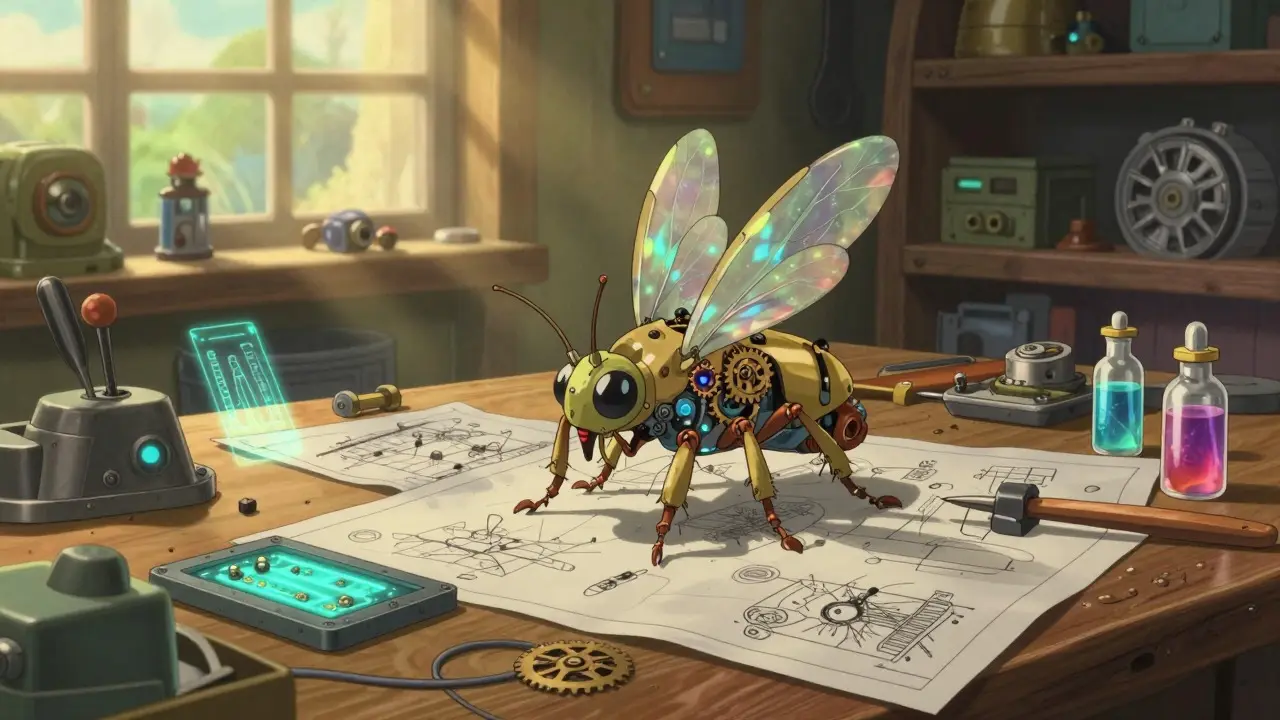
You’ve probably seen the name BattleFly (GFLY) pop up in your crypto feed. It promises a mix of strategic gameplay and earning potential, which sounds great on paper. But if you are looking at the current charts, things look a bit different than the hype might suggest. The price has dropped significantly from its peak, and trading volume is almost non-existent on major platforms.
So, what exactly is this project? Is it a dead token, or just a niche game with loyal players? To understand BattleFly is an experimental player-versus-player strategy game and cryptocurrency token built on the Arbitrum blockchain, we need to separate the gaming mechanics from the financial speculation. This guide breaks down how the game works, why the token exists, and whether there is still value in joining the ecosystem today.
The Core Concept: Strategy Meets Blockchain
BattleFly isn’t a simple clicker game where you press a button to earn coins. It positions itself as a tactical PvP (player-versus-player) arena. Launched officially on November 21, 2022, the project was designed to leverage the speed and low costs of the Arbitrum layer-2 scaling solution for Ethereum that enables fast and cheap transactions network. This choice of infrastructure is critical because traditional Ethereum mainnet games often suffer from high gas fees that eat into profits.
The central entity here is the BattleFly NFT a unique digital asset representing a customizable character in the game. You don't just buy a coin; you acquire a digital fighter. These fighters start with four modification slots. Over time, you can expand these slots using mod packs. The depth comes from the customization options. There are over 290 available modification components. Think of it like building a deck in a card game or customizing a car in a racing simulator. Every bolt, engine part, and armor plate affects how your BattleFly performs in combat.
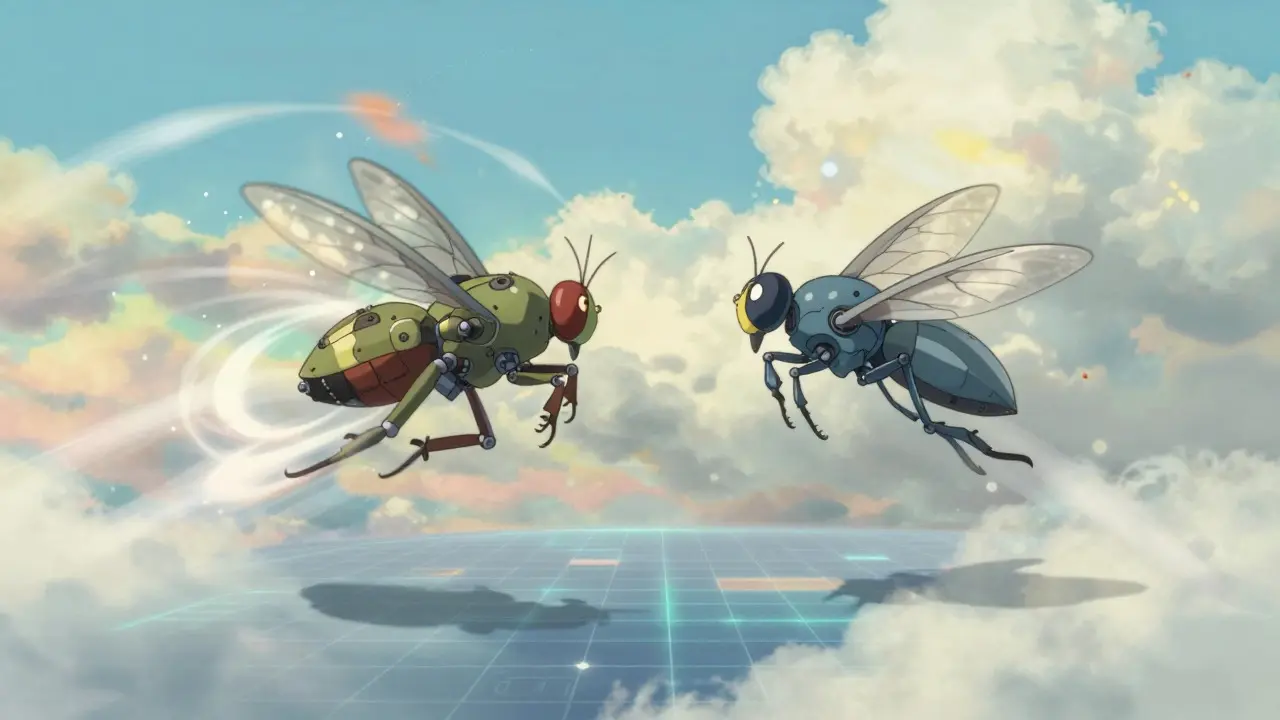
The gameplay loop revolves around automated battles. You set up your BattleFly with specific stats and synergies, and then it enters the Battlegrounds the primary competitive mode featuring rapid 1v1 PvP matches. These matches are short-lasting between 10 to 30 seconds-but they happen frequently, ranging from 10 to 100 times daily per active unit. This creates an "idle" aspect where your assets work while you sleep, provided you have optimized their build correctly.
Understanding the Dual-Token Economy
This is where many new users get confused. BattleFly operates with two distinct tokens, each serving a very different purpose. Understanding this separation is key to knowing what you are actually buying or holding.
- MAGIC Token: This is not native to BattleFly but belongs to the broader TreasureDAO a decentralized autonomous organization focused on building an open-source gaming ecosystem on Arbitrum ecosystem. In BattleFly, MAGIC acts as the fuel. Players stake small amounts of MAGIC on battle outcomes. If you win, you take your opponent’s stake minus platform fees. This creates a direct wealth redistribution mechanism among players rather than printing new money out of thin air.
- GFLY Token: This is the native governance and utility token of the BattleFly project itself. Built on the ERC20 standard with the contract address 0x872bAD41CFc8BA731f811fEa8B2d0b9fd6369585, it handles voting rights and specific in-game utilities. However, its market performance tells a starkly different story than its intended utility.
The reliance on MAGIC means that to play effectively, you need exposure to the TreasureDAO ecosystem’s health. If MAGIC drops in value, the rewards you win in BattleFly lose purchasing power, even if you are winning more battles. This ties the game’s success directly to the stability of a larger, external economic system.
Market Reality: Volatility and Liquidity Concerns
If you are looking at GFLY from an investment perspective, the data requires careful scrutiny. As of mid-2026, the token exhibits extreme volatility and low liquidity. Different tracking platforms show conflicting data, which is a red flag for retail investors.
| Metric | CoinMarketCap | CoinDesk | TradeSanta |
|---|---|---|---|
| Price (USD) | $0.008051 | $0.060 | $0.00737 |
| 24h Volume | $0 | N/A | $58.48 |
| Market Cap | $0 | N/A | $35,252 |
Note the all-time high of $73.31 reached on September 15, 2024. Comparing that to current prices near $0.007 represents a decline of nearly 99.99%. While crypto markets are known for cycles, such a drop combined with zero volume on major aggregators suggests that most speculative interest has evaporated. The token supply metrics also appear inconsistent, with some sources reporting zero circulating supply, likely due to data scraping issues or the token being consolidated in fewer wallets.
For a casual gamer, this might not matter much if you are playing for fun. But if you bought GFLY expecting it to recover to its 2024 highs, the path forward is steep. The lack of liquidity means that selling large amounts could crash the price further, trapping holders.
How to Start Playing: A Step-by-Step Guide
If you decide the strategic depth appeals to you despite the market conditions, here is how you enter the ecosystem. The barrier to entry is technical rather than financial, as the initial costs can be relatively low compared to other P2E giants.
- Set Up Your Wallet: You need a compatible cryptocurrency wallet. MetaMask a popular software cryptocurrency wallet used to interact with the Ethereum blockchain is the standard choice. Ensure it is configured to connect to the Arbitrum One network, not the Ethereum Mainnet, to avoid paying excessive gas fees.
- Acquire ETH and MAGIC: Buy Ethereum (ETH) on a major exchange and bridge it to Arbitrum. Then, swap some ETH for MAGIC tokens on a decentralized exchange (DEX) like Camelot or Uniswap. You will need MAGIC to stake in battles.
- Get a BattleFly: You can purchase a BattleFly NFT from the secondary market or buy a "Flight Pass" if available, which simplifies the onboarding process by bundling necessary assets.
- Customize and Deploy: Use the in-game interface to assign modifications to your NFT. Experiment with roles like "Assassin" (high burst damage) or "Tank" (high defense). Once ready, deploy your fly into the Battlegrounds.
The learning curve is significant. Newcomers often struggle with understanding wallet connections and gas optimization. The community Discord is your best resource here, as official documentation can be sparse compared to traditional gaming platforms.

Strategic Gameplay: Building for ROI
Success in BattleFly isn’t just about luck; it’s about math and synergy. Since battles are automated, your input happens before the fight starts. You are essentially programming your fighter’s behavior through stat allocation.
Players typically develop specialized builds:
- Farmers: Focus on consistency and low risk. They aim for steady, small wins to accumulate MAGIC slowly without risking large stakes.
- Assassins: High-risk, high-reward builds that try to end fights quickly. They rely on critical hit modifiers and speed stats.
- Warriors: Balanced tanks that absorb damage and outlast opponents. Effective against aggressive builds but vulnerable to sustained DPS (damage per second).
The achievement system tracks three main areas: modification load-out optimization, ROI ranking based on net MAGIC gains, and overall performance in the Hyperdome arena. Climbing these ranks doesn’t just give bragging rights; it often unlocks better modification slots or higher staking limits, creating a positive feedback loop for skilled players.
Is BattleFly Still Worth It in 2026?
The answer depends entirely on your goal. If you are a trader looking for quick profits, GFLY currently offers little liquidity and high risk. The dramatic price collapse and zero volume on major trackers make it a speculative gamble at best.
However, if you are a gamer who enjoys deep strategy and already participates in the Arbitrum or TreasureDAO ecosystems, BattleFly offers a unique experience. The integration with MAGIC provides a stable foundation for in-game economy, and the 290+ modification system ensures long-term replayability. The cross-platform support for PC, Android, and iOS makes it accessible, allowing you to manage your fleet on the go.
The project remains in an "experimental" phase according to developers. This means features can change, and tokenomics may evolve. For early adopters willing to tolerate uncertainty, there is potential value in contributing to a growing niche. For everyone else, caution is advised. Always do your own research (DYOR) and never invest more than you can afford to lose in volatile crypto gaming assets.
What is the contract address for GFLY?
The official ERC20 contract address for GFLY on the Arbitrum network is 0x872bAD41CFc8BA731f811fEa8B2d0b9fd6369585. Always verify this address on official channels before adding it to your wallet to avoid scams.
Do I need MAGIC tokens to play BattleFly?
Yes, MAGIC is essential for meaningful participation. It is used for staking on battle outcomes. Without MAGIC, you cannot engage in the core PvP economy where winners claim opponents' stakes. You can acquire MAGIC on Arbitrum-based DEXs.
Why is the GFLY price so low compared to its all-time high?
GFLY reached an ATH of $73.31 in September 2024 during a period of high speculation. Since then, the broader play-to-earn market has contracted, and liquidity has dried up. The current low price reflects reduced trading activity and market confidence in the token's short-term utility.
Can I play BattleFly on mobile devices?
Yes, BattleFly supports cross-platform accessibility. Official applications are available for both Android and iOS, as well as desktop versions for PC. This allows players to monitor and manage their BattleFlies remotely.
Is BattleFly a good investment right now?
Investing in GFLY carries high risk due to extreme volatility and low liquidity. With prices down ~99% from highs and minimal daily volume, it is considered highly speculative. It is better suited for gamers interested in the ecosystem rather than pure financial investors seeking stability.



Ed Mitchell
August 4, 2026 AT 17:45 PMIt is quite evident that this entire ecosystem is a carefully orchestrated Ponzi scheme designed to extract wealth from the unwary masses. The sudden drop in value is not a market correction but a deliberate liquidation event by insiders who knew the house was rigged. They want you to believe it is just 'volatility' while they quietly exit their positions. Do not be fooled by the technical jargon about Arbitrum or layer-2 solutions. These are merely distractions to keep you engaged while your capital evaporates into thin air. The lack of liquidity is not an oversight; it is a feature designed to trap retail investors. Wake up and see the matrix for what it truly is.
Ken G
August 4, 2026 AT 22:53 PMpeople need to stop falling for these shiny new toys every week its always the same story buy high sell low and cry about it later. the tokenomics are garbage because they rely on magic which is also dying. why would anyone trust a game where the currency depends on another failing project. it is just greed masquerading as innovation. simple as that.
Michael Mostyn
August 5, 2026 AT 06:42 AMOne must consider the philosophical implications of a digital asset whose value is derived entirely from speculative consensus rather than intrinsic utility. The BattleFly phenomenon serves as a modern allegory for the fragility of faith-based economies. When the narrative collapses, so too does the perceived worth of the underlying assets. It raises the question: if a tree falls in the forest and no one is trading it, does it have a price? In the case of GFLY, the answer appears to be a resounding no. The separation of gaming mechanics from financial speculation is theoretically sound but practically disastrous when the two are inextricably linked through staking mechanisms. We are witnessing the death of hope in real-time.
Erica Johnson
August 5, 2026 AT 14:46 PMActually, let me correct the record here because everyone seems to be missing the point. The issue isn't just the price drop; it's the fundamental flaw in relying on MAGIC. You think you're playing a strategy game, but you're really just providing liquidity for TreasureDAO. And guess what? They don't care about your little fly battles. The 290 modification components sound impressive until you realize they are just cosmetic skins with zero impact on the actual economic sustainability. I've been tracking this since 2022, and the devs have done nothing to address the core liquidity crisis. It's sad, really. :/
Lorraine Surringer
August 6, 2026 AT 05:22 AMoh honey you really thought you were going to get rich quick huh. look at yourself holding a bag of worthless pixels. i feel for you because i see the pain in your eyes when you check the chart. it hurts doesnt it. knowing you lost everything on a dream that never existed. but hey at least you learned a lesson right. maybe next time you will listen to people who actually know better. dont let it break your spirit though. we all have our moments of weakness.
Alex Di Mango
August 8, 2026 AT 00:29 AMLet's try to keep things positive here. While the financial aspect might be bleak, there is still value in the community and the strategic gameplay itself. Not everyone plays for profit. Some of us enjoy the puzzle of optimizing builds and the thrill of PvP matches. It's okay to admit the investment side failed, but let's not dismiss the effort put into the game design. Maybe if we focus on the fun rather than the money, we can find some joy again. There is potential for recovery if the team listens to feedback.
Nick Darring
August 8, 2026 AT 03:11 AMYou know what's funny is how everyone acts like they are surprised. I mean seriously, did nobody read the whitepaper or do any basic due diligence before throwing their life savings into a crypto game called BattleFly. It sounds like something a cartoon villain would come up with. But sure, keep telling yourselves it's just a temporary dip. Meanwhile, the developers are probably sipping margarites on a beach somewhere wondering why you people are so easy to trick. It's almost entertaining watching the herd run off a cliff together. Just remember to tip your waiters well on the way down.
Amor Jordan
August 8, 2026 AT 22:21 PMI just feel so much empathy for those who lost significant amounts. It is heartbreaking to watch passion turn into despair. Please remember that your worth is not defined by your portfolio. Take a deep breath and step away from the screen. The community should support each other through this tough time instead of blaming one another. We are all in this together, and kindness goes a long way.
Eden Tadesse
August 10, 2026 AT 20:34 PMi thot the game was cool but then i tried to sell my nft and realized there was literally no one buying. so yeah good luck with that. also my phone keeps crashing when i open the app so idk if its worth the hassle anymore. typos aside i think we all know where this is heading.
Eric Zehr
August 12, 2026 AT 11:11 AMDespite the challenges, there is always room for growth and improvement. The fact that the project remains active shows resilience. If players stick together and provide constructive feedback, the developers may yet revive the ecosystem. Let's focus on what we can control: our mindset and our engagement with the game. Optimism is a powerful tool in uncertain times.
Namrata Mapgaonkar
August 12, 2026 AT 20:35 PMfrom india perspective it seems very risky. we have seen many such projects fail here too. but the gameplay looks interesting if you ignore the money part. maybe play for free if possible. dont invest unless you can afford to lose. take care friends :)