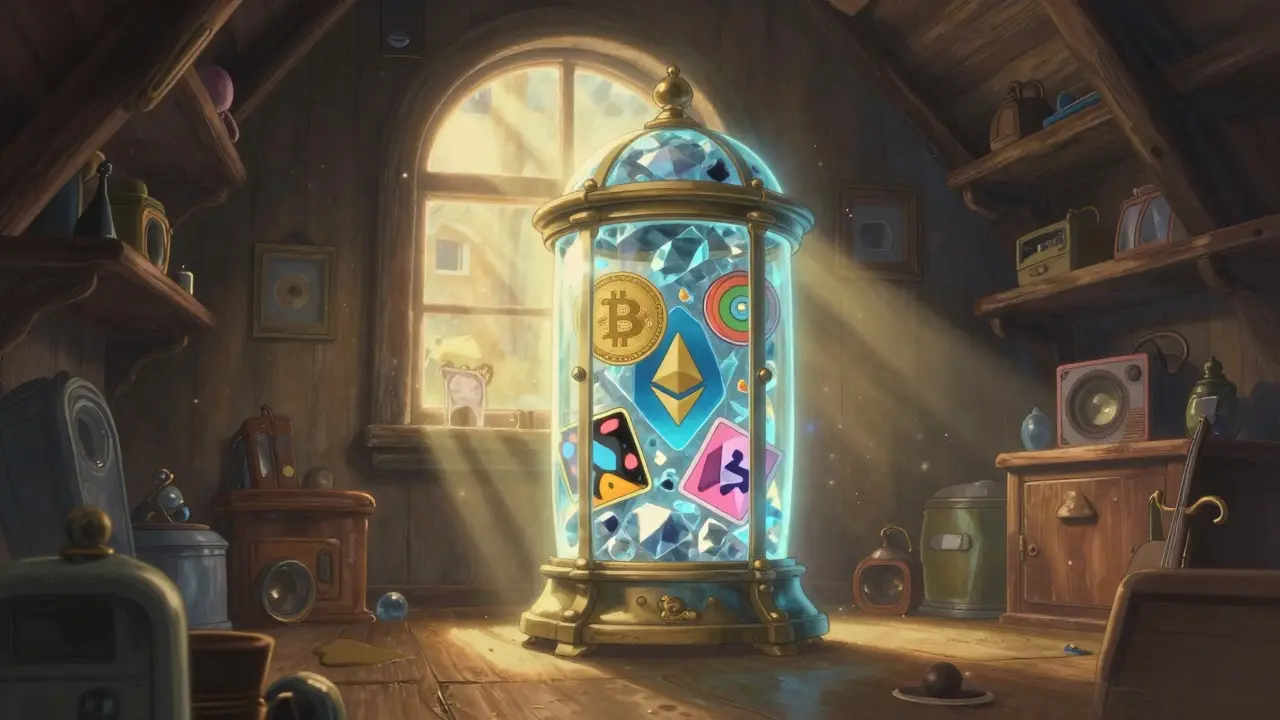
Imagine having a digital attic where you can store a Bitcoin, an Ethereum-based NFT, and a few Polygon tokens all in one single, secure container. That is exactly what Circuits of Value is trying to achieve. While most people identify it by its ticker symbol, COVAL, it is more than just a tradable coin; it is the engine behind a specific way of managing digital assets across different blockchains.
If you are looking at COVAL crypto coin today, you are likely seeing a project that has survived multiple market cycles but currently struggles with low liquidity. It is a relic from the early days of crypto that evolved into a specialized tool for asset bundling. But does it actually solve a problem, or is it just a technical curiosity? Let's break down how it works and where it stands in 2026.
The Core Concept: What is COVAL?
Circuits of Value is a cryptocurrency project that started as a protocol for secure value transfer and eventually became the utility token for the Emblem Vault platform. Launched back in late 2014, it predates many of the famous projects we know today. For years, it existed as a standalone coin, but its real purpose became clear when Shannon Code developed the Emblem Vault platform in 2019.
The big problem in crypto is that blockchains don't usually talk to each other. If you have assets on Bitcoin and others on Ethereum, you usually need different wallets and a lot of manual effort to manage them. COVAL aims to fix this by allowing users to create "vaults." These vaults act as wrappers that consolidate various assets-cryptocurrencies and NFTs-into one unit, making it easier to exchange or transfer a whole bundle of different assets at once.
How the Ecosystem Works: COVAL vs. FUEL
One thing that confuses new users is that the ecosystem uses a dual-token system. You can't just use COVAL for everything; there is another player called FUEL.
- COVAL: This is the primary utility token. You use it for platform operations, paying for the creation of new vaults, and trading outside the ecosystem.
- FUEL: This is a transactional token used exclusively for operations inside the Emblem Vault system. Think of it as the "gas" specifically for the vault's internal machinery.
Technically, COVAL is built on the Counterparty protocol. Since Counterparty is built on top of the Bitcoin blockchain, COVAL uses a Proof-of-Work (PoW) consensus mechanism. This means it inherits Bitcoin's security but also its slow speed. If the Bitcoin network is congested, your COVAL transactions will likely crawl along at the same sluggish pace.
| Attribute | Value / Detail |
|---|---|
| Circulating Supply | ~1.78 Billion COVAL |
| Consensus Mechanism | Proof-of-Work (via Counterparty) |
| Primary Use Case | Asset bundling in Emblem Vault |
| Supported Networks | Bitcoin, Ethereum, ERC-20, Polygon |
| All-Time High | $0.946 (December 2021) |
The User Experience: Using Emblem Vault
Setting up an account with Emblem Vault isn't as simple as downloading a modern app. It requires a moderate learning curve. First, you need a wallet that is compatible with Counterparty. Then, you have to acquire COVAL tokens, which are only available on a handful of exchanges.
Once you're in, the process of creating a vault requires a fixed fee in COVAL plus the standard network gas fees. For some, the ability to bundle NFTs from different chains is a game-changer. For others, the friction is too high. Real-world feedback from users on platforms like Reddit suggests that while the interface is simple, the actual movement of assets can be painfully slow. Some users reported waiting up to three days for cross-chain transfers to finalize due to Bitcoin network delays. If you are used to the instant speeds of Solana or Layer 2s, this will feel like a step back in time.
COVAL vs. The Giants: Is it Competitive?
When you compare COVAL to the heavyweights of interoperability, the gap is massive. Projects like Polkadot (DOT) and Cosmos (ATOM) are designed to be the "internet of blockchains," providing high-speed infrastructure for thousands of apps. COVAL, on the other hand, is more of a niche tool. It doesn't try to be a global network; it just wants to help you bundle your assets.
While the bundling feature is unique, COVAL faces stiff competition from newer protocols like Chainlink and its Cross-Chain Interoperability Protocol (CCIP). These newer systems have massive institutional backing and far better liquidity. COVAL's market cap is often below $1 million, which is a precarious position in the crypto world. With very low 24-hour trading volumes, it can be difficult to buy or sell large amounts of the coin without significantly moving the price.

The Risks and Red Flags
Investing in or using COVAL comes with significant risks. The most obvious is the volatility. The coin has plummeted over 99% from its 2021 peak. While some algorithmic predictors might suggest a recovery, the actual data shows a project that is struggling to gain traction.
There are also technical concerns. A look at the project's GitHub reveals very little recent development activity. When a project stops updating its code, it often means the developers have moved on or the project has stalled. Additionally, the support infrastructure is thin. Users have complained about slow response times from the team and inadequate documentation for troubleshooting failed transactions.
Final Verdict: Who is this for?
COVAL isn't for the average trader or a beginner looking for a safe bet. It is a highly speculative asset. However, for a specific type of user-someone who collects diverse NFTs and cryptocurrencies across multiple chains and wants a way to "package" them together-the Emblem Vault still offers a novel service that isn't easily found elsewhere.
If you decide to dive in, do so with extreme caution. Understand that you are interacting with a Proof-of-Work system that is slower than modern standards and a token with very low liquidity. It's a fascinating experiment in asset management, but from a financial perspective, it's a high-risk play.
What exactly is the utility of COVAL?
COVAL serves as the primary utility token for the Emblem Vault platform. Its main job is to facilitate the creation of vaults that bundle different digital assets (like BTC, ETH, and NFTs) into a single unit, and it is used to pay platform fees.
Is COVAL the same as FUEL?
No. COVAL is the general utility token used both inside and outside the platform. FUEL is a specific transactional token used only for operations within the Emblem Vault system to keep internal transactions efficient.
Which blockchain does COVAL run on?
COVAL operates on the Counterparty protocol, which is built on top of the Bitcoin blockchain. Because of this, it uses a Proof-of-Work consensus mechanism.
Why is COVAL's price so volatile?
The volatility is largely due to extremely low liquidity. When a coin has very low trading volume, even a small buy or sell order can cause the price to swing wildly. Combined with a lack of institutional interest, this makes it a high-risk asset.
Can I use COVAL for fast trading?
Generally, no. Because it relies on the Bitcoin network via Counterparty, transactions are much slower than those on modern blockchains. Users have reported delays of several days for some cross-chain movements.






Larry Yang
April 22, 2026 AT 21:00 PMImagine relying on a relic from 2014 in an era of L2s and instant finality... truly a quaint little fantasy for those who enjoy watching their assets gather digital dust for three days while the network chugs along like a steam engine
Kyle Bush
April 24, 2026 AT 17:46 PMWHO CARES ABOUT THE SPEED WHEN WE HAVE AMERICAN INNOVATION DRIVING THE MARKET!! 🇺🇸🇺🇸 THIS STUFF IS JUNK COMPARED TO WHAT WE DO BEST 🚀🔥💰
Ali Tate
April 26, 2026 AT 11:08 AMabsolute dinosaur tech for the mindless masses who think a wrapper is revolutionary... honestly just a glorified junk drawer for midwit traders who can't handle a simple seed phrase
Doc Coyle
April 27, 2026 AT 08:18 AMIt is simply not right to encourage people to put money into something with a dead GitHub. We have a moral obligation to warn beginners about these traps before they lose their savings.
Mary Tawfall
April 28, 2026 AT 16:24 PMIt is interesting to see how these early projects evolved! Even if the speed is slow, the idea of a digital attic is quite charming for collectors.
Jason M
April 29, 2026 AT 13:32 PMListen everyone! If you are feeling overwhelmed by the technical barriers of Counterparty, do not panic!
The learning curve is steep, but that is where the growth happens! Just take it one step at a time and always double-check your wallet compatibility before moving a single satoshi! You can totally master this if you just put in the work!
debashish sahu
April 30, 2026 AT 12:33 PMThe concept of bundling assets is useful in many ways, though the execution seems to struggle with the current demands of the global market.
Ellie Drews
May 1, 2026 AT 01:36 AMLet's try to keep the conversation helpful for everyone. It is okay to disagree on the tech as long as we stay kind to each other.