
You might have seen DOVU a blockchain-based utility token originally designed for mobility data rewards and now focused on tokenizing ecological credits in the voluntary carbon market pop up in your feed. It’s not just another meme coin. It has a history tied to Jaguar Land Rover and a pivot from tracking bus rides to saving the planet. But here’s the catch: if you’re looking at DOVU today, you need to know which version you’re buying. There’s the old legacy token, the new multi-chain "Earth" token, and a separate carbon credit token called cDOV. Confusing? Yeah, a bit. Let’s break it down so you don’t end up holding a dead asset while thinking you’re investing in green tech.
The Origin Story: From Bus Tickets to Carbon Offsets
Back in 2017, DOVU launched as an Ethereum ERC-20 token with a simple promise: reward people for moving around. The idea was to build a circular economy for transport data. If you used public transport, shared your anonymized travel data, or participated in market research, you earned DOV tokens. These could then be spent on travel tickets or eco-friendly products. It was a mobility-first project, backed by heavyweights like Jaguar Land Rover, who held a partial stake in the company. This corporate backing gave it more credibility than most early-stage crypto projects.
But the world changed. The focus shifted from just rewarding movement to rewarding sustainability. Today, under the branding "DOVU Earth," the platform targets the Voluntary Carbon Market (VCM). Instead of just giving you points for taking the train, it aims to let businesses and individuals buy tokenized carbon credits directly. You can offset your flight emissions or neutralize your daily commute using blockchain technology. It’s a pivot that moves DOVU from a niche transport app into the broader ESG (Environmental, Social, and Governance) investment space.
Understanding the Token Versions: Don’t Buy the Wrong One
This is where most newcomers get tripped up. There isn’t just one DOVU token. There are at least three distinct assets you need to distinguish between:
- DOVU [OLD] / DOV: The original ERC-20 token launched in 2017. It trades at a micro-cap valuation (often under $20k market cap) with very low liquidity. Many aggregators still list this, but it’s largely considered a legacy asset.
- DOVU (New/Multi-chain): The current utility token powering the DOVU Earth ecosystem. It has a total supply of 10 billion and is deployed across Hedera, Ethereum, and Base networks. This is the active trading asset with meaningful volume.
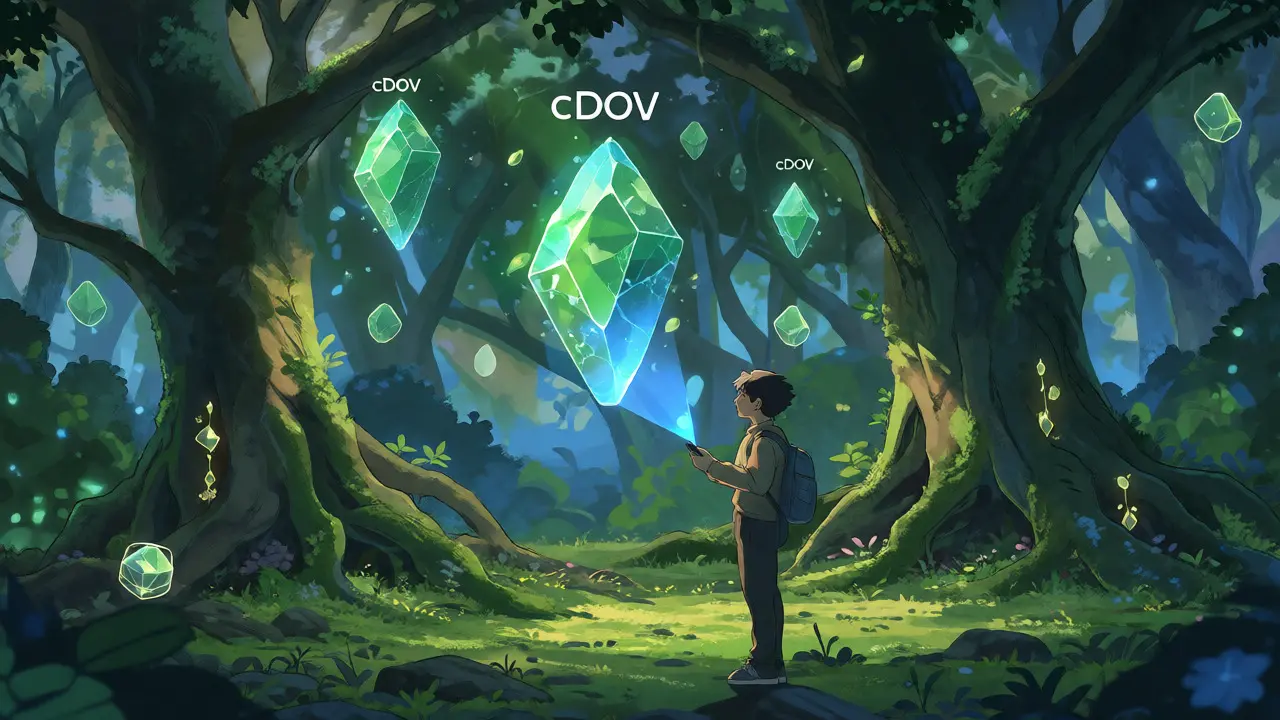
- cDOV: This is crucial-cDOV is not the DOVU token. It is a separate token on the Hedera network that represents the actual carbon credits. When you buy offsets, you’re interacting with cDOV, while DOVU is the currency you use to access the platform.
If you see a price chart showing DOVU trading at fractions of a cent with zero volume, you’re likely looking at the legacy DOV contract. The active DOVU token trades closer to $0.001-$0.005 range depending on market conditions. Always check the contract address before swapping.
| Feature | DOVU [OLD] (Legacy) | DOVU (Current/Earth) | cDOV (Carbon Credits) |
|---|---|---|---|
| Blockchain | Ethereum (ERC-20) | Hedera, Ethereum, Base | Hedera (HTS) |
| Purpose | Mobility Data Rewards | Platform Utility & Access | Representation of CO2 Offsets |
| Liquidity | Very Low / Near Zero | Moderate / Active | Niche / Platform-Specific |
| Status | Legacy / Phasing Out | Active Core Asset | Asset Class within Ecosystem |
How the Technology Works: Multi-Chain Strategy
DOVU didn’t stick to just Ethereum. They adopted a multi-chain strategy to reach different user bases. The main DOVU token lives on Hedera Hashgraph, Ethereum, and Base (Coinbase’s Layer 2 solution). Why Hedera? Because it’s enterprise-friendly, fast, and cheap-perfect for corporate partners like Jaguar Land Rover who want to track sustainability metrics without paying high gas fees. Ethereum and Base appeal to DeFi users who want to trade or stake their tokens in decentralized exchanges.
The architecture uses a two-token model. DOVU acts as the "fuel" for the ecosystem. You stake it to earn rewards, use it to pay for services, or vote on governance proposals. cDOV is the product itself-the digital certificate proving you’ve offset a ton of carbon. By separating the utility token from the asset token, the team avoids the volatility trap where the price of your carbon credit swings wildly based on crypto speculation. Your offset stays stable; your DOVU holdings fluctuate.
Real-World Use Cases: Who Actually Uses This?
It’s easy to dismiss small-cap crypto as vaporware, but DOVU has tangible integrations. The primary user base includes environmentally conscious consumers and corporations looking to meet ESG goals.
For individuals, the process looks like this: You link your mobility accounts (like transit cards or ride-sharing apps) to the DOVU app. The app tracks your sustainable actions-taking the bus instead of driving, walking, cycling. You earn DOVU tokens for these actions. Then, you can redeem those tokens for discounts on eco-products or convert them into carbon offsets via the marketplace.
For businesses, the value proposition is transparency. Companies can purchase verified carbon credits through the DOVU platform, ensuring that the offsets they buy are actually retired and not double-counted. The blockchain ledger provides an immutable record of this transaction, which is increasingly important for regulatory compliance in Australia, Europe, and beyond.

Risks and Red Flags: What to Watch Out For
Let’s be real: DOVU is a micro-cap asset. That means high risk. The market capitalization for the active token hovers in the millions, not billions. Liquidity can dry up quickly, leading to significant slippage when buying or selling large amounts.
Another major hurdle is communication. Reddit threads are full of users asking, "What is DOVU actually?" because the distinction between DOVU, DOV, and cDOV is poorly explained in many places. If you buy the wrong contract, you might hold an asset with no exit strategy. Also, the success of the project depends heavily on the adoption of the voluntary carbon market. If global demand for tokenized offsets stalls, DOVU’s growth ceiling lowers significantly.
Finally, keep an eye on the staking metrics. The whitepaper claims over 40% of tokens are staked, locking up supply. This reduces sell pressure, which is good for price stability. However, if those stakers decide to unstake en masse during a downturn, it could trigger a cascade of selling.
Key Takeaways
- Identify the Right Token: Ensure you are buying the current multi-chain DOVU token, not the legacy DOVU [OLD] ERC-20, unless you specifically want the historical asset.
- Understand the Dual-Token System: DOVU is the utility/access token; cDOV represents the actual carbon credits.
- Corporate Backing Matters: Partial ownership by Jaguar Land Rover adds legitimacy but doesn’t guarantee profit.
- Multi-Chain Flexibility: The token works on Hedera, Ethereum, and Base, offering various entry points for traders.
- Micro-Cap Volatility: Expect sharp price movements and lower liquidity compared to major cryptocurrencies.
Is DOVU a good investment for beginners?
DOVU is a high-risk, micro-cap cryptocurrency. While it has real-world utility in the carbon credit sector, its low liquidity and complex token structure make it better suited for experienced investors who understand the nuances of small-cap altcoins. Beginners should approach with caution and only invest what they can afford to lose.
What is the difference between DOVU and cDOV?
DOVU is the utility token used for transactions, staking, and accessing the platform. cDOV is a specific token on the Hedera network that represents a unit of carbon offset (one ton of CO2). You use DOVU to buy or interact with cDOV, but they serve different economic functions.
Where can I buy DOVU crypto?
The current DOVU token is traded on several centralized and decentralized exchanges. Key platforms include Gate.io, BitMart, and various DEXs on the Hedera and Base networks. Always verify the correct contract address for the chain you are using to avoid buying the legacy token.
Does Jaguar Land Rover still support DOVU?
Jaguar Land Rover holds a partial equity stake in the DOVU company, stemming from their initial involvement in the mobility data phase. While they remain a significant shareholder, their active operational role may vary. Their backing provides institutional credibility, but it does not mean JLR controls the token's price action.
Why are there different prices for DOVU on different sites?
This usually happens because aggregators list both the legacy DOVU [OLD] token and the newer DOVU token separately. The legacy token often shows near-zero prices due to lack of liquidity, while the active token reflects current market rates. Check the ticker symbol and contract address carefully.





0 Comments