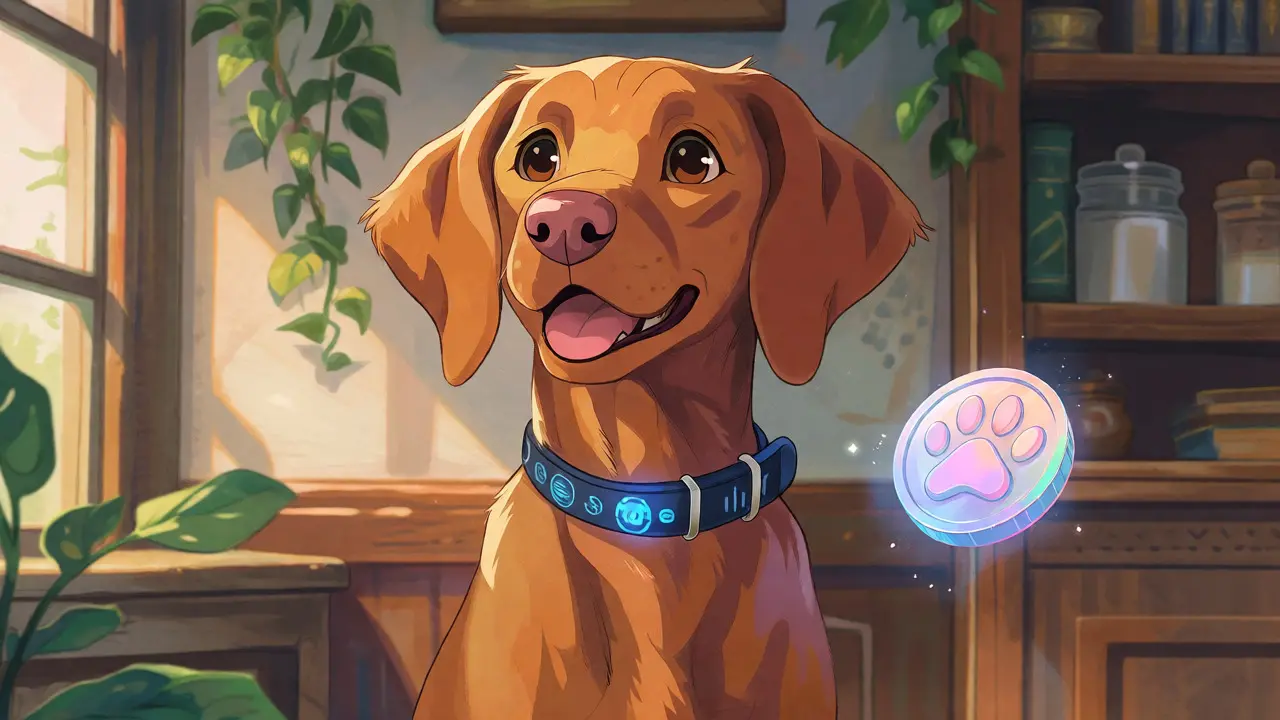
You might be scratching your head wondering why a dog breed known for its energy and loyalty has its own cryptocurrency. Hungarian Vizsla Inu (HVI) is exactly what it sounds like: a meme-inspired token on the Binance Smart Chain that mixes internet culture with a mission to help dogs. But don't let the cute branding fool you. This isn't just another joke coin that vanished after a week. Launched in May 2021, HVI positions itself as the first major Hungarian investment and charity token, aiming to support dog shelters while offering speculative value to holders. If you're curious about whether this micro-cap asset has any real legs or if it's just barking up the wrong tree, here’s the straight scoop.
The Core Concept: More Than Just a Meme
At its heart, HVI is a community-driven project that tries to bridge the gap between speculative trading and tangible social good. Most meme coins thrive on hype and volatility, but Hungarian Vizsla Inu adds a layer of purpose. The project markets itself as a vehicle for charitable giving, specifically targeting organizations that care for Hungarian Vizslas and other dogs in need. Every time the token is traded, a portion of the transaction is intended to go toward these charities. It’s a clever hook for animal lovers who want their investments to do more than just sit in a wallet gathering digital dust.
The team behind HVI started with a simple idea: create a token that reflects Hungarian national pride and supports local causes. While many crypto projects are faceless and global, HVI leans into its roots. It claims to be the "first Hungarian BEP-20 charity and investment token," a title that sets it apart from generic dog-themed coins like Dogecoin or Shiba Inu. However, it’s crucial to note that the team remains largely pseudonymous. You won’t find famous names leading the charge, which is common in the meme coin space but worth keeping in mind when assessing trust.
Technical Basics: How HVI Works on BNB Chain
If you’re used to Ethereum gas fees making small trades impossible, you’ll appreciate where HVI lives. It operates on the Binance Smart Chain (BNB Chain) using the BEP-20 token standard. This choice was strategic. BEP-20 tokens are compatible with popular wallets like MetaMask and Trust Wallet, and they allow for much cheaper and faster transactions than Ethereum-based ERC-20 tokens. For a low-value token like HVI, this matters. Nobody wants to pay $5 in gas fees to trade a coin worth fractions of a cent.
The primary way to trade HVI is through decentralized exchanges (DEXs), specifically PancakeSwap. The most active pair is HVI/WBNB (Wrapped BNB). Because it’s a DEX, there’s no central authority holding your funds; you swap directly from your wallet. The smart contract address for HVI is publicly verifiable on BscScan, allowing anyone to audit the code and see transaction history. This transparency is vital for verifying that the "charity" mechanism actually works as advertised, though independent audits are rare for projects of this size.

Tokenomics: The Massive Supply Issue
Here’s where things get tricky for new investors. HVI has an astronomically high total supply. We’re talking about 10,000 quadrillion HVI (10,000,000.00T tokens). To put that in perspective, Bitcoin has a max supply of 21 million. With such a massive number of tokens, the price per unit is naturally tiny. As of late 2025 and early 2026, prices hover around $0.000000000011 to $0.00000000000005 depending on the exchange snapshot.
This high supply creates a psychological trap for beginners. Seeing a price of ten zeros makes people think, "If it goes up by one zero, I’ll be rich!" But because the market cap is so small-often reported as near $0 due to inconsistent circulating supply data-the liquidity is thin. A small buy order can spike the price, but a small sell order can crash it just as fast. Furthermore, different data aggregators disagree on how many tokens are actually in circulation. Some report zero circulating supply, while others like KuCoin suggest nearly all 10 quadrillion are out there. This discrepancy highlights the lack of clear, standardized reporting for micro-cap tokens.
| Metric | Value / Description |
|---|---|
| Blockchain | Binance Smart Chain (BNB Chain) |
| Token Standard | BEP-20 |
| Total Supply | 10,000 Quadrillion (10,000,000.00T) |
| Primary Exchange | PancakeSwap (V2) |
| Launch Date | Late May 2021 |
| Market Position | Micro-cap / Meme / Charity |

Buying and Holding: Practical Steps
So, you’ve decided you want to support the cause or take a speculative shot. How do you actually get some HVI? Since it’s not listed on major centralized exchanges like Coinbase or Binance with significant volume, you’ll likely need to use a decentralized approach. Here is the typical workflow:
- Set up a Wallet: Install MetaMask or Trust Wallet and configure it for the BNB Smart Chain network.
- Fund Your Wallet: Buy BNB on a centralized exchange and send it to your wallet address.
- Connect to PancakeSwap: Go to PancakeSwap.com and connect your wallet.
- Find the Token: Use the official HVI contract address (0xde619a9e0eeeaa9f8cd39522ed788234837f3b26) to ensure you’re buying the right token. Never rely solely on the name search.
- Swap: Select BNB as the input and HVI as the output. Confirm the transaction and pay the small gas fee in BNB.
Be prepared for slippage. Because liquidity pools for HVI are small, large trades can move the price significantly before they execute. Always check your slippage tolerance settings in your wallet before confirming.
Risks and Reality Check
Let’s be honest: investing in HVI is high-risk. It ranks outside the top 6,000 cryptocurrencies on most trackers, with daily trading volumes often under $2,000. This means it lacks the institutional interest and deep liquidity of larger assets. There is no formal third-party security audit prominently displayed, meaning you are trusting the code written by anonymous developers. Rug-pull risks, where developers abandon the project and drain liquidity, are always present in the meme coin sector.
Additionally, the "charity" aspect is self-reported. While the website promises donations to shelters, there is limited public verification of cumulative donation amounts or specific non-profit partnerships. Without transparent proof-of-donation ledgers, the charitable claim remains part of the marketing narrative rather than a verified operational metric. Treat HVI as a speculative toy with a nice story, not a serious financial instrument.
Is Hungarian Vizsla Inu a legitimate project?
It is a legitimate token on the blockchain, meaning it exists and functions technically. However, "legitimate" in terms of long-term viability is debatable. It is a micro-cap meme coin with anonymous founders and low trading volume. It has survived since 2021, which shows some community resilience, but it lacks major exchange listings or verified audits.
Where can I buy HVI crypto?
The primary venue is PancakeSwap v2 on the Binance Smart Chain. You can also find it listed on smaller aggregators and some niche exchanges like KuCoin or Bybit, but liquidity there is often negligible compared to the DEX.
Does HVI actually donate to charity?
The project claims to donate a portion of transactions to dog shelters. However, there is limited public evidence or third-party verification of these donations. Investors should view this as a stated goal rather than a proven track record.
Why is the HVI price so low?
The price is low because the total supply is extremely high at 10,000 quadrillion tokens. High supply dilutes the value per unit. Price movement depends on percentage changes, not absolute dollar values.
Can I stake HVI?
The project mentions an ecosystem concept involving staking and other applications, but detailed information on live, robust staking programs is scarce. Most users currently hold or trade HVI rather than actively earning yield through complex DeFi integrations.






0 Comments