
When a new blockchain project launches, it doesn’t just hand out tokens randomly. The way those tokens are distributed shapes everything - from who gets rich early, to whether the network survives five years. This isn’t just about fundraising. It’s about utility token distribution - the blueprint that decides who owns what, why, and how they’re incentivized to stick around.
Why Distribution Matters More Than the Token Itself
A token without a fair distribution is like a pizza with one person eating the whole thing. Even if the recipe is perfect, the rest walk away hungry. In Web3, token distribution builds trust. If 80% of tokens go to the founding team and investors, the community feels locked out. That’s not decentralized. That’s centralized control with a blockchain label. Projects that get this right - like early Ethereum or Solana - didn’t just sell tokens. They built ecosystems where users, developers, and node operators had skin in the game. Their tokens had real use: paying for gas, voting on upgrades, staking for security. And the distribution made sure those people weren’t just spectators.Paid Distribution: How Money Changes Hands
Most projects raise funds by selling tokens. But not all sales are the same. SAFT (Simple Agreement for Future Tokens) is common in the U.S. It’s not a token sale - it’s a contract. Investors pay now for tokens that don’t exist yet. This lets projects comply with securities laws, since they’re selling an investment contract, not a functional asset. SAFTs are usually reserved for accredited investors and institutional buyers. They’re legal, but not public. Initial Coin Offerings (ICOs) were the wild west of 2017-2018. Anyone could buy tokens with Bitcoin or Ethereum. No KYC. No limits. Many projects vanished with the money. Today, ICOs are rare in regulated markets. Still, in places like Southeast Asia or Latin America, they’re alive because they’re simple and fast. Initial Exchange Offerings (IEOs) changed the game. Instead of the project running the sale, a crypto exchange like Binance or KuCoin does it. The exchange vets the project, handles KYC, and brings its user base. This adds trust. If Binance lists your token, you’re more likely to be legit. But you pay a cut - often 5-10% of the raised amount. Launchpads are the next evolution. Platforms like Polkastarter or CoinList let projects run token sales with built-in rules. You can set caps, time windows, and even use liquidity bootstrapping pools (LBPs) to avoid price crashes. LBPs slowly release tokens into the market, letting price find its level instead of dumping all at once.Free Distribution: Giving Tokens Away on Purpose
Not all tokens are sold. Some are given away - and that’s by design. Airdrops are the most popular free model. Projects send tokens to wallets that did something useful: held a specific coin, used a dApp, or joined a Telegram group. Airdrops create instant communities. When you get free tokens, you start using the platform. You talk about it. You might even stake them. Uniswap’s 2020 airdrop to early users didn’t just reward loyalty - it turned users into advocates overnight. Staking Rewards are another form of free distribution. Users lock up their tokens to help secure the network. In return, they get newly minted tokens as interest. Ethereum 2.0 does this. So does Cardano and Polkadot. It’s not a giveaway - it’s payment for service. And it keeps tokens circulating instead of sitting in wallets. Miners and Validators get tokens for securing the network. Bitcoin’s model is simple: solve a math problem, get a block reward. But PoW is energy-heavy. Newer chains use Proof-of-Stake (PoS), where validators are chosen based on how many tokens they hold and lock up. Either way, the network pays its guardians in tokens.
Capped vs. Uncapped: Controlling the Flood
How many tokens can one person buy? That’s the core of fairness. Uncapped sales let anyone buy as much as they want. Big wallets (whales) dominate. One person might buy 20% of the supply. That’s bad for decentralization. It’s also risky - if that whale dumps their tokens, the price crashes. Capped sales fix that. They set limits. For example, you can only buy $500 worth of tokens. Or you’re limited to 0.1% of the total supply. This forces participation from thousands, not dozens. Projects like Polygon and Avalanche used caps to avoid whale control. Parcel limits take it further. You can’t just buy 10,000 tokens in one transaction. You have to make 100 smaller ones. This slows down bots and whales. It’s not foolproof, but it adds friction where it matters.Treasury Allocations: The Project’s Emergency Fund
Every serious project sets aside a chunk of tokens - usually 10-25% - in a treasury. This isn’t for the founders to cash out. It’s for the future. The treasury pays developers. It funds marketing. It buys back tokens if the price drops too low. It can even be used to incentivize new partnerships. Think of it like a startup’s cash reserve - but in token form. The key is locking it up. If the treasury tokens are unlocked immediately, the team can dump them and abandon the project. Smart contracts usually lock treasury tokens for 2-4 years, releasing them monthly. This aligns long-term incentives.DAOs and Governance: Giving Power to Holders
The best distribution models don’t just give out tokens - they give out voting rights. That’s where DAOs (Decentralized Autonomous Organizations) come in. In a DAO, token holders vote on proposals: How much to spend on grants? Should we partner with X? Should we change the fee structure? The more tokens you hold, the more votes you get. That’s not perfect - it’s plutocratic - but it’s better than one CEO deciding everything. Projects like MakerDAO and Aave built their entire systems around this. Their tokens aren’t just currency. They’re shares in a digital company. That’s why their communities stay loyal even when prices drop.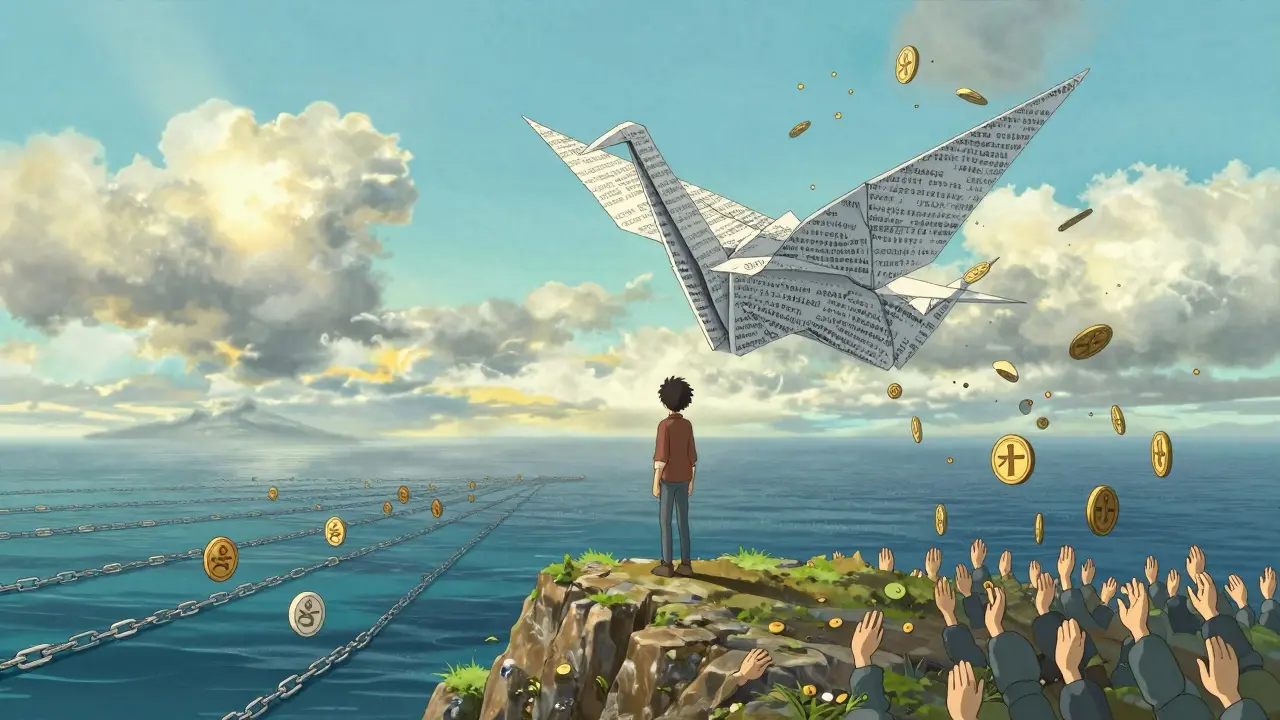
Anti-Whale Mechanisms: Preventing Centralization
One of the biggest failures of early crypto was token concentration. A few wallets owned half the supply. That’s the opposite of decentralization. Modern projects use tools to stop this:- Buy limits per wallet
- Delayed unlocks for large buyers
- Penalties for selling within 30 days
- Whale detection bots that flag suspicious activity
What Makes a Distribution Model Successful?
There’s no one-size-fits-all. But the best models share these traits:- Transparency: All rules are on-chain. You can verify allocations with a block explorer.
- Long-term alignment: Team tokens are locked for years. Advisors get vesting schedules.
- Community focus: More than 50% of tokens go to users, not investors.
- Utility first: Tokens aren’t just speculative assets - they unlock features, discounts, or governance.
- Regulatory awareness: No ICOs in the U.S. without proper structure. SAFTs or regulated exchanges are the norm.
What’s Changing in 2026?
The old ICO model is gone. So is the free-for-all airdrop. Today’s trends are:- Multi-stage distributions: Seed round → private sale → public sale → airdrop → staking rewards. Each stage targets a different group.
- On-chain identity: Using wallet history to verify participation, not just email addresses.
- Regulatory clarity: The EU’s MiCA law and U.S. SEC guidelines are forcing projects to structure sales properly.
- Token burn mechanics: Some projects burn unsold tokens or a portion of transaction fees to reduce supply and increase scarcity.
What’s the difference between a utility token and a security token?
A utility token gives access to a product or service on a blockchain - like paying for cloud storage on Filecoin or voting in a DAO. A security token represents ownership, like shares in a company, and is regulated like stocks. If a token promises profits from others’ work, it’s likely a security under U.S. law. Utility tokens focus on use, not investment.
Can I get rich from a token airdrop?
Sometimes, but rarely. Most airdrops give small amounts - $5 to $50 worth. A few, like Uniswap or Arbitrum, gave out millions in value. But those were exceptions. Airdrops are meant to build communities, not make you rich. If a project promises huge airdrops, it’s often a scam. Look for real usage, not hype.
Why do some projects lock team tokens for 4 years?
To prevent insiders from dumping tokens right after launch. If the team can sell 100% of their tokens on day one, they have no reason to keep building. Locking tokens for 2-4 years, with monthly releases, ensures they stay aligned with the project’s long-term success. It’s a signal of trustworthiness.
Are liquidity bootstrapping pools (LBPs) better than fixed-price sales?
Yes, for fairness. Fixed-price sales often lead to bots sniping tokens and whales dominating. LBPs start with a high price and slowly lower it over hours or days. This lets real users buy in gradually, without competing against bots. It’s harder to game. Projects like Balancer and Gnosis pioneered LBPs for this reason.
How do I know if a token distribution is fair?
Check the token allocation breakdown. If more than 20% goes to the team and advisors combined, be cautious. If over 60% goes to public sales and community incentives, that’s a good sign. Look for vesting schedules - team tokens should unlock slowly. And always verify the smart contract on Etherscan or a similar explorer. If the contract is unverified, walk away.





Kip Metcalf
January 11, 2026 AT 20:19 PMJust read this and my brain exploded in the best way possible. Token distribution isn’t just finance-it’s sociology with blockchain. If you give 80% to insiders, you’re not building a network, you’re building a pyramid scheme with a whitepaper.
Danyelle Ostrye
January 12, 2026 AT 19:43 PMSame. I lost money on a 2021 launch where the team had 70% unlocked day one. They vanished. Don’t trust anyone who doesn’t lock their tokens.
Natalie Kershaw
January 13, 2026 AT 01:23 AMLBPs are the future-no cap, no bots, no whales. Balancer’s model is genius. You let the market find its feet instead of letting crypto bros front-run everything. Also, airdrops aren’t free money-they’re community onboarding tools. Stop treating them like lottery tickets.
Mujibur Rahman
January 13, 2026 AT 18:03 PMFrom a dev perspective, treasury allocation is everything. If your project doesn’t have a 15-20% locked treasury with a 3-year vesting schedule, it’s not serious. I’ve seen too many teams cash out and ghost. Vesting isn’t optional-it’s survival.
Dave Lite
January 13, 2026 AT 23:48 PMYES!!! And don’t forget on-chain identity! If a project still uses Telegram for airdrop verification, they’re stuck in 2018. Wallet history = trust. No email, no KYC, just behavior. That’s the real decentralization.
Jessie X
January 14, 2026 AT 08:04 AMMost people don’t realize utility tokens are like membership cards not stocks. If your token doesn’t do something-pay for gas, vote, unlock features-it’s just a speculative gamble. And that’s a death sentence in Web3.
Jon Martín
January 16, 2026 AT 04:13 AMLook at Ethereum-early adopters got tokens for helping test the network. Not because they had money. Because they contributed. That’s the spirit. Today? Everyone wants free money with zero skin in the game. We lost something.
Jennah Grant
January 17, 2026 AT 18:55 PMWhale detection bots are underused. If someone buys 10% of a token in 3 seconds, that’s not a user-that’s a bot farm. Projects need to flag and delay those wallets. Fairness isn’t magic-it’s code.
Tracey Grammer-Porter
January 17, 2026 AT 20:51 PMOne thing I wish more projects did: reward small holders with extra governance weight. Not just ‘more tokens = more votes’-but ‘small holders get bonus voting power to balance the whales’. That’s how you avoid plutocracy.
Dennis Mbuthia
January 18, 2026 AT 04:20 AMLet me be blunt: if your project doesn’t follow MiCA or SEC guidelines, you’re not building Web3-you’re running a casino with a blockchain logo. The U.S. is coming for you. SAFTs aren’t optional-they’re your legal shield. Stop pretending you’re ‘decentralized’ while dodging regulators.
sathish kumar
January 19, 2026 AT 19:47 PMIt is imperative to recognize that token distribution models must adhere to the principles of equitable allocation and long-term sustainability. The absence of vesting schedules and transparent on-chain governance undermines the foundational ethos of decentralization.