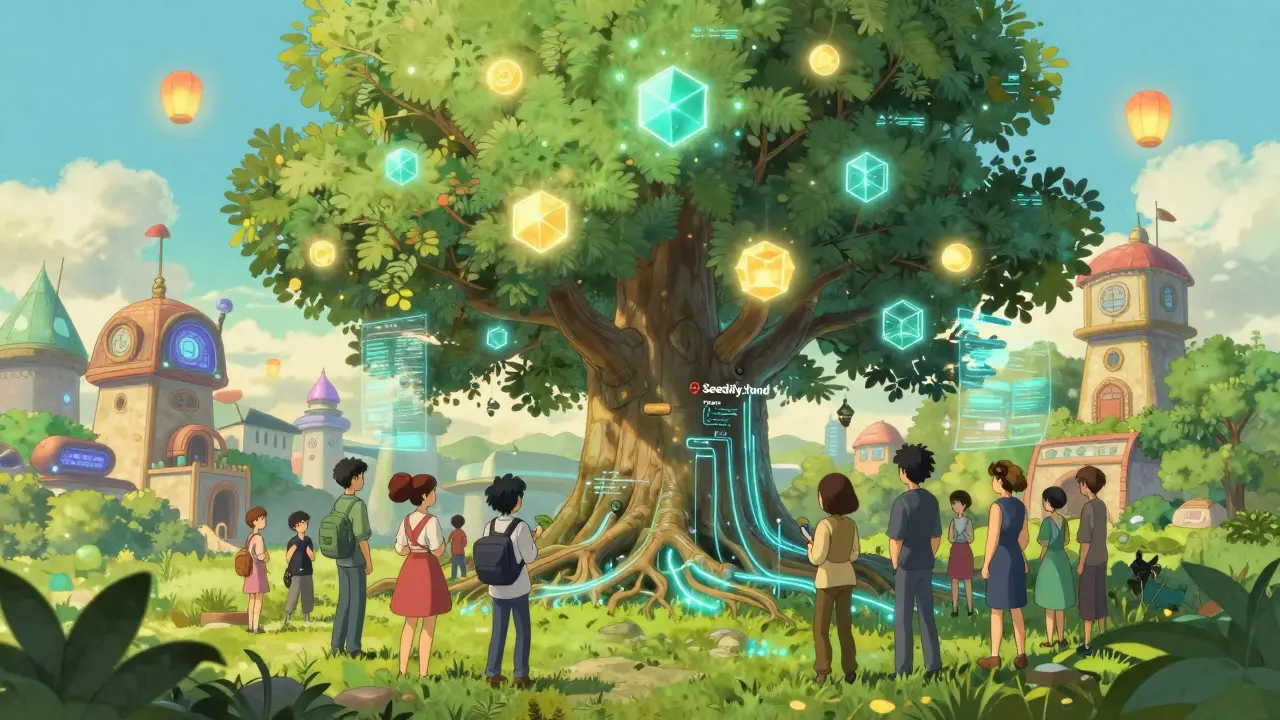
Have you ever seen a new crypto project launch and wondered how it got its first round of funding? For most people, that process is hidden behind closed doors. But in the world of blockchain gaming, one platform has turned that door into a wide-open window for community investors. That platform is Seedify.fund, and its native token is known as SFUND.
If you are looking at your portfolio and thinking about where the next big gains might come from, you have probably heard whispers about "Initial Game Offerings" or IGOs. These are essentially IPOs for video games built on the blockchain. Seedify.fund is the primary engine driving this specific niche. It is not just another generic launchpad; it is a specialized ecosystem designed to fund, incubate, and launch Web3 gaming projects.
But what exactly is SFUND? Is it just a speculative asset, or does it have real utility? To answer that, we need to look under the hood of this Decentralized Autonomous Organization (DAO) and see how it actually works for both developers and investors like you.
What Exactly is Seedify.fund?
At its core, Seedify.fund is a decentralized autonomous organization (DAO). This means it isn't controlled by a single CEO or a small board of directors in a glass office building. Instead, it is governed by its community. Founded in 2021, the platform was created to solve a specific problem: innovative blockchain gaming projects struggled to find seed funding, while everyday crypto holders wanted access to early-stage investments but lacked the connections to venture capital firms.
Seedify bridges this gap. It acts as an incubator and a launchpad. Developers bring their game concepts to Seedify. If the project passes due diligence, it gets listed on the platform. Then, the community steps in. Holders of the SFUND token can vote on which projects receive funding. This democratic approach ensures that the money flows toward projects that the community actually believes in.
The platform is chain-agnostic, meaning it doesn't lock you into one blockchain network. While it started with strong ties to Binance Smart Chain (BSC), it now supports Ethereum, Fantom, Polygon, Avalanche, and Sei. This flexibility is crucial because different games require different technical environments. Some need the speed of BSC, while others need the security of Ethereum.
Understanding the SFUND Token Utility
You cannot participate in the Seedify ecosystem without understanding the SFUND token. It is a BEP-20 token built on the Binance Smart Chain, which keeps transaction fees low and speeds up interactions. But holding SFUND is not just about hoping the price goes up. The token has three main utilities that drive its value:
- Governance Rights: As a DAO, Seedify relies on votes. When a new gaming project applies for funding, SFUND holders cast votes. Your stake determines your voice. If enough holders vote "yes," the project receives $75,000 in initial funding.
- Staking for Allocation Tiers: This is the most critical feature for investors. Seedify uses a 9-level tier system. The more SFUND you stake, and the longer you keep it staked, the higher your tier. Higher tiers give you better allocation limits when buying tokens from new Initial Game Offerings (IGOs). Tier 1 users get very little access, while Tier 9 users get priority access to the hottest launches.
- Platform Fees: Transactions within the ecosystem often require SFUND. For example, trading the secondary token SNFTS incurs a 1% fee, while general platform transactions may incur a 2% fee. These fees help maintain the ecosystem's liquidity and security.
It is important to note that Seedify employs an anti-inflationary model. They do not mint new SFUND tokens to reward stakers. Instead, rewards come from the success of the funded projects. This creates a sustainable economic loop rather than a dilutive one.
How the Launchpad Works: From Idea to Investment
The magic of Seedify happens in its launchpad infrastructure. Unlike traditional venture capital, where checks are written quietly, Seedify’s process is transparent and structured. Here is how a typical journey looks for a project and an investor:
- Application & Due Diligence: A developer submits their game concept. Seedify’s team performs rigorous checks on the code, the team’s background, and the market viability.
- Voting Phase: Once approved, the project goes to the community. SFUND holders review the pitch deck and vote. If the community approves, the project moves forward.
- Funding Round: Approved projects receive an initial injection of funds (typically $75,000). In return, Seedify retains a 3% stake in the project’s tokens. This aligns the platform’s interests with the project’s success-if the game fails, Seedify loses value too.
- IGO Launch: The final sale opens to the public via bonding curves. There are four types of launches:
- Degen: Open access, instant buy, high risk/reward.
- Curated by Seedify: Thoroughly vetted by the internal team.
- Curated by Partners: Vouched for by reputable external partners.
- Community Voting: Selected entirely by the DAO.
For investors, the key is timing and tier status. You need to stake your SFUND before the snapshot is taken to ensure you qualify for the allocation. Missing the snapshot means missing out on the potentially lucrative early entry point.

Seedify vs. Other Launchpads: Why Choose It?
The crypto space is crowded with launchpads. You have giants like Binance Launchpad, Polkastarter, and DAO Maker. So why would you choose Seedify.fund over them?
| Feature | Seedify.fund | Binance Launchpad | Polkastarter |
|---|---|---|---|
| Primary Focus | Blockchain Gaming & NFTs | General DeFi & Infrastructure | Polkadot Ecosystem Projects |
| Governance Model | DAO (Community Voting) | Centralized (Binance Team) | Hybrid (Team + Community) |
| Tokenomics | Anti-inflationary (No new minting) | Inflationary (BNB burns vary) | Inflationary (POLY rewards) |
| Chain Support | Multi-chain (BSC, ETH, Polygon, etc.) | Primarily BNB Chain | Primarily Polkadot/Substrate |
| Entry Barrier | Medium (Requires Staking/Tier Up) | High (Requires BNB Holding/Snapshot) | Medium (Requires POLY Staking) |
The biggest differentiator is specialization. Generalist launchpads often struggle to evaluate gaming projects because they lack industry expertise. Seedify’s team consists of veterans from the gaming and crypto sectors. They understand player retention, metaverse mechanics, and NFT utility in a way that generalist platforms do not.
Furthermore, the anti-inflationary model is a significant advantage. Many competitors dilute existing holders by printing more tokens to pay out staking rewards. Seedify avoids this, protecting the long-term value of your SFUND holdings.
Risks and Considerations Before Investing
No investment is without risk, and Seedify.fund is no exception. Before you buy SFUND or stake it, consider these factors:
Market Volatility: The blockchain gaming sector is highly volatile. While the market is projected to grow significantly, individual projects can fail. Seedify reports a 63% success rate for its incubated projects based on post-launch performance metrics through Q4 2025. That means nearly 40% of projects do not meet expectations. If the projects you vote for fail, the ecosystem suffers.
Liquidity Constraints: Compared to giants like Binance, Seedify has a smaller market cap and lower trading volume. As of recent data, SFUND trades with a daily volume around $293,000 USD. This means large buy or sell orders can cause significant price slippage. It is not ideal for day traders looking to move millions quickly.
Complexity Curve: Understanding the tier system, staking periods (ranging from 30 to 270 days), and multi-chain connectivity requires time. New users often report spending 2-4 hours just setting up their wallets and understanding the dashboard. If you are not comfortable connecting MetaMask or Trust Wallet to decentralized applications, this platform will be challenging.
Regulatory Uncertainty: Like all crypto assets, SFUND faces regulatory scrutiny. Different countries treat utility tokens and governance tokens differently. Seedify implements KYC (Know Your Customer) procedures for high-tier allocations to mitigate this, but the legal landscape remains fluid.

How to Get Started with Seedify.fund
If you are convinced that blockchain gaming is the future and you want exposure to early-stage projects, here is how you begin:
- Set Up a Web3 Wallet: Download MetaMask or Trust Wallet. Ensure you have some BNB (Binance Coin) for gas fees if you are interacting with the Binance Smart Chain version of the platform.
- Acquire SFUND: Buy SFUND from a centralized exchange like MEXC, Gate.io, or KuCoin. Transfer the tokens to your Web3 wallet address.
- Connect to Seedify: Go to the official Seedify.fund website and connect your wallet. Never share your private key or seed phrase with anyone.
- Stake Your Tokens: Navigate to the staking section. Decide how many SFUND tokens you want to lock up. Remember, locking them for longer periods (e.g., 270 days) yields higher APY and helps you climb the tier ladder faster.
- Participate in Governance: Keep an eye on the voting section. Research projects thoroughly before casting your vote. Your vote determines which games get funded.
- Join the Community: Seedify has an active Discord server with approximately 35,000 members. Engaging there provides insights into upcoming projects and helps you navigate the platform’s nuances.
The Future of Seedify and Web3 Gaming
The trajectory for Seedify.fund seems aligned with broader industry trends. According to Delphi Digital, specialized launchpads focusing on vertical markets like gaming are expected to capture 35-40% of the launchpad market by 2027. With the global blockchain gaming market projected to reach substantial valuations in the coming years, Seedify’s early mover advantage in this niche is significant.
The platform continues to evolve. Recent upgrades include enhanced launchpad functionality and expanded support for chains like Sei. The introduction of the SNFTS token adds another layer of engagement, rewarding loyal stakers and NFT holders with additional utility. As decentralized governance matures, Seedify aims to become even more community-driven, reducing reliance on central teams and empowering the DAO.
However, success depends on execution. The platform must continue to curate high-quality projects. If the quality of incubated games drops, user trust will erode. Conversely, if Seedify produces several breakout hits-games that achieve mainstream adoption-the value of the SFUND token and the entire ecosystem could see exponential growth.
For now, Seedify.fund stands as a unique bridge between traditional gaming innovation and decentralized finance. It offers a structured, community-led way to invest in the next generation of digital entertainment. Whether you are a gamer, a developer, or an investor, understanding this ecosystem provides a valuable lens into the future of Web3.
What is the current price and market cap of SFUND?
As of mid-2026, SFUND trades at approximately $0.03959 USD. The circulating supply is around 88.5 million tokens out of a total max supply of 100 million. This results in a relatively modest market capitalization compared to major cryptocurrencies, reflecting its niche focus on gaming projects.
Is Seedify.fund safe to use?
Seedify.fund employs standard security measures for DeFi platforms, including smart contract audits and KYC procedures for high-tier allocations. However, as with any decentralized platform, users bear responsibility for securing their own wallets. Always verify URLs and never share private keys. The platform’s due diligence process also adds a layer of safety for invested projects.
How do I increase my tier level on Seedify?
Your tier level is determined by the amount of SFUND you stake and the duration of the stake. To move from Tier 1 to higher tiers like Tier 9, you need to stake more tokens and/or lock them for longer periods (up to 270 days). Higher tiers provide larger allocation limits during Initial Game Offerings (IGOs).
What is the difference between SFUND and SNFTS?
SFUND is the primary governance and utility token used for voting, staking, and accessing launchpad features. SNFTS is a complementary token airdropped to SFUND stakers and certain NFT holders. SNFTS transactions incur a lower 1% fee compared to SFUND’s 2% platform fee, offering additional utility within the ecosystem.
Can I withdraw my staked SFUND anytime?
Withdrawal depends on the staking period you selected. Shorter terms (e.g., 30 days) allow quicker access but offer lower APY. Longer terms (e.g., 270 days) lock your tokens for a fixed duration to maximize rewards and tier benefits. Early withdrawal may result in penalties or loss of accrued rewards, so check the specific staking pool rules before committing.




0 Comments