
Streaming video used to be simple. You clicked play, and a massive data center sent the file to your screen. Today, that model is breaking under its own weight. With billions of people watching 4K content, live sports, and AI-generated media simultaneously, traditional Content Delivery Networks (CDNs) are hitting a wall. They are expensive, centralized, and often result in buffering during peak hours. This is exactly where Theta Network steps in.
Theta Network is a Layer 1 blockchain and decentralized infrastructure specifically designed for video, AI, and entertainment use cases. It operates as a dual network consisting of two complementary subsystems: the Theta Blockchain and the Theta Edge Network. Instead of relying solely on distant servers, Theta turns your idle bandwidth into a resource that helps deliver smoother streams to everyone else. In this guide, we will break down how it works, why it matters, and what you need to know about its tokens.
The Core Problem: The "Last Mile" Bottleneck
To understand Theta, you first have to understand the problem it solves. Traditional video delivery relies on CDNs like Akamai or Cloudflare. These companies build huge data centers around the world. When you watch Netflix, the video comes from the nearest server. But here is the catch: those servers are still miles away from you. This distance creates the "last mile" bottleneck.
During major events-like the Super Bowl or a global esports final-the demand spikes. The central servers get overwhelmed. The result? Buffering, dropped connections, and poor picture quality. For content providers, fixing this means paying millions to build more data centers. For viewers, it means frustration.
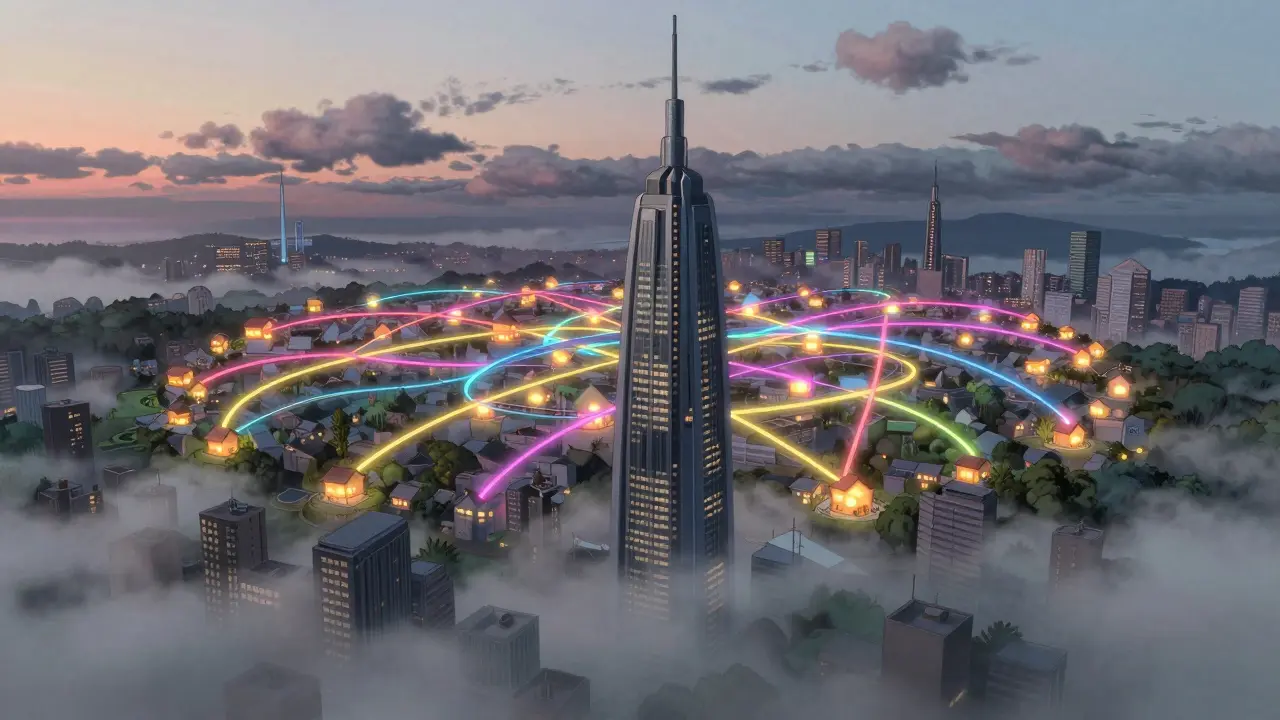
Theta Network flips this model. It uses a peer-to-peer (P2P) approach. Instead of pulling all data from one central location, Theta allows users to share their excess bandwidth and computing power with each other. Your device becomes a mini-node that helps deliver chunks of video to neighbors nearby. This reduces the load on central servers and speeds up delivery for everyone involved.
How the Theta Architecture Works
Theta isn't just a file-sharing app; it is a sophisticated blockchain ecosystem. It runs on two main layers that work together:
- The Theta Blockchain: This is the ledger that records transactions, manages smart contracts, and handles governance. It ensures security and transparency across the network.
- The Theta Edge Network: This is the physical layer where the magic happens. It consists of thousands of devices worldwide contributing bandwidth to cache and relay video data.
The network uses a three-tier node structure to keep things running smoothly:
- Enterprise Validator Nodes: Operated by major corporations like Google, Samsung, and Sony. These nodes propose new blocks and ensure the network's integrity.
- Guardian Nodes: Run by community members. They monitor the validators, seal blocks, and prevent malicious behavior. If a validator acts up, guardians can slash their stake.
- Edge Nodes: Hosted by everyday users. These are the heart of the P2P system. By running the Theta Edge Node software, you contribute spare bandwidth and earn rewards.
This structure balances decentralization with performance. Theta claims to process up to 1,000 transactions per second using a modified consensus mechanism called Multi-BFT (Byzantine Fault Tolerance). This speed is crucial for real-time video streaming, where latency kills the user experience.
Understanding the Tokens: THETA vs. TFUEL
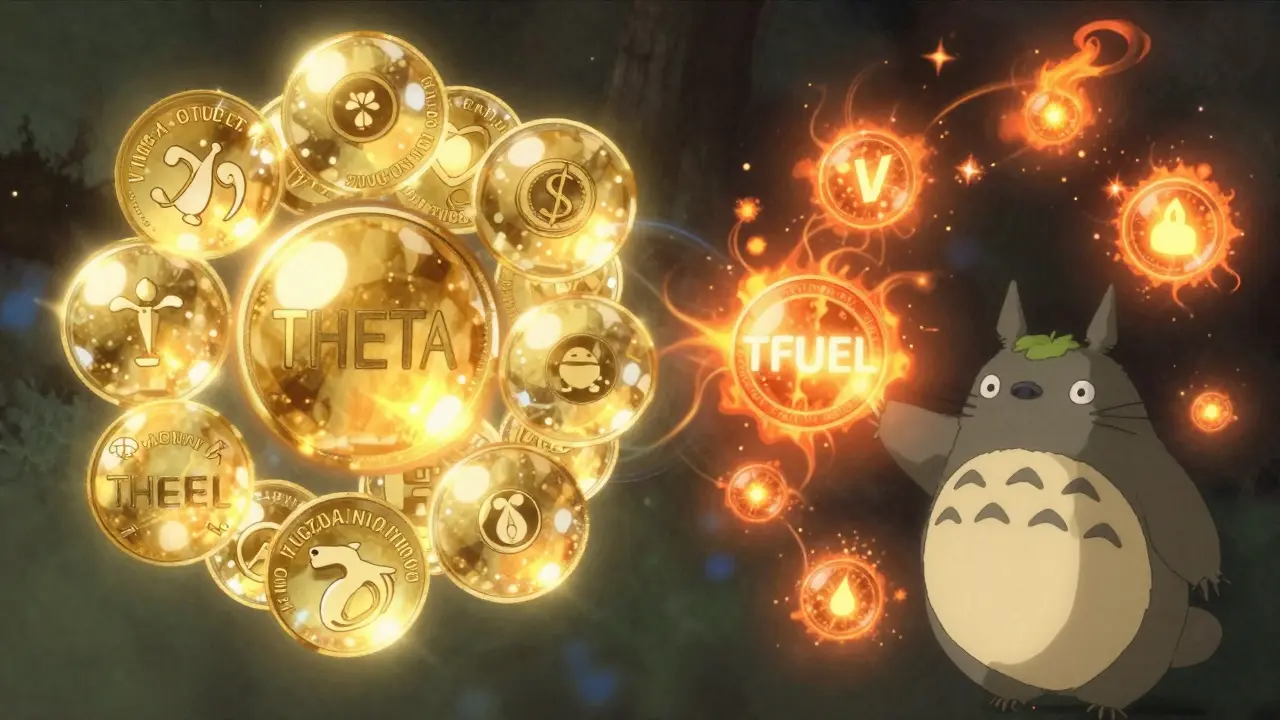
One of the most confusing parts for newcomers is that Theta has two tokens. They serve very different purposes. Think of them as having distinct roles in the economy.
| Feature | THETA Token | TFUEL Token |
|---|---|---|
| Primary Use | Governance and Staking | Gas Fees and Rewards |
| Supply | Fixed at 1 Billion | Inflationary (uncapped) |
| Who Uses It? | Investors, Validators, Guardians | Users, Developers, Edge Nodes |
| Economic Role | Store of Value / Voting Power | Medium of Exchange / Utility |
THETA is the governance token. Holders can vote on protocol upgrades and network parameters. It is also used for staking. Enterprise validators and guardian nodes must lock up THETA to participate in securing the blockchain. Because the supply is fixed at 1 billion, it is deflationary in nature, which appeals to long-term investors.
TFUEL is the fuel. Every transaction on the Theta blockchain requires gas, paid in TFUEL. More importantly, TFUEL is the reward currency. When you run an Edge Node and share your bandwidth, you earn TFUEL. Content creators also pay TFUEL to distribute their videos. This creates a circular economy: users provide resources, earn TFUEL, and then spend that TFUEL on services or trade it for THETA.
Key Technologies: EdgeCast and EdgeCloud
Theta doesn't just rely on basic P2P sharing. It has developed proprietary technologies to make decentralized streaming viable at scale.
Theta EdgeCast is the current flagship technology. It enables global caching and relaying of live stream video data. It captures live video, transcodes it in real-time, and distributes it through the Edge Network. This significantly lowers the cost of video transcoding and storage for broadcasters compared to traditional CDNs.
Looking ahead, the platform is developing Theta EdgeCloud. Scheduled for full launch in late 2024, EdgeCloud represents the next generation of the network. It is positioned as the first hybrid cloud computing platform built on a fully distributed architecture. While EdgeCast focuses on video, EdgeCloud expands into general-purpose computing, including AI inference and GPU rendering. This aligns with Theta's new positioning as "The Decentralized Cloud for AI, Media & Entertainment."
Real-World Adoption and Partnerships
Crypto projects often struggle with real-world utility, but Theta has secured some heavyweight partnerships. This isn't just hype; these are established players integrating Theta into their infrastructure.
- Samsung: Samsung NEXT invested in Theta, and the company uses Theta for its VR platform. They have also collaborated on an NFT ecosystem for Galaxy mobile phones.
- Sony: Sony Innovation Fund is an investor. Sony has partnered with Theta to create 3D NFTs for its spatial reality display technology.
- Google: Google Cloud provides enterprise validator nodes, adding significant credibility to the network's security.
- Creative Artists Agency (CAA): CAA, one of the world's largest talent agencies, is an enterprise validator. Their involvement was partly driven by client Katy Perry, who launched NFTs on ThetaDrop.
- Sports Leagues: Theta has partnerships with the NBA, NHL, MLS, and top esports organizations. For example, the Vegas Golden Knights use Theta for fan-based NFT experiences.
These partnerships matter because they bring actual traffic to the network. When Samsung or Sony streams content via Theta, it generates real demand for bandwidth, which rewards Edge Node operators. This validates the economic model beyond speculative trading.
ThetaDrop: The NFT Marketplace
Beyond streaming, Theta has built a digital collectibles marketplace called ThetaDrop. Launched to disrupt the digital collectibles industry, it hosts official merchandise and memorabilia from major brands.
You can find NFTs from Katy Perry, American Idol, The Price Is Right, and Taste of Home on the platform. ThetaDrop features its own T-drop token, allowing users to earn rewards when purchasing with TFUEL. This integrates the NFT market directly into the broader Theta economy, encouraging users to hold and spend TFUEL rather than just hoarding it.
Market Position and Price Context
As of October 2025, THETA trades at approximately $0.73 USD with a daily trading volume exceeding $28 million. This indicates strong liquidity and active interest from traders. However, price alone doesn't tell the whole story.
Theta positions itself not as a general-purpose blockchain like Ethereum or Solana, but as a specialized solution for media and entertainment. Its value proposition is tied to the growth of decentralized video streaming and AI compute demand. If traditional CDNs continue to face capacity issues and costs rise, Theta's alternative model becomes more attractive. Conversely, if centralized providers solve their bottlenecks efficiently, Theta's competitive edge may diminish.
The project benefits from advisory support by Steve Chen (co-founder of YouTube) and Justin Kan (co-founder of Twitch). Their expertise in scaling video platforms adds a layer of strategic insight that many crypto projects lack.
Pros and Cons of Using Theta Network
Before diving in, it is important to weigh the advantages against the limitations.
Pros:
- Cost Efficiency: Lower costs for video transcoding and delivery compared to traditional CDNs.
- High Performance: Capable of handling high-throughput transactions suitable for live streaming.
- Strong Partnerships: Backed by tech giants and entertainment industry leaders.
- Dual-Token Economy: Clear separation between governance (THETA) and utility (TFUEL).
Cons:
- Complexity: Understanding the difference between THETA, TFUEL, and Edge Nodes can be confusing for beginners.
- Adoption Barrier: Users need to install and run software to participate fully as Edge Nodes.
- Competition: Faces competition from both traditional CDN providers and other Web3 video protocols.
Conclusion: Is Theta Worth Your Attention?
Theta Network addresses a genuine pain point in the digital media landscape: the inefficiency and cost of centralized video delivery. By leveraging decentralized bandwidth, it offers a scalable solution that benefits viewers, creators, and participants alike. With strong enterprise backing and a clear roadmap toward AI and cloud computing, Theta is more than just a crypto coin-it is an infrastructure play.
If you are interested in the intersection of blockchain, video streaming, and AI, Theta deserves a spot on your radar. Whether you choose to stake THETA, run an Edge Node, or simply follow its development, understanding its mechanics gives you an edge in navigating the evolving Web3 media landscape.
What is the difference between THETA and TFUEL?
THETA is the governance and staking token with a fixed supply of 1 billion. It is used for voting on network upgrades and securing the blockchain. TFUEL is the utility token used for gas fees, rewarding Edge Node operators, and facilitating transactions. TFUEL has an uncapped, inflationary supply.
How does Theta Network improve video streaming?
Theta uses a peer-to-peer (P2P) network where users share their excess bandwidth. This reduces reliance on distant central servers (CDNs), lowering latency and buffering. It also cuts costs for content providers by distributing the load across thousands of Edge Nodes worldwide.
Can I earn money by running a Theta Edge Node?
Yes. By installing the Theta Edge Node software and contributing your spare bandwidth, you help deliver video content to others. In return, you are rewarded with TFUEL tokens. The amount earned depends on your upload speed, uptime, and the demand for bandwidth in your region.
Who are the major partners of Theta Network?
Theta has partnerships with major companies including Google, Samsung, Sony, Creative Artists Agency (CAA), and Binance. It also collaborates with sports leagues like the NBA and NHL, and entertainment brands such as Katy Perry and American Idol.
Is Theta Network secure?
Theta uses a Multi-BFT consensus mechanism with Enterprise Validators and Guardian Nodes to ensure security. Major corporations like Google and Samsung operate Enterprise Nodes, adding a layer of institutional trust. The open-source nature of the protocol also allows for community auditing.
What is Theta EdgeCloud?
Theta EdgeCloud is the next-generation hybrid cloud computing platform built on a fully distributed architecture. Scheduled for launch in late 2024, it expands Theta's capabilities beyond video streaming to include AI inference, GPU rendering, and general-purpose decentralized computing.
Where can I buy THETA tokens?
THETA is listed on major cryptocurrency exchanges such as Binance, Coinbase, Kraken, and KuCoin. You can buy it using fiat currencies or trade it for other cryptocurrencies like Bitcoin or Ethereum.




0 Comments