
Tokenized Real Estate Return Calculator
Estimate your potential returns from tokenized real estate investments based on your initial investment, expected returns, and holding period. The calculations are based on industry averages for tokenized real estate with passive income payouts.
Your Estimated Returns
Total Investment Value
$0.00
After 5 years at 6.8% annual returns
Monthly Income
$0.00
Based on monthly dividend payouts
Imagine owning a piece of a skyscraper in downtown Tokyo, or a rare Picasso painting, or a vineyard in Tuscany - not by buying the whole thing, but by buying a $50 token. That’s what tokenizing real assets does. It turns physical things you can touch - buildings, art, gold, even royalties from music - into digital pieces you can buy, sell, and trade on a blockchain. This isn’t science fiction. As of December 2025, over $12.8 billion in real-world assets have already been tokenized, and the market is growing at nearly 70% a year.
What Exactly Is Tokenizing Real Assets?
Tokenizing real assets means taking something tangible - like an apartment building, a piece of land, or a collection of vintage watches - and turning its ownership into digital tokens on a blockchain. Each token represents a fraction of that asset. Instead of needing $100,000 to buy a share in a commercial property, you can now buy $10 or $50 worth of tokens. These tokens are built on blockchain networks like Ethereum or Polygon, using standards like ERC-20 or ERC-1400 that make them secure, traceable, and programmable.This isn’t just about making things digital. It’s about fixing broken systems. Traditional real estate deals take weeks. You need lawyers, brokers, banks, title companies - everyone involved moves at their own pace. With tokenization, all of that is replaced by smart contracts. Once you pay, ownership updates automatically. Settlements that used to take two business days now happen in under 15 seconds.
Breaks Down High Entry Barriers
One of the biggest problems with traditional investments like real estate or fine art is that they’re locked behind massive price tags. A single luxury apartment in Sydney might cost $2 million. Only the wealthy can get in. Tokenization changes that. Platforms like RealT and Securitize let you buy fractions of properties starting at $10. That opens up access to people who’ve never been able to invest in these markets before - teachers, nurses, small business owners in places like Manila, Lagos, or Perth.Before tokenization, your options were limited: buy a whole house, invest in a REIT (which still requires thousands), or do nothing. Now, you can build a diversified portfolio with $500 - owning small slices of properties in the U.S., Europe, and Asia. One Reddit user in Singapore told me they own tokens from five different buildings across three countries, earning 6.8% annual returns, all from their phone.
Liquidity That Actually Works
Real estate is famously illiquid. You can’t just sell your house in an hour. Even REITs only trade during market hours, and dividends come quarterly. Tokenized assets? They trade 24/7, like crypto. There’s no waiting for a buyer. No open houses. No listing fees. You log in, click sell, and your tokens are bought within minutes - sometimes seconds.The numbers show it. Traditional real estate has an annual liquidity rate of just 0.5% to 1.5%. Tokenized real estate? That jumps to 8% to 12%. That’s a 15x increase in how easily you can turn your investment into cash. And it’s not just real estate. Tokenized fine art has seen trading volumes spike since platforms like Masterworks started offering fractional shares. Collectors who used to hold onto pieces for decades now have exit options.
Lower Costs, Fewer Middlemen
Traditional asset markets are full of fees. Brokers take 5-8%. Lawyers charge thousands. Custodians, transfer agents, clearinghouses - each adds cost and delay. Tokenization cuts them out. Smart contracts handle the rules: who gets paid, when, and how much. No more paperwork. No more delays. Transaction fees drop from 8-12% down to 2-5%.Deloitte’s 2025 report found that tokenized real estate transactions take 3-5 days instead of 30-60. That’s a 90% reduction in processing time. For institutional investors, that’s huge. One fund manager in London told me they used to spend six months setting up a single real estate deal. Now, they can deploy capital across 20 tokenized properties in under a week.
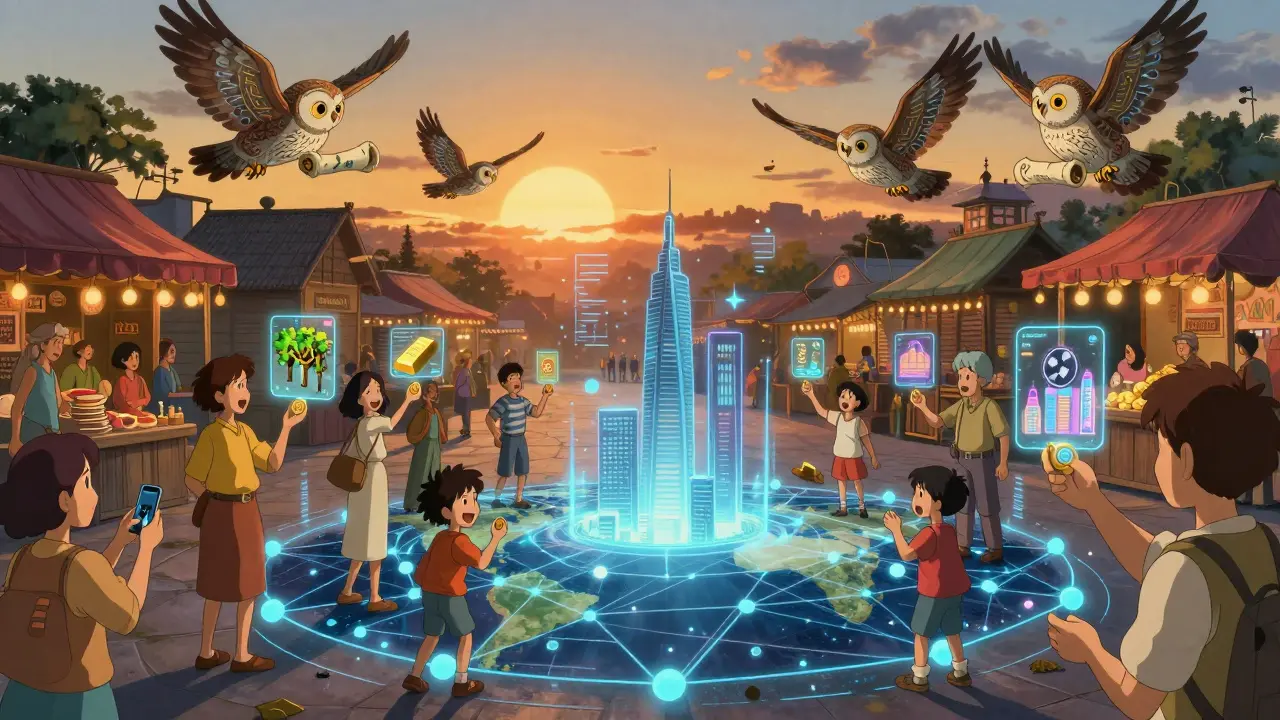
Transparency and Trust Built In
Blockchain doesn’t lie. Every transaction is recorded permanently and publicly. You can see exactly who owned a token, when it was bought, and what dividends were paid. No more hidden fees. No more forged documents. In a May 2025 EY survey, 89% of users said they trusted tokenized asset ownership more than paper-based systems.For example, if you buy a token representing 1% of a warehouse in Dallas, you can verify its location, condition, rental income, and even insurance status - all on-chain. No more relying on a broker’s word. The data is there, for anyone to see. This level of transparency reduces fraud and builds investor confidence, especially in markets plagued by opacity like art and commodities.
Custom Portfolios, Real Control
Institutional investors used to be stuck with broad funds. If you wanted exposure to green buildings in Europe, you had to buy a generic ESG fund with no control over what was inside. Tokenization changes that. Now, you can build your own portfolio. Want only solar-powered office buildings in Germany? Done. Want only tokenized royalty streams from indie musicians under 30? That’s possible too.BlackRock launched its tokenized fund platform in July 2025, letting institutional clients create custom baskets of tokenized assets with specific criteria - sustainability ratings, geographic focus, yield targets. This level of precision was impossible before. You’re no longer limited to what fund managers decide to offer. You pick the assets, the weights, the rules.
Who’s Using This Right Now?
Real estate leads the pack. As of Q2 2025, tokenized real estate made up $8.1 billion - 63% of the entire RWA market. Art and collectibles are next at $2.3 billion. Commodities like gold and oil are catching up, with tokenized gold now available on platforms like Paxos and Tether.Big names are jumping in. BlackRock, Fidelity, and JPMorgan all have active tokenization projects. Southeast Asia is the fastest-growing region, with Singapore and Thailand leading regulatory innovation. In Europe, MiCA (the Markets in Crypto-Assets regulation) is now fully in force, giving clear rules for issuers. The U.S. is still messy - SEC rules vary by state - but adoption is growing anyway.
On the retail side, platforms like RealT, Real Estate Token (RET), and Tokeny are seeing daily traffic from people who’ve never touched crypto before. Many are attracted by the monthly dividend payouts - automatic, on-chain, and reliable. One user in Brisbane told me they’ve been getting $42 in passive income every month from three tokenized rental properties. No landlord calls. No repairs. Just income.

The Downsides? Yes, There Are Some
It’s not all perfect. Regulatory uncertainty is still a big issue. Only 17 countries have clear rules for security tokens as of Q3 2025. Some platforms have collapsed after running afoul of regulators - like the $22 million fractional real estate startup that shut down in early 2024 after an SEC warning.Then there’s the tech barrier. Setting up a wallet, managing private keys, understanding gas fees - it’s confusing for non-tech users. A June 2025 Trustpilot analysis found 37% of first-time users needed help just to get their wallet working. Poor customer support on some platforms makes it worse.
And while liquidity is higher, it’s not guaranteed. If no one’s buying your token when you want to sell, you’re stuck. Some tokenized assets still trade thinly, especially in niche categories like intellectual property or agricultural land.
How to Get Started (If You Want To)
If you’re curious, here’s how to begin:- Choose a regulated platform - RealT, Securitize, or Tokeny are good starting points.
- Complete KYC/AML verification - usually takes 3-5 days.
- Set up a crypto wallet (MetaMask or Coinbase Wallet work fine).
- Deposit fiat or stablecoin (USDC, USDT).
- Buy your first token - start small, $50-$100.
Don’t rush. Learn the basics. Watch YouTube tutorials. Read the platform’s documentation. Most platforms now offer free onboarding courses. And never invest more than you can afford to lose - especially since this market is still evolving.
The Bigger Picture
This isn’t just about making investing easier. It’s about changing how value moves in the world. For centuries, wealth was tied to physical ownership - hard to divide, hard to move, hard to prove. Tokenization flips that. It turns assets into software. You can send a piece of a building to someone in another country in seconds. You can program dividends to auto-pay. You can prove ownership without a notary.The CAIA Association calls it a "structural shift" in finance. Gartner predicts 10% of all illiquid assets will be tokenized by 2028 - that’s $25 trillion. Central banks are testing integration with digital currencies. Imagine buying a tokenized property and paying for it instantly with a央行数字人民币 (CBDC). That’s the next step.
Tokenizing real assets doesn’t replace traditional finance. It improves it. It makes markets fairer, faster, and open to everyone - not just the rich.
What assets can be tokenized?
Almost any physical or financial asset can be tokenized. Common examples include real estate (residential, commercial, industrial), fine art, precious metals like gold and silver, commodities (oil, wheat), music royalties, patents, and even private equity shares. Real estate leads the market, followed by art and collectibles. Emerging categories include agricultural land and carbon credits.
Is tokenizing real assets legal?
It depends on where you live. As of 2025, only 17 countries have clear legal frameworks for security token offerings. The European Union’s MiCA regulation, effective since June 2025, provides the most comprehensive rules. Singapore, Switzerland, and Malta are also friendly. In the U.S., it’s a patchwork - the SEC treats most tokens as securities, so issuers must comply with federal and state laws. Always use platforms that are registered and regulated in your jurisdiction.
How do I make money from tokenized assets?
There are two main ways: capital appreciation and income. If the value of the underlying asset rises - say, a building increases in value - your tokens go up too. You can sell them for a profit. Many tokenized real estate platforms also pay out rental income as dividends, often monthly. Some tokenized art or royalty platforms pay based on sales or licensing revenue. It’s passive income, but only if the asset performs.
Can I lose money with tokenized assets?
Absolutely. Just like any investment, tokenized assets can lose value. If the property declines, the art becomes less popular, or the market for that asset dries up, your tokens are worth less. There’s also platform risk - if the company running the tokenization platform goes under or gets shut down by regulators, your tokens could become worthless. And liquidity isn’t guaranteed - you might not find a buyer when you want to sell.
Do I need a crypto wallet to invest?
Yes. You need a digital wallet to hold your tokens. Most platforms accept MetaMask, Coinbase Wallet, or their own custodial wallets. Some platforms let you buy tokens with a credit card and hold them for you - but that means you don’t control the private keys. For full security and control, use a non-custodial wallet. Just remember: if you lose your private key, you lose your tokens. There’s no customer service to recover them.
How is this different from REITs or ETFs?
REITs and ETFs are pooled investments managed by professionals. You don’t own the actual asset - you own shares in a fund that owns the asset. With tokenization, you own a direct, fractional stake in the real asset itself. You can see the property, the contract, the income stream. You can trade 24/7, not just during market hours. And you can often choose exactly which assets you want - not just what the fund manager picks.
What’s the minimum investment?
It varies by platform and asset. Some platforms allow purchases as low as $10. Others require $100 or $500 minimum. Real estate tokens often start at $50. Art tokens might start at $100. Compare platforms - some offer fractional shares of high-value items like a $5 million painting broken into 10,000 tokens at $500 each. You can start small and scale up.
Are tokenized assets taxed like stocks?
In most countries, yes. Tokenized real assets are typically treated as securities or property for tax purposes. Capital gains taxes apply when you sell. Dividend income from rentals or royalties is usually taxed as ordinary income. Tax rules vary by country - Australia, the U.S., and the U.K. all have different reporting requirements. Always consult a tax professional familiar with digital assets. Never assume they’re treated like Bitcoin.


Bridget Suhr
December 14, 2025 AT 07:05 AMOkay but like... i just bought a $50 token of a Brooklyn brownstone last week and got $18 in rent this month. no calls, no leaky faucets, just vibes and cash. mind blown.
also my dog now barks at the building when i walk by. he knows.
Ike McMahon
December 15, 2025 AT 07:35 AMThis is the future. No more waiting 6 months to buy a house. You can start small, learn as you go, and build real wealth without needing a trust fund. The tech is here. The platforms are legit. The only thing stopping you is fear.
Start with $50. Watch it grow. Then do it again.
Lynne Kuper
December 15, 2025 AT 22:56 PMOh wow, so now even my cousin who thinks ‘crypto’ is a type of pasta can invest in a Paris apartment? Cool. I guess the next step is tokenizing my ex’s emotional baggage and selling shares to the highest bidder.
But seriously - this is genius. Why did it take this long? The system was broken. Now it’s just... fixed. Like, why are we still using paper deeds in 2025?!
Lois Glavin
December 16, 2025 AT 02:40 AMMy aunt in Ohio just bought three tokens. One in Lisbon, one in Manila, one in Chicago. She says she checks her phone every morning like it’s a slot machine. But she’s happy. No stress. Just income.
Kinda beautiful, really. Money doesn’t have to be scary.
Abhishek Bansal
December 17, 2025 AT 01:09 AMSo you’re telling me I can now own a piece of a building without ever leaving my couch? Sounds like capitalism finally learned how to nap.
Also, who’s gonna pay for the 5000th ‘tokenized vineyard’? There’s only so much land. And so many people with phones.
Steven Ellis
December 17, 2025 AT 15:20 PMTokenization isn’t magic - it’s mechanics. It replaces archaic intermediaries with verifiable code. The real revolution isn’t the blockchain - it’s the democratization of ownership. For the first time, a nurse in Detroit can hold the same kind of asset as a hedge fund in Zurich.
And that’s not just financial - it’s moral.
But let’s not ignore the risks. Custody, regulation, and liquidity gaps remain real. Don’t chase yield without understanding the infrastructure. This isn’t a lottery. It’s a new financial layer - treat it like one.
Eunice Chook
December 19, 2025 AT 03:21 AM70% annual growth? That’s not growth - that’s a bubble wearing a suit.
Remember when everyone thought NFTs were the future? Now most are just JPEGs of apes.
Tokenized real estate? Same story. Wait for the crash. Then buy the rubble.
Patricia Whitaker
December 20, 2025 AT 03:05 AMSo now I’m supposed to trust a computer to handle my money instead of a human? Cool. I’ll just hand over my life savings to some guy in Estonia who coded this in his basement.
Also, ‘24/7 trading’? Bro, I tried to sell my token last week and it took 3 days. No one was buying. So much for liquidity.
Also, why do all these platforms look like they were designed in 2013?
Jessica Eacker
December 21, 2025 AT 02:22 AMStart with $50. Don’t overthink it. Just do it.
Don’t wait for perfect. Start before you’re ready.
You don’t need to know everything. Just know this: if you don’t try, you’ll never know.
And if you lose it? You’re not broke. You’re just learning.
Now go.
Andy Walton
December 21, 2025 AT 23:52 PMbro this is the future 🤯 but also... what if the blockchain dies? 😭
also i lost my seed phrase last week and now i'm crying into my ramen 🍜
also can i tokenize my cat? 🐱💸
Candace Murangi
December 23, 2025 AT 05:51 AMMy cousin in Nairobi just bought her first token - a small farm in Kenya. She said it’s the first time she’s ever felt like her money could grow where she grew up.
That’s the real win here. Not the returns. Not the tech.
It’s belonging.
Albert Chau
December 24, 2025 AT 00:21 AMEveryone’s acting like this is new. It’s not. It’s just Wall Street with a blockchain tattoo.
You think the rich are letting you in? Nah. They’re just packaging the same old game in prettier packaging.
Same risks. Same fees. Just more buzzwords.
Tiffany M
December 25, 2025 AT 01:01 AMOkay, I’m sold. I just bought my first token - a tiny slice of a solar farm in Arizona. $75. Got $3 in dividends in 48 hours.
Also, I told my mom about it. She said, ‘So… you’re like a landlord now?’
I said, ‘No, Mom. I’m a blockchain landlord.’
She hung up.
But I’m still smiling.
And yes, I’m buying another one tomorrow.