Imagine waking up to find that your bank is legally forbidden from helping you buy or sell digital assets. For millions of Nigerians, this wasn't a thought experiment-it was reality from February 2021 until December 2023. The Central Bank of Nigeria (CBN) basically told banks to freeze the accounts of anyone dealing in crypto. But instead of killing the market, this move did something unexpected: it pushed the entire industry into the shadows, creating a massive, high-speed underground crypto economy that operated right under the regulators' noses.
The ban didn't actually make owning Bitcoin illegal for individuals; it just cut off the official bridges. This created a "gray market" where Nigerians didn't just survive-they innovated. By 2022, Nigeria had become one of the most active crypto hubs globally, proving that when you try to block a financial tool that people actually need, they'll just find a way around the fence.
The Rise of P2P and the Shadow Infrastructure
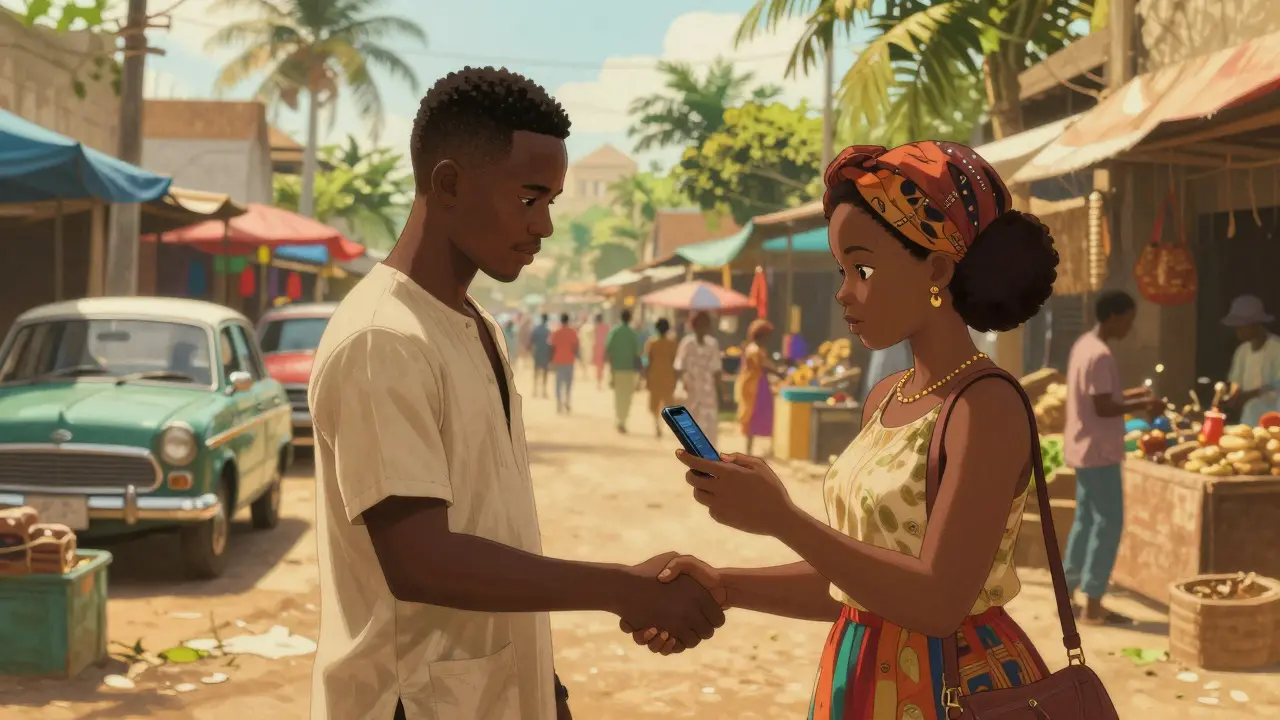
When the traditional banking doors slammed shut, the crowd moved to Peer-to-Peer (P2P) trading. This is essentially a digital handshake where two people trade crypto for cash without a middleman bank. Binance P2P became the undisputed king of this era. By late 2022, over 1.2 million Nigerians were using it, moving roughly $150 million in naira every single month.
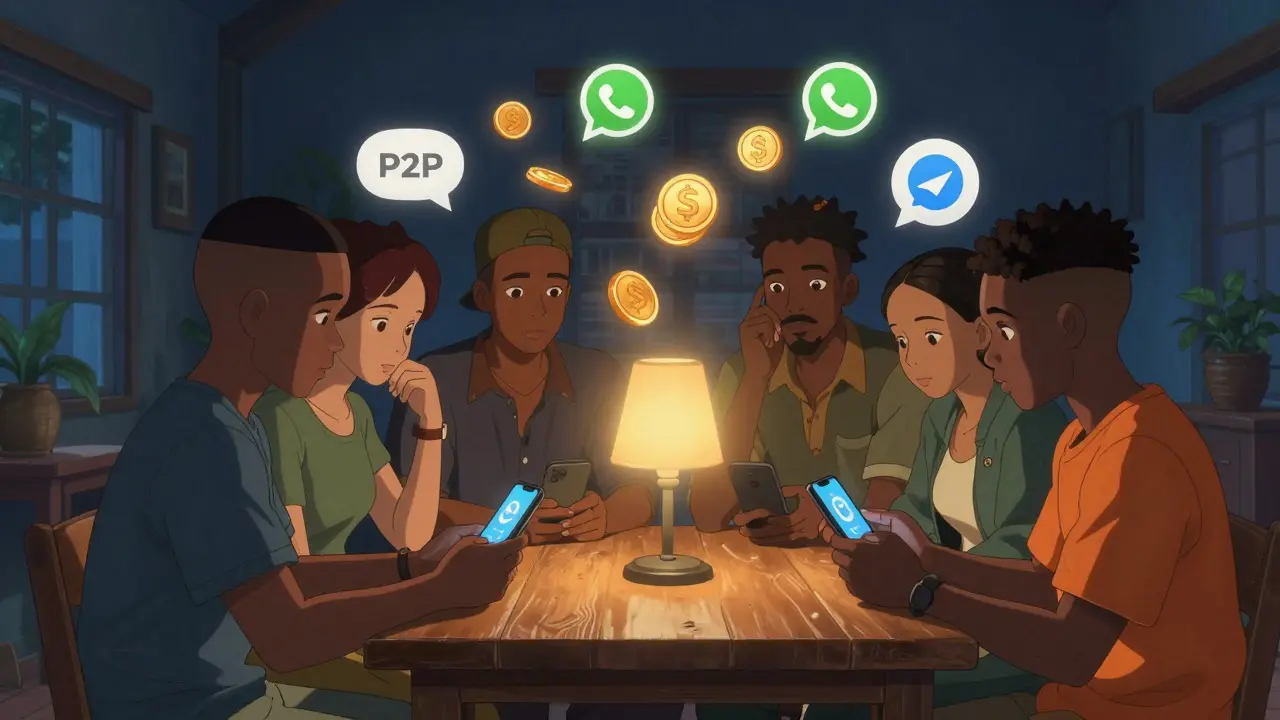
But you can't run a multi-million dollar economy on just one app. A whole secondary layer of communication popped up. Traders didn't trust official emails; they trusted WhatsApp and Telegram. About 78% of traders used WhatsApp groups to verify that a payment had actually hit their account, and 63% used Telegram to keep an eye on the real-time market price. It was a financial system run through chat apps.
To keep things safe, the community built its own security protocols. Since they couldn't call a bank manager to dispute a charge, they created massive blacklists. Some WhatsApp groups with over 50,000 members shared lists of scammers in real-time. They also relied on multi-signature escrow services. In fact, Paxful saw Nigerian users making up 32% of its global escrow transactions during the ban, showing just how much trust had shifted from banks to decentralized code.
Comparing the Nigerian Gray Market to Global Bans
Not all crypto bans are created equal. If you look at China, the government went for a "scorched earth" policy, making ownership and mining strictly illegal. Nigeria's approach was different-it was a targeted strike on financial institutions. This distinction is why Nigeria's underground market grew so much larger than similar scenes in Egypt or Algeria.
| Feature | China's Ban | Nigeria's Ban (2021-2023) |
|---|---|---|
| Target | Individual ownership & Mining | Banking Facilitation |
| Market Result | Significant migration offshore | Explosive P2P domestic growth |
| Primary Tool | State Surveillance | Community-led Trust (P2P) |
| Adoption Trend | Suppressed/Hidden | Accelerated (2nd globally in 2022) |
The scale of this shadow economy was staggering. Between July 2021 and June 2022, transaction volumes hit $56.7 billion. To put that in perspective, Nigeria represented only 0.1% of global GDP during that time, yet it accounted for 1.2% of all global crypto transactions. People weren't just speculating; they were using crypto to preserve their wealth against a volatile local currency.
The Human Side: Wins and Scams
For many, the underground economy was a lifeline. Take the story of a user known as 'LagosTrader87' on Reddit. Starting with just ₦5,000 in early 2021, they used Binance P2P to build a portfolio worth ₦2.3 million by the end of 2022, which actually paid for their university tuition. For a student in a country with limited credit options, crypto became the only viable scholarship.
But the shadows have dangers. Without a legal framework, scams were rampant. Around 42% of traders reported being scammed at least once. Another user, 'AbujaInvestor,' lost ₦380,000 to a Telegram seller who vanished the moment the crypto was released. With no bank to call and no police report that would be taken seriously, that money was simply gone.
To fight this, the community developed the "trade verification protocol." Instead of sending a large sum at once, traders would perform several tiny test transactions to ensure the other party was legitimate. Data from community groups suggests this simple habit reduced scam rates by about 37%.

Navigating the Risks: The Trader's Playbook
Operating in a banned environment required a specific set of skills. You couldn't just "buy and hold"; you had to be a strategist. Most banks restricted single transactions to around ₦500,000 (roughly $600) to avoid flagging suspicious activity. This meant if you wanted to move a larger sum, you had to break it into smaller pieces or use multiple bank accounts.
Experienced traders rarely stuck to one platform. About 82% of them maintained accounts on at least three different exchanges to ensure they always had liquidity. If one platform faced a crackdown, they had two others ready to go. When disputes happened, they didn't go to court-they went to the 'Naija Crypto Arbitration Group' on Telegram, a community-run court that resolved over 1,200 disputes every month by late 2022.
The learning curve was steep. Most new users spent two to three weeks just learning how to spot a fake profile or how to time their transfers to avoid bank freezes. Educational YouTube channels, like 'Crypto With Tolu,' became the unofficial classrooms for the movement, teaching thousands of people how to navigate the P2P maze safely.
The Regulatory Paradox and the Aftermath
The irony of the CBN's ban is that it actually accelerated the very thing it tried to stop. By driving crypto underground, the government lost all visibility. They couldn't track money laundering or tax profits because they had no window into the P2P world. The Nigerian Economic Summit Group pointed out that the state essentially gave up control over 1.2% of the country's informal economy.
Even after the ban was officially lifted in December 2023, the relationship remained tense. The government quickly realized that you can't just "turn on" a regulated market after people have spent years trusting a decentralized one. In early 2024, the SEC tried to ban P2P naira trading again to protect the national currency, but the cultural shift had already happened. A survey found that 89% of Nigerians now view cryptocurrency as a legitimate financial tool, regardless of what the central bank says.
As we move toward 2026, the landscape is shifting again. With the 2025 Investments and Securities Act recognizing digital assets as financial securities and the introduction of a 25% tax on crypto profits in 2026, there's a real risk that the cycle will repeat. When taxes get too high or rules too rigid, the activity simply slides back into the shadows where the community feels safe.
Was it illegal for individuals to own crypto during the ban?
No. The Central Bank of Nigeria clarified in March 2021 that individuals were not prohibited from buying or trading crypto. The ban specifically targeted financial institutions, prohibiting banks from facilitating these transactions. This is why a massive P2P market was able to grow.
How did traders avoid having their bank accounts frozen?
Traders used several tactics: keeping individual transactions under ₦500,000 to avoid triggering bank flags, using multiple bank accounts across different institutions, and utilizing P2P platforms that allowed for more discreet transfers.
What is the 'trade verification protocol'?
It is a community-developed safety measure where buyers and sellers perform small test transactions before committing to a larger trade. This helps confirm the identity and reliability of the partner, reducing the risk of scams by roughly 37%.
Why did the ban actually increase crypto adoption?
The ban pushed users toward P2P networks, which are more resilient and decentralized. It also highlighted crypto's utility as a hedge against currency devaluation. By the time the ban ended, Nigeria had jumped to 2nd place globally in the Chainalysis Adoption Index.
What happens to the underground economy now that it's legal?
While more formal exchanges are emerging, many users still prefer P2P due to lower fees and a deep-seated distrust of traditional banks. Furthermore, new taxes (like the 25% profit tax in 2026) may drive some users back to informal, underground channels to avoid payment.





Mike Word
April 20, 2026 AT 16:21 PMThe way they shifted to WhatsApp and Telegram is a fascinating example of how social infrastructure can replace financial infrastructure when the state creates a vacuum.
Caiaphas Konkol
April 21, 2026 AT 07:04 AMNaturally, the state views this as a loss of control, but they fail to realize that the very act of banning it is what validates the asset's utility to the masses. This is a textbook case of the Streisand Effect applied to monetary policy. The global elite love to pretend these systems are for the common man, but the moment a population actually achieves financial autonomy, the regulators panic and try to pull the rug out. It is entirely predictable that they would try to tax the profits now that they have lost the ability to prevent the growth.
Doc Coyle
April 22, 2026 AT 09:30 AMIt is pretty obvious that these people were just gambling with money they didn't have. Calling a high-risk shadow market a lifeline is a stretch. Most people probably lost everything and just don't talk about it because they were technically breaking the rules. It is simply a matter of basic economics that these bubble markets eventually burst and leave the most vulnerable people in a worse position than where they started.
Gary Lingrel
April 22, 2026 AT 14:28 PMtotally just a way for scammers to find new victims in the dark lol :) a complete disaster for everyone involved really
Kyle Bush
April 23, 2026 AT 21:21 PMWho cares about some shadow market in Africa! 🇺🇸 We need to focus on our own currency before the whole world laughs at us 🦅💥 This is why we need a strong border and a strong dollar! 🇺🇸🇺🇸
Clair Geary
April 25, 2026 AT 19:44 PMThat student paying for university with their gains is just such a sparkling bit of news! It's wild how these digital tools can open doors that were previously bolted shut for so many bright minds 🌟
Gloris Young
April 27, 2026 AT 11:59 AMLove seeing the grit and creativity here. Very inspiring.
Jennifer Taylor
April 27, 2026 AT 17:42 PMThe banks are just pretending they can't help but they are actually working with the government to track every single person. The ban was just a way to make people move to P2P so the government could watch them in a smaller group. It is all a trap to see who is smart enough to hide their money before the big reset happens. Don't trust the apps.
Sarah Ingrams
April 29, 2026 AT 16:43 PMso sad about the people who got scammed though
Hannah Rubia
April 29, 2026 AT 19:02 PMOne must consider that the emergence of a community-led arbitration group represents a significant step toward a decentralized legal framework. It is highly probable that such systems will provide the blueprint for future dispute resolutions in the digital asset space, regardless of national legislation.
Liz Ariza
April 30, 2026 AT 17:42 PMThe test transaction trick is absolute genius! 💡 such a clever way to build a bridge of trust when the system is basically a jungle 🌿✨
Mary Tawfall
May 1, 2026 AT 17:12 PMIt is so heartening to see how a community can come together to protect one another when they are pushed into a corner. I really hope the upcoming regulations find a balance that doesn't push people back into the shadows where they are more vulnerable to bad actors.
Ellie Drews
May 3, 2026 AT 02:58 AMI think the most important takeaway here is that people will always prioritize their financial survival over government mandates. It's a great lesson in human resilience and adaptability during tough times.