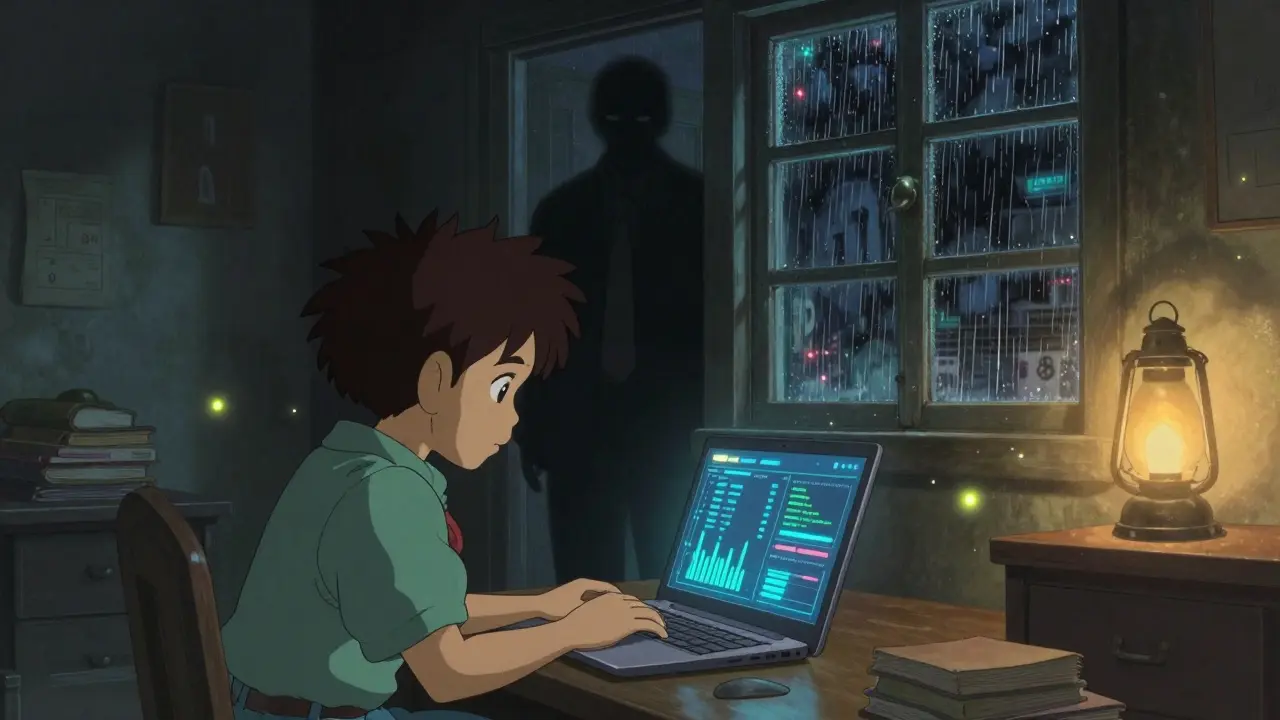
Bitcoin is illegal in Bangladesh - but people are still trading it
It’s 2025, and if you’re trading Bitcoin in Bangladesh, you’re breaking the law. Not just a little - Bitcoin trading is banned. The central bank, Bangladesh Bank, has made this clear since 2017. No official exchange. No legal banking support. No protection. And yet, half a million people are doing it anyway.
Why? Because the money’s there. Remittances from overseas workers hit $21.1 billion in 2024 - over 6% of the country’s entire economy. Many of those workers use crypto to send money home faster and cheaper than traditional services. Others see Bitcoin as a hedge against inflation and currency devaluation. The government says it’s dangerous. The people say it’s necessary.
What exactly is banned - and what isn’t?
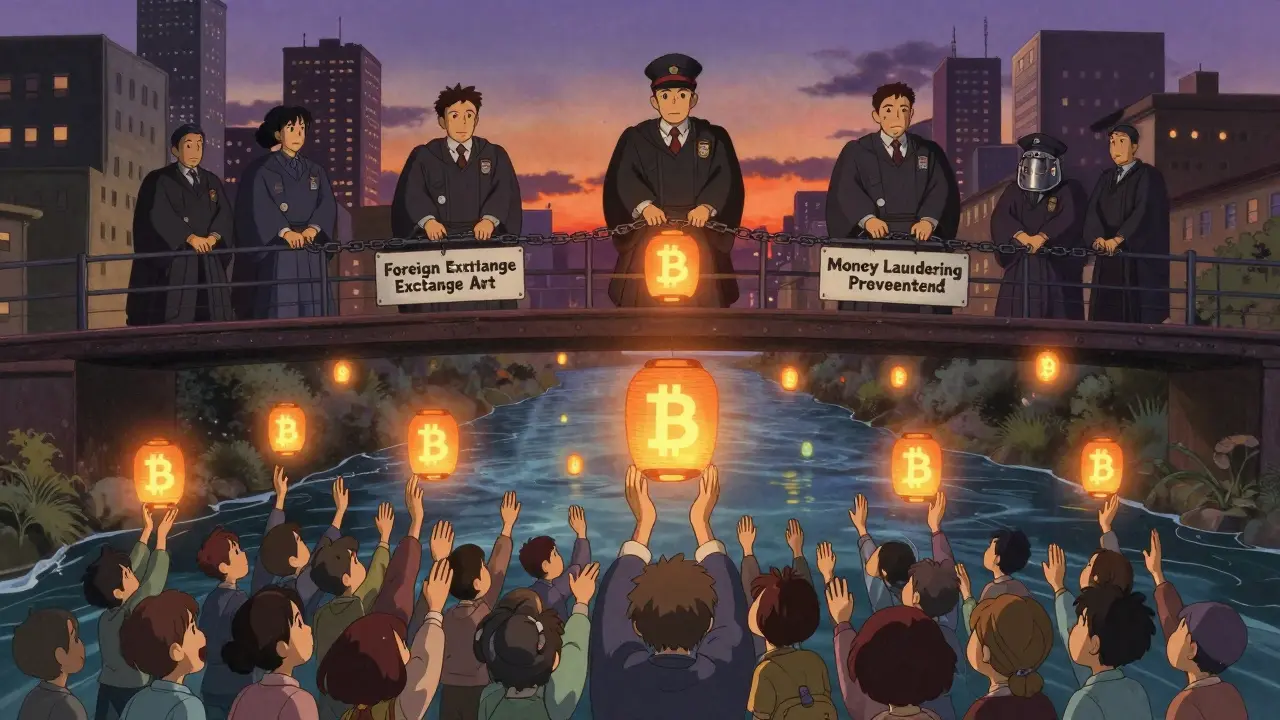
The confusion starts here. Bangladesh Bank never passed a law that says, “Owning Bitcoin is a crime.” But they did say this: “Cryptocurrencies are not legal tender.” That means you can’t use Bitcoin to buy a phone, pay a bill, or trade it through a bank. Any transaction involving crypto is treated as a violation of the Foreign Exchange Regulation Act of 1947 and the Money Laundering Prevention Act of 2012.
Here’s the catch: owning Bitcoin isn’t explicitly illegal. But if you trade it, transfer it, or convert it to taka through an agent, you’re now in the crosshairs of the Bangladesh Financial Intelligence Unit (BFIU) and the Criminal Investigation Department (CID). They don’t arrest people for holding coins. They arrest them for moving money.
In 2022, 14 people were arrested in Dhaka for running a crypto exchange that processed $2.3 million. In 2023, a trader named Mohammad Ali had 127 Bitcoin - worth over $12 million at the time - seized by authorities. In 2024, seven university students in Chittagong were investigated for moving $85,000 monthly through peer-to-peer networks. These aren’t random cases. They’re warnings.
How are they catching people?
They’re not waiting for you to post your wallet address on Facebook. They’re watching your bank account.
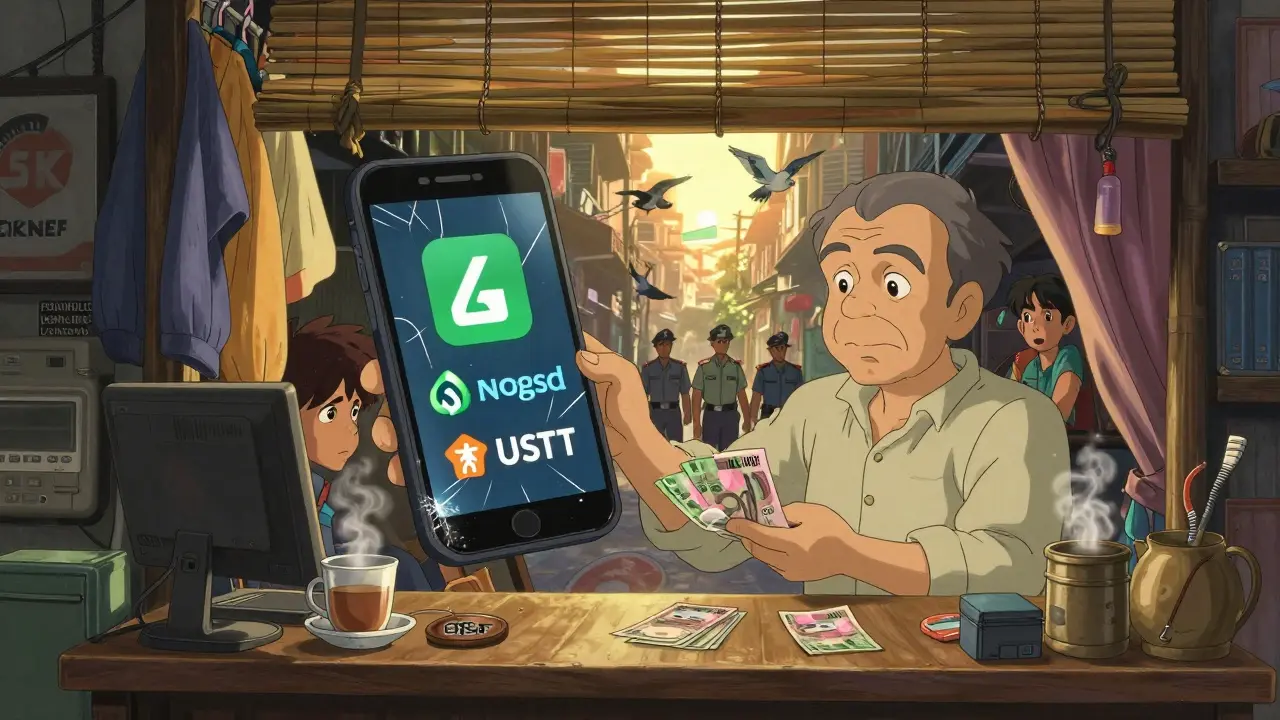
Bangladesh Bank monitors every international card transaction through the Bangladesh Automated Clearing House (BACH). In the last quarter of 2024 alone, 127 suspicious transactions linked to crypto were flagged. That’s not a typo - 127 in three months. Then there’s bKash and Nagad, the two most popular mobile money apps in the country. In 2024, they blocked over 2,800 accounts for suspected crypto activity.
Even if you use a VPN to access Binance or KuCoin, your payments still leave a trail. If you pay for USDT using bKash, the system logs it. If you send money to a local agent who converts your crypto to cash, they’re the weak link. And when those agents disappear - like Sohel Rana did in June 2024, taking $350,000 from 23 traders - the police come knocking on everyone’s door.
The punishment: prison, fines, frozen accounts
Under Section 6 of the Money Laundering Prevention Act (amended in 2015), you can be sentenced to 1 to 10 years in prison. Fines range from 10,000 to 1,000,000 Bangladeshi Taka - that’s $80 to $8,000 USD. And you don’t need to be convicted to lose everything.
A May 2025 survey of 350 crypto users in Dhaka found that 68% had at least one bank account frozen because the bank detected a crypto-related transaction. No warning. No explanation. Just locked. Some people lost their life savings. Others couldn’t pay rent or school fees. Banks don’t ask questions - they just shut it down.
There’s no official process to appeal. No legal channel to prove you didn’t launder money. You’re guilty until you prove otherwise - and the burden of proof is on you.
Who’s trading - and how?
Despite the risks, crypto use is growing. The Blockchain Association of Bangladesh estimates 500,000 to 700,000 active traders. Most use one of three methods:
- Local agents - These are individuals who buy your USDT in exchange for taka. They charge 3-5% fees. Many operate out of small shops or homes. Risky? Yes. But they’re the only option for people without access to international exchanges.
- Peer-to-peer platforms - LocalBitcoins, Paxful, and Binance P2P are accessed via VPN. Traders connect directly with buyers. Payment is made through bKash, Nagad, or bank transfer. The platform doesn’t hold your money - you trust the other person.
- Mobile apps - Binance and KuCoin are still available on Google Play in Bangladesh. As of March 2025, they had 150,000-200,000 active monthly users. The apps don’t know you’re in Bangladesh. The bank does.
Reddit’s r/CryptoBd has over 12,000 members. Facebook groups like “Bangladeshi Crypto Traders” have nearly 30,000. People share tips on how to avoid detection. How to use cash deposits. How to split transactions. How to disappear from the system. It’s a survival guide, not a trading forum.
Why won’t the government change its mind?
The central bank’s stance hasn’t wavered since 2014. Former Governor Dr. Atiur Rahman started the crackdown over fears of financial instability. Current Governor Dr. Abdur Rouf Talukder repeats the same warnings every quarter.
They argue that crypto threatens monetary policy. Bangladesh relies heavily on remittances - $21.1 billion a year. If people start using Bitcoin to send money, the central bank loses control over the flow of foreign currency. That could destabilize the taka. That’s their main fear.
Meanwhile, economists like Dr. B M Mainul Hossain from Dhaka University say the ban costs Bangladesh $150 million a year in lost tax revenue. He points out that India taxes crypto at 30% and still allows trading. Pakistan is exploring Bitcoin reserves. Sri Lanka is drafting a legal framework. Bangladesh? Still stuck in 2017.
Even the government’s own National Blockchain Strategy from 2020 says blockchain technology is valuable - just not cryptocurrencies. In January 2025, Bangladesh Bank launched a sandbox for blockchain applications - but made it clear: “No crypto.”
Taxes? No one knows
There’s no official crypto tax law in Bangladesh. But the National Board of Revenue (NBR) says it can apply existing income tax rules. If you make a profit from trading Bitcoin, you could owe 25-30% in taxes. But no one files crypto taxes. No one reports it. And the NBR doesn’t have the tools to track it.
So here’s the irony: the government doesn’t want you to trade crypto - but if you do, you’re technically supposed to pay tax on it. No one’s enforcing that. But they could, anytime.
The future: more risk, no relief
Finance Minister Abul Hassan Mahmood Ali said in March 2025: “There are no plans to reconsider the cryptocurrency ban.” That’s the official line.
But the underground market keeps growing. The younger generation - students, tech workers, freelancers - are more connected than ever. They see crypto as freedom. The government sees it as a threat.
Until there’s a policy shift - and there’s no sign of one - the risk stays high. You can trade Bitcoin in Bangladesh. But if you get caught, you won’t just lose money. You could lose your freedom.
What happens if you’re caught?
It’s not a fine and a warning. It’s an investigation. A police file. A possible arrest. Your bank accounts frozen. Your phone seized. Your contacts questioned. Your name on a government list.
Even if you’re not prosecuted, the damage is done. Banks blacklist you. Employers check your financial history. You’re labeled a financial risk. No one wants to hire someone who’s been investigated for crypto.
There’s no safe way to trade. Only less dangerous ways.






Ellen Sales
December 21, 2025 AT 07:27 AMSo they ban crypto but let remittances flow through shady agents? That's like banning water but letting people drink through a straw. The system's broken, not the people.
Janet Combs
December 22, 2025 AT 14:37 PMi just cant believe people are getting arrested for using bitcoin when they're just trying to send money to their families. why is this even a crime?
Tyler Porter
December 23, 2025 AT 14:04 PMThis is insane. People are risking jail time just to get paid. If the government wants to stop crypto, they need to offer a real alternative. Not just lock accounts and hope people give up.
Ashley Lewis
December 25, 2025 AT 03:03 AMThe central bank’s position is unequivocally sound. Sovereign monetary policy cannot coexist with decentralized, unregulated assets. The risk to macroeconomic stability is non-negotiable.
Sheila Ayu
December 25, 2025 AT 10:33 AMWait, so owning Bitcoin isn't illegal... but moving it is? So if I hold it in a drawer and never touch it, I'm fine? But if I give it to my cousin who gives me cash? Criminal? That's not law, that's a magic trick!
Zavier McGuire
December 25, 2025 AT 16:53 PMThey don't arrest you for holding coins but for moving money so you're guilty until you prove you didn't launder anything? That's not justice that's a witch hunt
Jacob Lawrenson
December 27, 2025 AT 06:32 AMThis is wild!! People are literally building a financial underground just to survive. Imagine if your government banned your only way to feed your family. This isn't about crypto it's about survival. 💪
Cathy Bounchareune
December 27, 2025 AT 12:19 PMIt’s like the government is trying to stop the tide with a paper fan. People aren’t stupid-they’re desperate. And when you’re desperate, you don’t care about rules. You care about eating, paying rent, sending money home. Crypto isn’t the problem. The system is.
Radha Reddy
December 27, 2025 AT 15:18 PMI understand the concerns of the central bank. However, the human cost of this policy is immense. Many families rely on these transactions. Perhaps a regulated sandbox for remittance-focused crypto use could be explored?
Aaron Heaps
December 28, 2025 AT 09:28 AMSo you’re telling me the government is fine with $21B in remittances but freaks out over $12M in crypto? That’s not a policy. That’s hypocrisy wrapped in bureaucratic jargon.
Rebecca F
December 29, 2025 AT 04:30 AMThe fact that students are getting investigated for moving $85k a month tells you everything. This isn’t about crime. It’s about control. People are using crypto because the system failed them. The government didn’t fix the problem. They just made it illegal to fix it themselves.
Luke Steven
December 29, 2025 AT 17:18 PMThere’s a quiet revolution happening here. Not with protests or hashtags-but with wallets and peer-to-peer trades. People aren’t rebelling against technology. They’re rebelling against a system that refuses to adapt. The state thinks it’s protecting the economy. But what it’s really doing is protecting its own irrelevance. The future doesn’t care about your 2017 policies. It’s already here-in someone’s phone, in a bKash transaction, in a student’s encrypted chat. You can ban a currency. You can’t ban human ingenuity.
Megan O'Brien
December 30, 2025 AT 01:12 AMThe regulatory arbitrage here is textbook. Central bank mandates vs. decentralized financial primitives. The enforcement architecture is brittle-relying on legacy banking surveillance systems to detect crypto flows. The disconnect between policy and on-the-ground behavior is a classic case of institutional myopia. The state is fighting a 2025 problem with a 2017 playbook.