Donation Impact Calculator
Smart contracts eliminate middlemen, reduce fees to 2-5%, and provide transparency through blockchain technology.
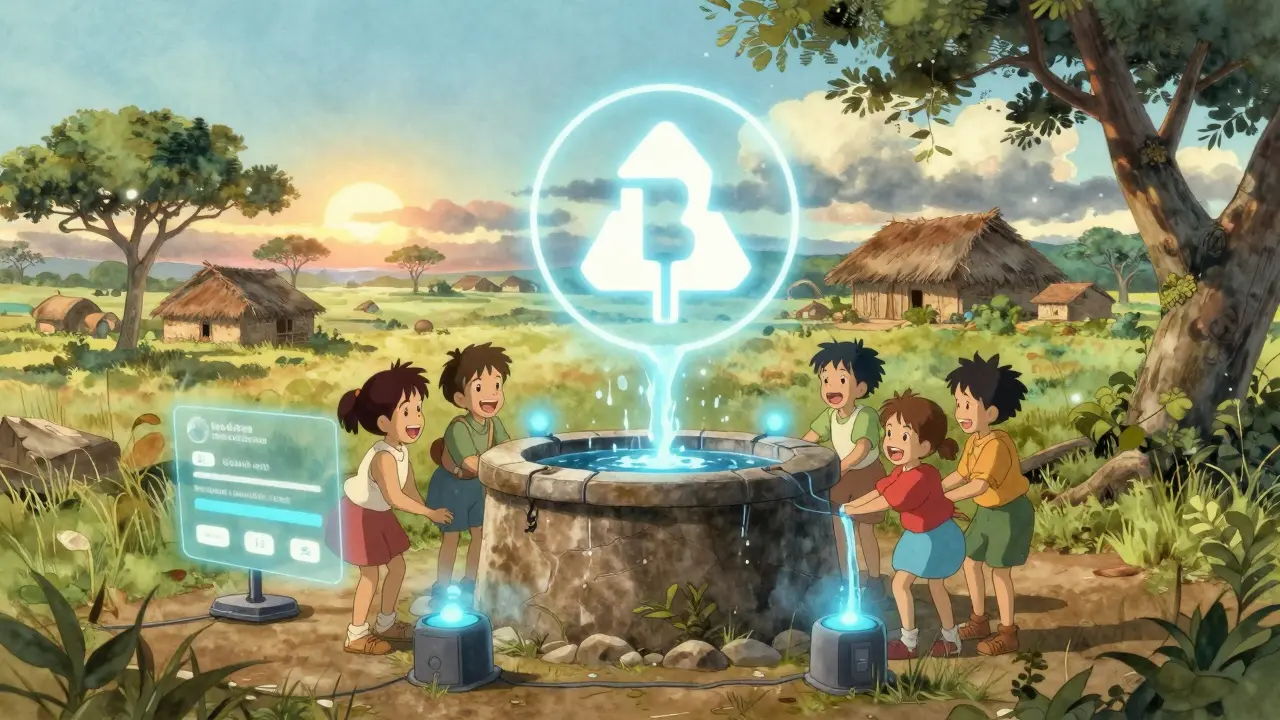
Imagine giving $500 to build a clean water well in Kenya - and actually seeing the sensors confirm the well was dug, the water tested safe, and only then, your money released. No middlemen. No delays. No guesswork. That’s what smart contracts for conditional donations make possible today.
Traditional charity donations often feel like throwing cash into a black box. You hear stories. You see photos. But do you really know if your money reached the people who need it? A 2022 Cone Communications survey found only 23% of donors trusted charities to use funds as promised. Smart contracts fix that - not with promises, but with code.
How Smart Contracts Work for Donations
A smart contract is just code running on a blockchain. It doesn’t need a person to decide what happens. It follows rules written into it - like a vending machine that only dispenses soda when you insert the right amount. For donations, those rules can be anything: "Release funds when 100 school uniforms are delivered," or "Pay out $10,000 after satellite images show reforestation progress."
Most of these contracts run on Ethereum, which handles about 68% of all charitable blockchain projects as of mid-2024. The contract holds your donation in a digital wallet until the conditions are met. Then, and only then, it sends the money to the charity. If the conditions aren’t met? The money stays with you, or goes back to you.
This isn’t theoretical. The Malala Fund used this model in 2023 to fund girls’ education in Pakistan. Donors could track real-time updates: how many scholarships were awarded, which schools were approved, and when payments were made. Donor confidence jumped 37% - not because they were told it was working, but because they could see it.
Why This Beats Traditional Giving
Traditional donations go through banks, payment processors, charity admins, and sometimes even third-party fundraisers. Each step takes time and money. Charity Navigator’s 2023 report shows 15-25% of donations vanish in administrative fees. That means if you give $100, only $75-$85 actually helps.
With smart contracts, that drops to 2-5%. Firefly Giving’s 2024 case studies show nonprofits get 95-98% of every dollar donated. Why? Because the blockchain cuts out the middlemen. The code handles verification, payment, and record-keeping automatically.
And speed? Where traditional matching gift programs take 30-90 days to process, smart contracts do it in minutes. United Way’s 2023 pilot matched donor funds to charity needs within 15 minutes - instead of waiting weeks for paperwork.
Real-World Conditions That Trigger Payments
Smart contracts don’t guess. They need real data. That’s where oracles come in - trusted third-party services that feed real-world info into the blockchain.
For example:
- A disaster relief fund might use satellite imagery to confirm roads are passable before releasing funds.
- A school funding contract might require signed attendance logs from local officials uploaded via a secure app.
- A medical aid project could tie payouts to verified inventory counts from partner clinics.
Chainlink is the most common oracle used in charitable smart contracts - trusted by 73% of projects in 2024. It connects the blockchain to weather reports, government databases, IoT sensors, even GPS trackers on delivery trucks.
One donor on Reddit, "EthGiver87," set up a $500 contract for clean water wells in Kenya. Sensors at each well confirmed installation and water quality. He got daily updates. "I knew exactly where my money went," he wrote. "No more wondering if it was wasted."

The Hidden Problems - And Why It’s Not Perfect
Smart contracts sound perfect. But they’re not magic. They’re code. And code can’t adapt.
In 2022, UNICEF ran a pilot to send cryptocurrency to flood victims in Pakistan. The contract was set to release funds only after verified supply deliveries. But when the floods worsened, the charity needed to redirect money to emergency shelters. The contract couldn’t change. $220,000 sat locked, waiting for conditions that no longer made sense.
This is the "code is law" problem. Rigid rules work great when everything goes as planned. They fail when emergencies happen - and emergencies are exactly when charities need flexibility.
Another issue: complexity. Small charities struggle. A 2024 TechSoup survey found 68% of nonprofits with under $500,000 in annual revenue can’t afford the $15,000-$25,000 setup cost or the $120/hour blockchain developer fees. One charity CEO posted on LinkedIn: "We spent $8,500 just to set up what should’ve been a simple donation tracker. We’re not tech people. We’re nurses and teachers."
Donors face hurdles too. MetaMask and Trust Wallet aren’t intuitive. A 2024 survey showed 12 out of 20 potential donors abandoned a campaign because they couldn’t get their wallet working. That’s why platforms like XDC Network improved their donor interfaces - by 2023, 82% of users could complete a conditional donation with minimal help, up from just 35% in 2020.
Who’s Using This - And Who Isn’t
Adoption is split. Big players are in. Fortune 500 foundations? 41% have piloted or fully adopted conditional smart contracts. Deloitte reports 67% of major banks now offer them to high-net-worth clients - partly because automated records make IRS tax documentation 92% faster.
But small charities? Only 8% have tried it. Why? Cost, fear, lack of support. There are only three active Reddit groups for nonprofit blockchain help. Most charities don’t know where to start.
Legal uncertainty is another roadblock. A January 2025 court case, Bryant v. JPMorgan Chase Bank, ruled that "conduct can manifest acceptance of terms" - meaning if you click "agree" to a smart contract, you’re legally bound. But what if the terms were buried in lines of Solidity code? Courts are still figuring this out.

What’s Changing in 2025 and Beyond
The field is moving fast. In February 2024, Ethereum launched ERC-7217 - a new standard specifically for charitable smart contracts. It gives developers a template, cutting development time by 40%. That means cheaper, faster setups.
And in late 2025, ISO 23026 - the first global standard for blockchain in social impact - is expected to be released. It’ll define how these contracts should be built, documented, and verified. That’ll help charities feel safer adopting them.
Market projections are strong. The global blockchain charity market hit $1.27 billion in 2023. Conditional donations made up $280 million of that. By 2027, it’s expected to hit $940 million.
Gartner predicts that by 2027, 35% of charities with budgets over $1 million will use some form of smart contract giving. But the Center for Global Development warns: without better usability, it’ll stay a niche tool - helping less than 15% of the sector by 2030.
Should You Use It?
If you’re a donor who cares about proof, not promises - yes. If you want to know exactly how your money is used, and you’re comfortable with a crypto wallet, smart contracts give you unmatched control.
If you’re a small charity? Start small. Partner with a platform like Firefly Giving or Bloom Solutions. They handle the tech. You focus on your mission. Don’t try to code your own contract. You don’t need to.
If you’re a big donor or foundation? This is the future. Automated transparency, lower fees, faster payouts. The technology is ready. The only thing holding it back is fear - of complexity, of change, of the unknown.
Smart contracts don’t replace human compassion. They just make sure it’s not wasted.
Can I track my donation in real time with a smart contract?
Yes. Smart contracts are built on public blockchains like Ethereum, where every transaction is recorded and visible. When paired with oracles like Chainlink, you can see real-time updates - like when sensors confirm a well was built, or when a school submits attendance records. Platforms like Firefly Giving and XDC Network offer dashboards where donors can log in and view live progress.
Do I need a crypto wallet to make a conditional donation?
Yes. You need a digital wallet like MetaMask, Trust Wallet, or Coinbase Wallet to send cryptocurrency to a smart contract. These wallets are free and work on phones or computers. The setup takes 5-10 minutes. Some platforms now offer simplified flows - like QR code scans or email-linked wallets - to make it easier for non-tech donors.
What happens if the charity doesn’t meet the conditions?
The money stays locked in the contract. It doesn’t go to the charity. Most contracts are designed to return funds to the donor if conditions aren’t met within a set timeframe. Some allow partial payouts - for example, if 3 out of 5 wells are built, 60% of the funds release. The rules are set upfront by the donor.
Are smart contract donations tax-deductible?
In the U.S., yes - if the charity is a registered 501(c)(3). The IRS treats cryptocurrency donations like property. You get a deduction based on the fair market value at the time of donation. Smart contracts make this easier because they automatically generate timestamped, immutable records - which the IRS accepts as proof. Firefly Giving’s 2023 data shows donors get IRS-compliant receipts 92% faster than with traditional methods.
Can I change the conditions after I donate?
No. Once a smart contract is deployed, the rules are fixed. That’s the whole point - it prevents anyone, including the charity, from changing the terms. If you want flexibility, you can’t use a smart contract. That’s why some charities now offer both options: a traditional donation button and a smart contract option.
Is this only for big charities?
No. While setup costs are high for small charities, platforms like Firefly Giving and CharityChain now offer white-label solutions. Small nonprofits can use their existing website and add a "Donate with Smart Contract" button without coding anything. The platform handles the blockchain side. The charity pays a small fee per transaction - not a big upfront cost.
What’s the difference between Bitcoin and Ethereum for conditional donations?
Ethereum is the most common because it supports complex logic - like "if X, then Y" - in its smart contracts. Bitcoin can do conditional donations too, using Discreet Log Contracts (DLCs) or Covenants, but they’re harder to build and less flexible. Ethereum handles 68% of charitable smart contracts. Bitcoin is better for simple, privacy-focused donations where you don’t need real-time triggers.
How do I know a smart contract is safe and not a scam?
Always check if the contract has been audited. Reputable platforms publish audit reports from firms like CertiK or OpenZeppelin. Look for the contract address on Etherscan - you can see its code and transaction history. Never send money to a contract you didn’t get from a trusted charity or platform. If it’s too good to be true - like "double your donation" - it’s likely a scam.






Katherine Alva
December 4, 2025 AT 22:35 PMI love this so much 💖 Finally, a way to give without the guilt of wondering if my $500 bought a well or just a new SUV for some CEO. Smart contracts feel like digital compassion with receipts.
Shari Heglin
December 5, 2025 AT 06:23 AMThe assertion that smart contracts reduce administrative fees to 2–5% is misleading. Transaction fees on Ethereum, gas costs, oracle service subscriptions, and smart contract auditing are not accounted for in this calculation. The net efficiency gain is significantly overstated.
Tatiana Rodriguez
December 5, 2025 AT 06:46 AMOMG this is THE FUTURE I’ve been screaming about for years 😭 Imagine a little girl in rural Kenya opening a water tap and knowing-*knowing*-that a stranger in Ohio paid for it because the sensors said so. No bureaucracy. No lies. Just pure, coded humanity. I cried reading this. This isn’t tech. This is miracles with a blockchain.
justin allen
December 6, 2025 AT 08:41 AMSo let me get this straight-Americans are gonna trust code written by some crypto bros in Berlin over their own government’s charity system? We can’t even fix the postal service but now we’re banking on Ethereum to feed kids? This is the dumbest thing I’ve read all year.
ashi chopra
December 7, 2025 AT 16:59 PMI work with rural schools in Odisha. We get donations every month, but we never know if the funds are real or just promises. This idea… it gives me hope. Not because of the tech, but because it means someone out there cares enough to make sure the money doesn’t vanish. Thank you for writing this.
Vidyut Arcot
December 8, 2025 AT 16:12 PMThe real win here isn’t the blockchain-it’s the transparency. People don’t need to understand Solidity to trust a live dashboard showing water quality readings. Start with a simple interface. Don’t force donors to learn wallets. Make it feel like Amazon, not a crypto exchange.
Alan Brandon Rivera León
December 9, 2025 AT 16:30 PMI’ve seen this work in Colombia with clean cookstoves. Donors got photo logs, GPS coordinates, even voice notes from women using the stoves. One donor sent a letter saying, 'I didn’t just give money-I gave dignity.' That’s the real power here. Not the code. The connection.
Ankit Varshney
December 11, 2025 AT 10:25 AMThe UNICEF case proves the flaw. Code doesn’t understand famine. If a flood destroys the road, the contract doesn’t care. It just locks the money. That’s not efficiency. That’s cruelty dressed in algorithms.
Ziv Kruger
December 13, 2025 AT 00:23 AMSmart contracts are just trust machines. They replace human judgment with mathematical certainty. But what if the oracle lies? What if the sensor breaks? What if the charity’s local partner gets coerced? Code doesn’t ask questions. People do. And sometimes that’s the only thing that saves lives.
Heather Hartman
December 14, 2025 AT 05:39 AMI set up a smart contract for my niece’s school in Nepal last year. She sent me a video of the new library shelves being built. I cried. I’ve donated to charities for 15 years. This is the first time I felt like I was really there. Like I helped. Not just gave. This is magic.
Paul McNair
December 15, 2025 AT 02:08 AMThis isn’t just about efficiency. It’s about cultural shift. When donors from the Global North can see the impact in real time, it breaks the colonial dynamic of ‘we help them.’ Now it’s ‘we build together.’ That’s revolutionary.
Mohamed Haybe
December 16, 2025 AT 10:41 AMBlockchain? Crypto? All this Western tech nonsense. India has been doing charity right for centuries. Temples, community kitchens, local trusts. No blockchain needed. You think a sensor in a well in Kenya is more real than a grandmother feeding 50 kids every day? Pathetic.
Marsha Enright
December 16, 2025 AT 13:37 PMIf you're a small nonprofit and want to try this, start with Firefly Giving. They handle the wallet, the contract, the audit, everything. You just add a button. I helped three orgs set it up last year. No coding. No stress. Just real impact. You got this 🙌
Andrew Brady
December 17, 2025 AT 13:18 PMThis is a surveillance tool disguised as charity. Every donation tracked. Every sensor feeding data into a global ledger. Who owns that data? Who’s watching who? Next they’ll be using smart contracts to decide who gets aid based on credit scores. This isn’t transparency. It’s control.
Sharmishtha Sohoni
December 18, 2025 AT 07:08 AMWhat about the 68% of small charities that can’t afford this? Are they just left behind?