
You’ve probably seen Polaris Share (POLA) pop up on a price tracker or an exchange list and wondered what it actually does. It’s not Bitcoin. It’s not Ethereum. So why does it exist?
Polaris Share is an ERC-20 cryptocurrency token built on the Ethereum blockchain. Its goal is to create a decentralized marketplace for knowledge. Instead of just sharing documents for free or paying subscription fees to big platforms, POLA aims to connect people who produce high-quality information with people who need it. You get paid in tokens when your expertise is used; I pay tokens to access that expertise.
But here is the reality check: POLA is a small-cap altcoin with significant volatility and low liquidity. Before you buy or hold, you need to understand exactly how it works, where the money comes from, and why the price has dropped so much since its peak.
How the Polaris Share Ecosystem Works
The core idea behind Polaris Share is simple but ambitious. Most online content today is either free (and often low quality) or locked behind expensive paywalls. Polaris tries to fix this by turning knowledge into a tradeable asset.
Here is the workflow:
- Knowledge Producers: Experts, analysts, or writers upload reports, documents, or data. When someone uses their work, they earn POLA rewards.
- Knowledge Consumers: Users pay POLA to access these assets. They aren’t just buying a PDF; they are participating in a system that values the creator’s effort.
- Incentive Mechanism: The token acts as the currency for this exchange. It aligns the interests of both sides. If the platform grows, the utility of the token grows.
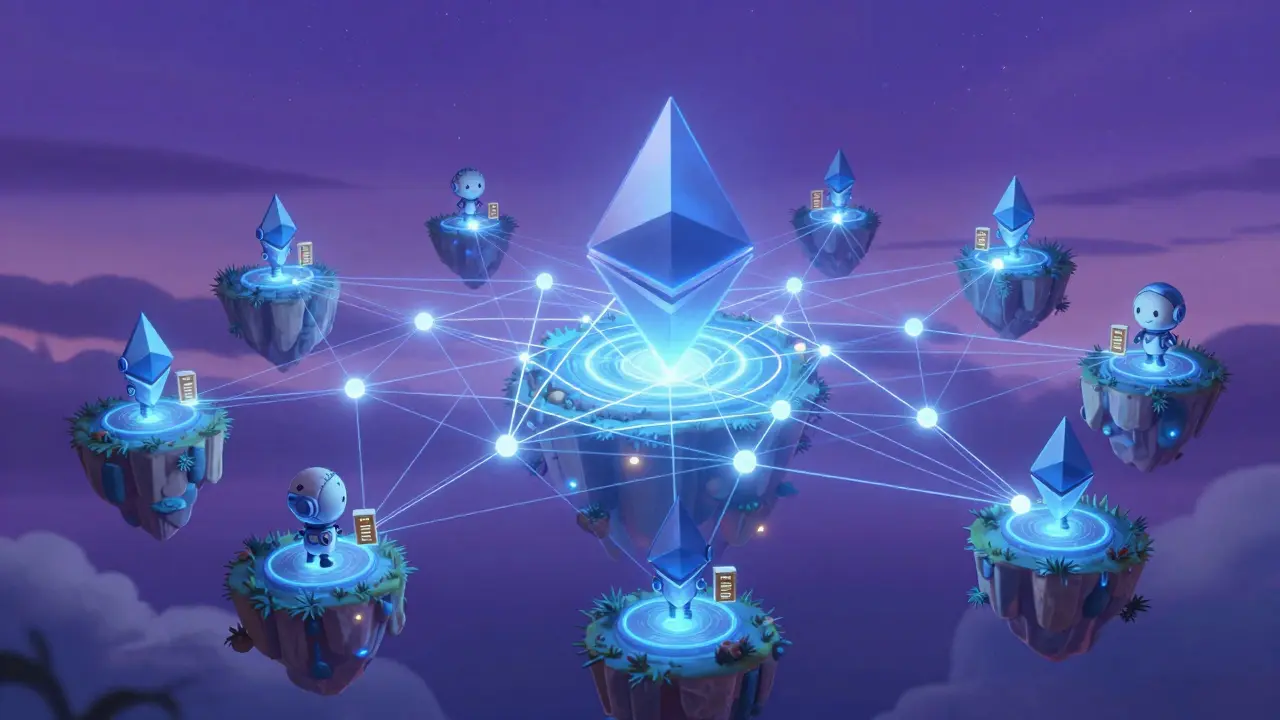
This isn’t a standalone blockchain. POLA runs entirely on Ethereum. This means it relies on Ethereum’s security and infrastructure but also inherits its transaction fees (gas costs). For micro-transactions involving cheap documents, gas fees can sometimes be higher than the document itself, which is a hurdle the project needs to solve.
Token Specs and Supply Details
If you are looking at the technical side, POLA is a standard fungible token. Here are the hard numbers you need to know:
| Attribute | Value |
|---|---|
| Blockchain | Ethereum (ERC-20) |
| Contract Address | 0xc691bc298a304d591ad9b352c7a8d216de9f2ced |
| Total Supply | 4,600,000,000 POLA |
| Circulating Supply | ~503 million - 535 million POLA |
| Holder Count | ~1,119 addresses |
Notice the gap between total supply and circulating supply? Only about 11% of all POLA tokens are currently in circulation. That means nearly 90% of the tokens are still locked, held by the team, investors, or reserved for future ecosystem growth. In crypto, this is a major risk factor. If those locked tokens are released later, the increased supply could drive the price down significantly unless demand spikes to match it.
Price Performance and Liquidity Reality
Let’s talk numbers, because they tell a story of hype followed by a long cooldown.
Polaris Share hit an all-time high (ATH) of roughly $0.54 during the bull market of 2020-2021. As of recent snapshots in 2026, the price hovers between $0.005 and $0.011 depending on the exchange. That is a drop of nearly 98% from its peak.
Why such a wide price range across exchanges? Liquidity. POLA is not traded heavily like Bitcoin or even mid-tier coins. On some days, trading volume might be $22,000 on one exchange and $1.6 million on another. This fragmentation means:
- Slippage Risk: If you try to sell a large amount of POLA, you might crash the price on that specific order book because there aren’t enough buyers waiting.
- Data Discrepancies: CoinMarketCap, Coinbase, and Binance may show slightly different prices at the same moment because they pull data from different pools of trades.
For a retail investor, this means you cannot treat POLA like a stable store of value. It is highly speculative. You need to check the specific exchange’s order book before placing any orders to ensure you won’t lose half your value in slippage.
Staking and Passive Income Potential
You might see POLA listed on staking platforms like StakingRewards. Does staking make sense here?
Technically, yes. Since POLA is an ERC-20 token, "staking" usually doesn’t mean securing the blockchain (like Ethereum validators do). Instead, it typically involves locking your tokens in a smart contract or a third-party pool to earn rewards from a reward pool or platform fees.
However, be cautious. The Annual Percentage Yield (APY) for small-cap tokens can look attractive-sometimes triple digits-but these rates are often unsustainable. They are funded by printing new tokens or using existing treasury funds. If the token price drops faster than the APY earns you, you are still losing money in real terms. Always verify if the staking is native to the protocol or just a promotional offer from an exchange.

Risks You Cannot Ignore
I’m not here to scare you, but I am here to keep your portfolio safe. Here are the three biggest red flags for POLA right now:
1. Low Transparency on Team and Roadmap
Unlike major projects with public teams, regular audits, and clear roadmaps, Polaris Share has limited English-language documentation. There is no widely available whitepaper detailing exact tokenomics breakdowns (e.g., how many tokens go to marketing vs. development). Without knowing who controls the wallet keys or the unlock schedule, you are trusting the system blindly.
2. Regulatory Gray Area
Is POLA a utility token or a security? Regulators like the US SEC look closely at tokens that promise returns based on the efforts of others. If POLA is deemed a security in certain jurisdictions, it could be delisted from major exchanges, trapping your funds.
3. Competition from Bigger Players
The "knowledge economy" space is crowded. Tokens like Basic Attention Token (BAT) or even newer AI-data tokens have larger communities, better liquidity, and clearer use cases. Why would users choose POLA over a more established alternative? Until Polaris proves unique adoption, it struggles to gain traction.
How to Buy and Store POLA Safely
If you decide to proceed despite the risks, here is the safest path to take:
- Choose a Reputable Exchange: Look for POLA listings on major platforms like Coinbase, Crypto.com, or Binance. Avoid obscure DEXs unless you know exactly what you are doing.
- Verify the Contract Address: Double-check that the POLA you are buying matches the official Ethereum contract address:
0xc691bc298a304d591ad9b352c7a8d216de9f2ced. Scammers often create fake tokens with the same name but different addresses. - Use a Secure Wallet: Do not leave your POLA on the exchange long-term. Transfer it to a non-custodial wallet like MetaMask or a hardware wallet like Ledger. Since it is an ERC-20 token, any wallet that supports Ethereum will work.
- Watch Gas Fees: Transferring POLA requires Ethereum gas. If the network is congested, a small transfer could cost more than the tokens themselves. Time your transfers during off-peak hours.
Is Polaris Share (POLA) a good investment in 2026?
POLA is considered a high-risk, speculative asset. It has dropped ~98% from its all-time high and has low liquidity. It is not suitable for conservative investors. Only invest money you can afford to lose entirely, and do thorough research on the project's current activity before buying.
What is the difference between POLA and other crypto tokens?
Unlike Bitcoin (store of value) or Ethereum (smart contracts), POLA is designed specifically for a niche marketplace: trading knowledge and documents. It aims to incentivize creators directly through token rewards rather than relying on advertising revenue models.
Where can I buy Polaris Share?
POLA is available on several major exchanges including Coinbase, Crypto.com, and Binance. However, availability depends on your region. Always check the specific exchange's supported countries list before attempting to trade.
Does POLA have a fixed supply?
Yes, the total supply is capped at 4.6 billion POLA. However, only about 11% is currently in circulation. The remaining tokens are likely held in reserve, by the team, or for future incentives, which poses inflationary risk if released without corresponding demand.
Is Polaris Share safe to store in MetaMask?
Yes, because POLA is an ERC-20 token on Ethereum, it is fully compatible with MetaMask. Just ensure you add the correct contract address to avoid receiving fake tokens. Never share your seed phrase with anyone.






0 Comments