
When Bitcoin first launched in 2009, anyone with a regular computer could mine it. You didn’t need fancy gear-just a CPU and some patience. Today, that’s impossible. If you try to mine Bitcoin with your laptop or even a high-end gaming GPU, you’ll spend more on electricity than you’ll earn in coins. The reason? ASIC miners. These aren’t just better tools-they’re the only tools that make sense for serious cryptocurrency mining anymore.
What Exactly Is an ASIC Miner?
An ASIC miner is a device built for one job: solving cryptographic puzzles to validate blockchain transactions. The name stands for Application-Specific Integrated Circuit, which means the hardware is designed from the ground up to run a single algorithm-nothing else. Unlike your laptop, which can browse the web, stream videos, and run games, an ASIC miner can’t do any of that. It doesn’t need to. Its entire purpose is to hash data as fast as possible.
The first ASIC miner hit the market in 2013. It was called the Avalon, made by Canaan Creative. Within months, Bitmain released the Antminer S1, and everything changed. These devices weren’t just faster-they were hundreds of times more efficient than CPUs or GPUs. Where a gaming GPU might produce 50 megahashes per second (MH/s) for Bitcoin, an early ASIC could do 1,000 MH/s. Today’s top models hit over 100 exahashes per second (EH/s). That’s 100 million million hashes every second.
How Do ASIC Miners Actually Work?
Cryptocurrency networks like Bitcoin use a system called Proof-of-Work. Miners compete to solve complex math problems. The first one to solve it gets to add a new block to the blockchain and earns a reward-newly minted coins plus transaction fees. This isn’t just about earning money; it’s how the network stays secure and decentralized.
ASIC miners tackle this by running the same calculation over and over-billions of times per second. For Bitcoin, that’s the SHA-256 algorithm. For Litecoin, it’s Scrypt. Each ASIC is built specifically for one of these algorithms. You can’t plug a Bitcoin ASIC into a Litecoin network and expect it to work. It’s like trying to use a coffee maker to bake bread.
Inside, you’ll find a circuit board packed with dozens of custom chips. These chips are etched with circuits that do nothing but calculate hashes. They’re paired with powerful cooling systems and high-efficiency power supplies because they run hot and draw a lot of electricity. A single Antminer S21, for example, uses about 3,250 watts and produces over 200 TH/s. That’s more than enough to outpace every consumer-grade device ever made.
Why ASICs Beat CPUs and GPUs
Let’s compare what’s possible today:
- CPUs: In 2009, a typical desktop CPU could mine Bitcoin at 10-50 MH/s. Today? Even the fastest consumer CPUs max out at under 100 MH/s. Not even close.
- GPUs: A top-tier gaming GPU like the NVIDIA RTX 4090 can mine Ethereum (before its switch to Proof-of-Stake) at around 120 MH/s. For Bitcoin? Less than 10 MH/s. And it uses 320 watts to do it.
- ASICs: The Antminer S21 delivers 200 TH/s (that’s 200,000,000 MH/s) using roughly 3,250 watts. That’s 20,000 times faster than a GPU-and uses 30% less power per hash.
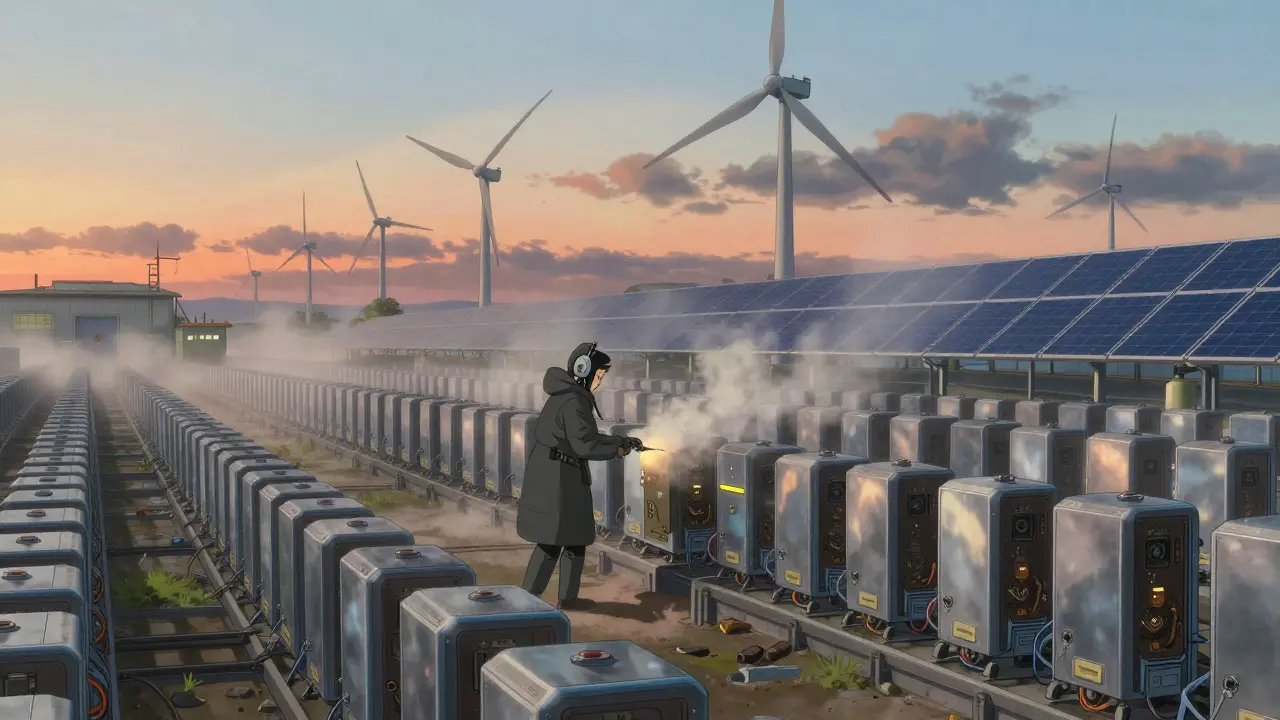
The numbers don’t lie. ASICs are 100 to 10,000 times more efficient than general-purpose hardware for their target algorithms. That’s why CPU mining vanished by 2011, GPU mining for Bitcoin died by 2015, and now even high-end GPUs are useless for Bitcoin mining.
What ASIC Miners Are Used For Today
ASIC miners aren’t just for Bitcoin. Different chips handle different algorithms:
- SHA-256: Bitcoin, Bitcoin Cash, Litecoin (some versions), Dash
- Scrypt: Litecoin, Dogecoin
- Equihash: Zcash, Bitcoin Gold
- Kaspa (KHeavyHash): Kaspa
- Keccak: Ethereum Classic
Companies like Bitmain, Canaan, and MicroBT produce ASICs for each of these. You can’t use one ASIC to mine all of them. If you want to mine Kaspa, you need a Kaspa-specific miner. If you switch to Dogecoin, you’ll need a different one. That’s the trade-off for extreme efficiency.
The Downsides: Cost, Obsolescence, and Centralization
ASICs aren’t perfect. They come with big problems:
- High upfront cost: A new Antminer S21 costs around $5,000. Entry-level models start at $1,500. That’s more than most people spend on a new car.
- Fast obsolescence: New models come out every 6-12 months. If you buy an ASIC today, it might be unprofitable in 18 months as difficulty rises and newer, more efficient miners flood the market.
- Energy use: A single ASIC miner can use as much electricity as a small house. In places with expensive power, mining can cost more than it earns.
- Centralization: Only big mining farms can afford thousands of ASICs. This means a few companies control most of Bitcoin’s hash power. Critics say this goes against Bitcoin’s decentralized roots.
Small-scale miners rarely make money anymore. You need cheap electricity (under $0.06 per kWh), a good cooling setup, and access to mining pools to have a shot. Most people who buy ASICs without understanding these factors lose money.
Who Uses ASIC Miners Today?
It’s not hobbyists anymore. The mining industry is dominated by:
- Industrial mining farms: These are warehouses filled with thousands of ASICs, cooled by air or liquid systems, and powered by cheap hydroelectric or solar energy.
- Publicly traded companies: Marathon Digital, Riot Platforms, and Bitfarms operate massive ASIC fleets. They report quarterly hash rates like tech companies report sales.
- Energy companies: Some power plants in Texas, Kazakhstan, and Russia now run entirely on mining, using excess electricity that would otherwise go to waste.
Individuals still mine, but they’re mostly in countries with near-free electricity. In the U.S., Europe, or China, it’s almost never profitable without corporate-scale operations.
What’s Next for ASIC Mining?
ASIC technology keeps improving. New chip designs use 5nm and 3nm silicon-same as your smartphone processor. This means more hashes per watt. The next generation of ASICs will likely cut power use by another 20-30%.
But there’s pressure. Environmental groups are pushing back. Some countries, like Germany and Sweden, have started taxing mining operations. Others, like Texas and Paraguay, are actively inviting miners to use renewable energy.
Meanwhile, Bitcoin’s halving events (which cut block rewards in half every four years) make efficiency even more critical. Miners who don’t upgrade risk losing money fast.
Some believe ASICs will fade if Bitcoin switches to Proof-of-Stake. But that’s not happening. Bitcoin’s core philosophy is built on Proof-of-Work. It’s unlikely to change. Other coins like Kaspa and Dogecoin are doubling down on ASIC mining. So for the foreseeable future, ASICs aren’t going anywhere.
Should You Buy an ASIC Miner?
If you’re asking this question, the answer is probably no.
Unless you have:
- Access to electricity under $0.05/kWh
- A space with good airflow or cooling
- $3,000-$10,000 to invest upfront
- The patience to wait 12-24 months for a return
…then you’re better off buying the cryptocurrency directly.
Most people who buy ASICs without this setup lose money. The market is too competitive. The tech moves too fast. The costs are too high.
ASIC miners are incredible machines. But they’re not for everyone. They’re for corporations, energy companies, and those with deep pockets and serious infrastructure. For the rest of us? Stick to buying Bitcoin, Ethereum, or other coins on an exchange. It’s simpler, cheaper, and far less risky.
Can you mine Bitcoin with a GPU today?
No. Even the most powerful consumer GPUs can’t compete with ASIC miners for Bitcoin. A top-end RTX 4090 might get you 10 MH/s on SHA-256, while a single Antminer S21 produces over 200,000,000 MH/s. The electricity cost alone would make mining unprofitable. ASICs are the only viable option for Bitcoin mining now.
Are ASIC miners worth the investment?
Only if you have extremely cheap electricity (under $0.06/kWh), a dedicated space with strong cooling, and the capital to buy multiple units. Most individual miners lose money because they underestimate power costs, overestimate mining difficulty, or buy outdated hardware. For 95% of people, buying Bitcoin directly is smarter than mining it.
How long do ASIC miners last?
Technically, they can last 5-7 years. But profitability drops fast. Most ASICs become unprofitable within 12-24 months due to rising network difficulty and newer, more efficient models. Many miners replace their hardware every 1-2 years just to stay in the game. The device doesn’t break-it just stops making money.
Can you mine different cryptocurrencies with the same ASIC?
No. Each ASIC is built for one algorithm. A SHA-256 miner (like for Bitcoin) can’t mine Scrypt-based coins like Litecoin. You need a separate device for each coin. Some miners switch between coins with the same algorithm, but you can’t use one machine for everything.
What happens if Bitcoin switches to Proof-of-Stake?
Bitcoin won’t switch to Proof-of-Stake. It’s built on Proof-of-Work, and changing that would go against its core design. Other coins like Ethereum did switch, but Bitcoin’s community strongly opposes it. ASIC miners for Bitcoin will remain relevant for the foreseeable future.






Issack Vaid
March 9, 2026 AT 07:10 AMI appreciate the breakdown, but let’s be real-ASICs didn’t just change mining. They killed it as a hobby. The moment you need a warehouse and a power contract to break even, you’re no longer a miner. You’re a utility company with a balance sheet.
Josh Moorcroft-Jones
March 11, 2026 AT 03:43 AMYou know what’s funny? People still think they can "get in early" on ASIC mining. Like it’s 2010 and they’re gonna buy a GPU and mine Bitcoin while watching Netflix. The reality? The average ASIC owner loses money before the warranty expires. I’ve seen spreadsheets-honestly, it’s heartbreaking. The electricity cost alone, the depreciation, the noise, the heat, the fact that your entire investment is worthless if the price drops 15%... it’s a pyramid scheme disguised as innovation.
jay baravkar
March 11, 2026 AT 04:37 AMYou’re not alone if you’re thinking about mining 😊 Honestly, I looked into it last year. Did the math. Turned out my electricity was $0.14/kWh. Even with a used S19, I’d be losing $150/month. So I bought BTC instead. Best decision ever. Stay smart, stay simple!
Nash Tree Service
March 12, 2026 AT 01:54 AMThe notion that cryptocurrency mining is a decentralized, egalitarian endeavor is a myth perpetuated by those who refuse to acknowledge economic reality. The infrastructure required to operate at scale necessitates capital, energy access, and regulatory compliance-all of which are inherently concentrated. The romanticization of the individual miner is not merely nostalgic; it is economically illiterate.
Shawn Warren
March 13, 2026 AT 01:12 AMASICs are the future and anyone who says otherwise is stuck in 2012. The efficiency gains are insane. We’re talking about moving from a candle to a nuclear reactor. The fact that people still try to mine with GPUs is like trying to power a city with a AA battery. It’s not wrong-it’s just delusional
Melissa Ritz
March 14, 2026 AT 12:57 PMI bought an Antminer S19 Pro last year. Thought I’d be rich by now. Turned out my local power co charges $0.18/kWh. I’m down $1,200. My basement smells like a server farm and my dog hates it. I’m selling it on eBay. If you’re reading this and thinking about it-don’t. Just buy the coin.
Ian Thomas
March 16, 2026 AT 11:19 AMFunny how we call these machines "miners" when they’re really just very expensive, very loud, very hot heaters that happen to produce a little crypto as a byproduct. The real product is heat. The real value is in the grid stability. The real question isn’t whether ASICs are efficient-it’s whether we should be using planetary resources to validate digital ledgers that exist only because we collectively decided to believe in them.
Austin King
March 16, 2026 AT 11:31 AMJust buy the coin.
Bryanna Barnett
March 17, 2026 AT 16:59 PMLMAO at people still think ASICs are "fair." Like the 5000 dollar machine is for the little guy. Nah. It’s for hedge funds with access to russian hydro. I’m not mad. Just disappointed in humanity.
Cerissa Kimball
March 18, 2026 AT 10:25 AMThe efficiency metrics cited are accurate but often misinterpreted. Power usage effectiveness (PUE) for industrial farms is below 1.1 when properly cooled. Consumer setups often exceed 1.5 due to poor airflow and ambient temperatures. This gap explains why home miners lose money-not because ASICs are inefficient but because their deployment is suboptimal
Rachel Rowland
March 19, 2026 AT 12:40 PMIf you’re thinking about mining, start by checking your local power rates. If it’s over $0.07, you’re already behind. Find a mining pool. Learn the difference between difficulty and hash rate. Talk to people who’ve done it. Don’t just buy a machine because TikTok said so. You’re not a pioneer. You’re a statistic waiting to happen
Bonnie Jenkins-Hodges
March 19, 2026 AT 23:00 PMAMERICA NEEDS TO STOP LETTING CHINA AND RUSSIA OWN OUR ENERGY. IF WE WANT TO BE FREE, WE NEED TO MINE OUR OWN BITCOIN. ASICs are the answer. Stop being weak. Build the farm. Power it with solar. Own your future. 🇺🇸🔥
Jackson Dambz
March 21, 2026 AT 21:41 PMThe fact that you even need to explain this shows how far we’ve fallen. Mining with a CPU? That was a cute experiment. Now we have corporate entities controlling 70% of the hash rate. This isn’t decentralization. It’s oligarchy with a blockchain sticker.
Lydia Meier
March 23, 2026 AT 07:12 AMI’ve read this entire post twice. I still don’t understand why anyone would spend $5,000 on a machine that only does one thing and costs more to run than it earns. The only people winning are the manufacturers. And the power companies. And the Chinese factories. Not the guy in Ohio with his basement full of Antminers.